THE ADVENTURE COLLECTIVE® · Independent discovery and booking for outdoor travel

Escape Marrakech for a short drive to the rocky Agafay Desert for a 20‑minute camel trek, a traditional tagine dinner, Berber dancing and a fire show at sunset. Practical for most travelers and rich in local flavor.
Escape Marrakech for a short drive to the rocky Agafay Desert for a 20‑minute camel trek, a traditional tagine dinner, Berber dancing and a fire show at sunset. Practical for most travelers and rich in local flavor.
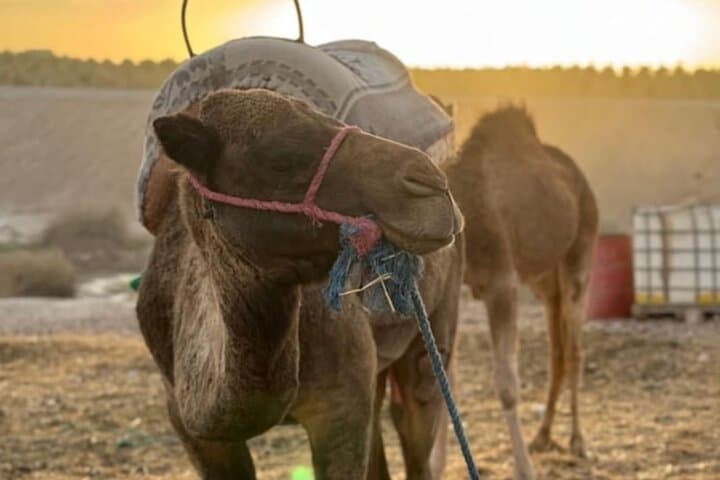
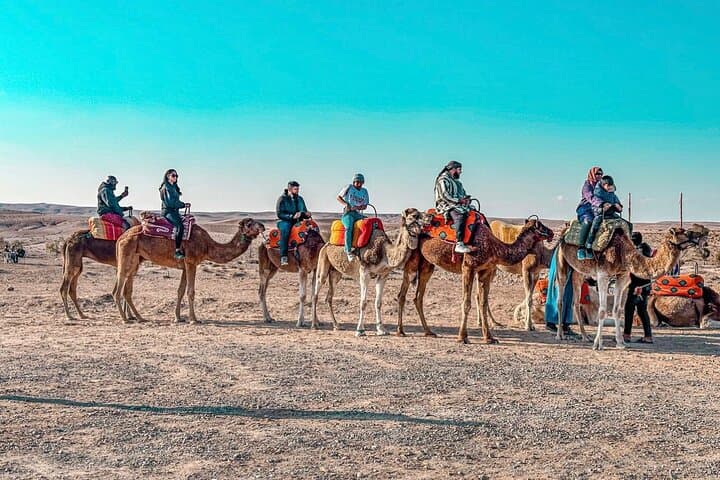
You arrive from Marrakech as the low sun skims a hard, stony plain. The Agafay’s surface crunches under vehicle tires; a lineup of camels waits, patient and steady, while the horizon blushes orange and ochre. The ride is unhurried — a 20‑minute sweep across rocky reg with the Atlas foothills cut against the sky — and the desert seems to lean toward the sunset as if it’s pulling the light away.
Verified experiences and guided adventures in the surrounding area.
Operated by El arkachy · Marrakech, Marrakesh-Safi
You arrive from Marrakech as the low sun skims a hard, stony plain. The Agafay’s surface crunches under vehicle tires; a lineup of camels waits, patient and steady, while the horizon blushes orange and ochre. The ride is unhurried — a 20‑minute sweep across rocky reg with the Atlas foothills cut against the sky — and the desert seems to lean toward the sunset as if it’s pulling the light away.
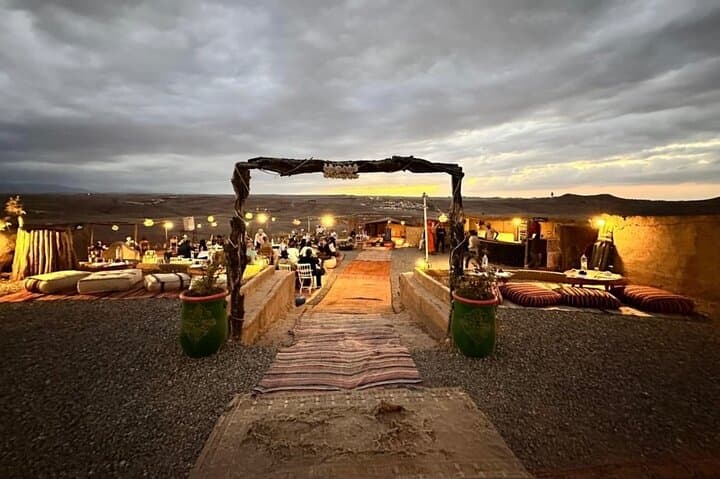
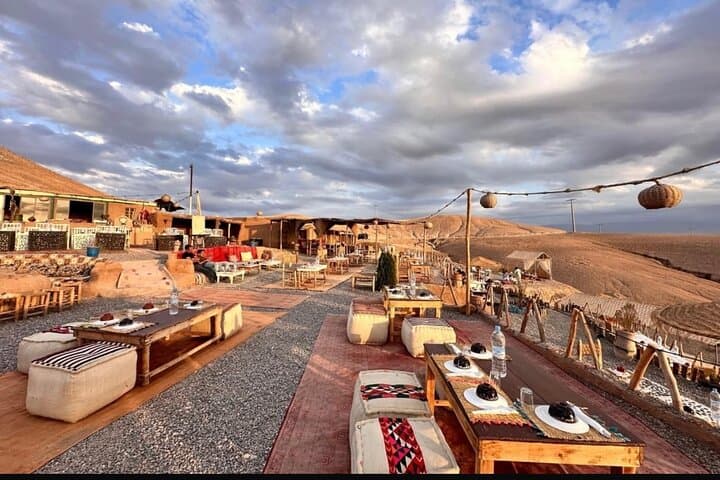
Geologically Agafay is not sand dunes but a reg: compacted gravel and bedrock shaped by erosion at the foot of the High Atlas. For centuries local Berber communities grazed goats and traded across these pathways; today small camps and evening gatherings borrow that heritage, translating songs and food into a tourism ritual. At the dinner, tagines and couscous arrive under canvas while drummers and dancers perform traditional Berber pieces; later a fire show and music dramatize the desert night.
Practical side: tours pick up in Marrakech and drive roughly 30–45 minutes (about 30 km) to the camps, returning after a roughly six‑hour round trip. Expect dusty, uneven ground — closed shoes and a wind scarf help — and limited lighting once night falls. The camel segment is short and suitable for most travelers, but those with back or heart conditions should sit out the ride. Bring sun protection, a refillable bottle, and a camera with a spare battery; temperature can drop after sunset. The experience pairs accessible culture, a quick wildlife glance, and a theatrical evening — a compact way to feel the Atlas foothills without an overnight trek.
easy.
6 hours (total, including transfer and dinner).
Suitable for most fitness levels; requires basic mobility for mounting camels and walking on uneven ground.
The included camel ride is approximately 20 minutes across the stony plain and is suitable for most travelers.
Most transfers are about 30–45 minutes by vehicle from central Marrakech, roughly 30 km depending on pickup point and traffic.
Yes — dinners typically feature regional dishes such as tagine and couscous served family‑style, often with vegetarian options if requested in advance.
Children can attend but camel rides may be limited by age/weight; the tour notes wheelchair accessibility in some areas but camel riding and uneven surfaces may not be suitable for all with mobility challenges.
Agafay has long been grazing land for Berber communities near the Atlas foothills; recent decades have seen small tourist camps adapt traditional music and food for evening cultural programs.
Water is scarce and the reg surface is fragile; stick to paths, avoid collecting wood, and use provided waste facilities to minimize impact.
El arkachy operates guided outdoor trips and adventures with an emphasis on safety, stewardship, and memorable experiences.
You arrive from Marrakech as the low sun skims a hard, stony plain. The Agafay’s surface crunches under vehicle tires; a lineup of camels waits, patient and steady, while the horizon blushes orange and ochre. The ride is unhurried — a 20‑minute sweep across rocky reg with the Atlas foothills cut against the sky — and the desert seems to lean toward the sunset as if it’s pulling the light away.
You arrive from Marrakech as the low sun skims a hard, stony plain. The Agafay’s surface crunches under vehicle tires; a lineup of camels waits, patient and steady, while the horizon blushes orange and ochre. The ride is unhurried — a 20‑minute sweep across rocky reg with the Atlas foothills cut against the sky — and the desert seems to lean toward the sunset as if it’s pulling the light away.
Geologically Agafay is not sand dunes but a reg: compacted gravel and bedrock shaped by erosion at the foot of the High Atlas. For centuries local Berber communities grazed goats and traded across these pathways; today small camps and evening gatherings borrow that heritage, translating songs and food into a tourism ritual. At the dinner, tagines and couscous arrive under canvas while drummers and dancers perform traditional Berber pieces; later a fire show and music dramatize the desert night.
Practical side: tours pick up in Marrakech and drive roughly 30–45 minutes (about 30 km) to the camps, returning after a roughly six‑hour round trip. Expect dusty, uneven ground — closed shoes and a wind scarf help — and limited lighting once night falls. The camel segment is short and suitable for most travelers, but those with back or heart conditions should sit out the ride. Bring sun protection, a refillable bottle, and a camera with a spare battery; temperature can drop after sunset. The experience pairs accessible culture, a quick wildlife glance, and a theatrical evening — a compact way to feel the Atlas foothills without an overnight trek.