THE ADVENTURE COLLECTIVE® · Independent discovery and booking for outdoor travel

Spend a full day crossing from Casablanca to the Agafay stone desert for a camel ride and home-cooked lunch, then return to Marrakech for palace visits and souk time. This full-day itinerary combines a hands-on desert experience with a practical introduction to Marrakech’s historic core.
Spend a full day crossing from Casablanca to the Agafay stone desert for a camel ride and home-cooked lunch, then return to Marrakech for palace visits and souk time. This full-day itinerary combines a hands-on desert experience with a practical introduction to Marrakech’s historic core.
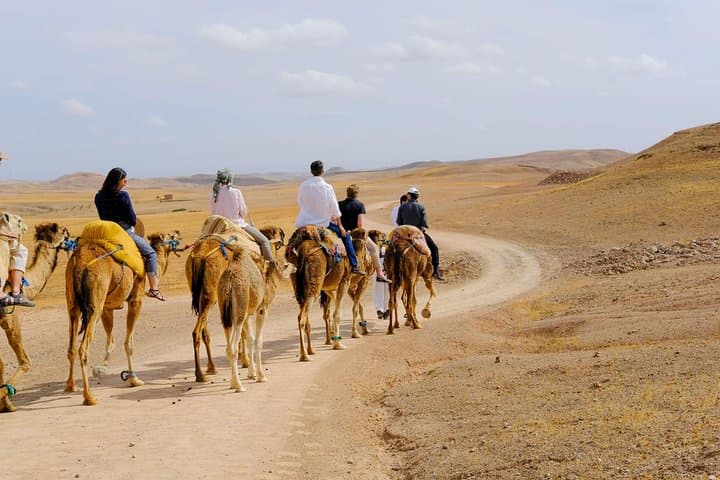
A low, pale sun sits over the stony plains as the convoy climbs out of the city: Casablanca’s coastline shrinks and the road points inland toward Marrakech. By mid-morning the landscape changes from irrigated fields to the wind-sculpted, hard-pan ridges of the Agafay “stone desert,” where camels wait near small camps and local guides strap on traditional saddles.
Verified experiences and guided adventures in the surrounding area.
Operated by Marrakechandcasablancatours · Casablanca, Casablanca-Settat
A low, pale sun sits over the stony plains as the convoy climbs out of the city: Casablanca’s coastline shrinks and the road points inland toward Marrakech. By mid-morning the landscape changes from irrigated fields to the wind-sculpted, hard-pan ridges of the Agafay “stone desert,” where camels wait near small camps and local guides strap on traditional saddles.
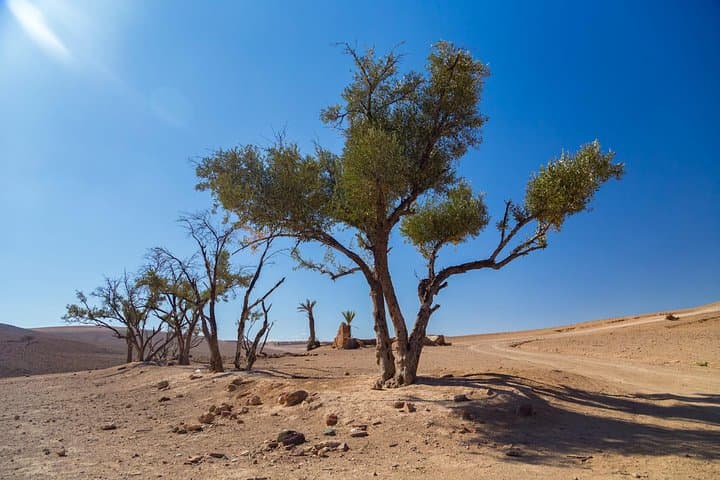
Agafay isn’t Saharan dunes but an expanse of compacted rock and gravel formed by erosion of nearby Atlas foothills; the area has long served as a crossroads between Marrakesh and highland communities. Later, the trip folds into Marrakech’s living history — the 19th-century Bahia Palace’s carved cedar and tiled courtyards and the 12th-century Koutoubia minaret rising over the old medina. Along the way, tea and a home-cooked lunch introduce visitors to Moroccan hospitality and regional flavors.
Expect a full day: long transfers from Casablanca, approximately three hours on site in Agafay for camel time and a traditional meal, then a guided stroll through souks and a short visit to key monuments in Marrakech. The terrain at Agafay is rocky and uneven; camels move slowly but the saddle can jostle. Bring sun protection, sturdy shoes, and cash for local vendors and tips. Traffic between Casablanca and Marrakech can add time—start early and confirm pickup details. For travelers who want a readable, practical day outdoors with cultural immersion, this trip balances desert quiet with the pulse of Marrakech’s old city.
easy.
12 hours.
Suitable for travelers in average fitness—able to sit on a camel for 30–90 minutes and walk short distances around the medina.
The full-day tour runs about 12 hours total; transfers can take roughly 3–4 hours each way depending on traffic and route.
Camel rides are generally safe for most guests but not recommended for travelers with serious back problems, recent surgery, or late pregnancy; infants may need to sit on laps.
Lunch is served at a local home and typically features Moroccan dishes, bread, salad, tea, and options for common dietary needs if requested in advance.
The itinerary includes stops at sites like Bahia Palace; admission and extra guided services within Marrakech may depend on the operator—confirm at booking.
Agafay sits near old caravan routes that connected Marrakech to highland communities; Marrakech itself grew as a political and cultural center under Almohad and Saadian dynasties, visible in monuments like Koutoubia and Bahia Palace.
Agafay’s fragile steppe supports limited vegetation and water—stick to established trails and camps, minimize waste, and support local guides and home-based meals to benefit the community.
Marrakechandcasablancatours operates guided outdoor trips and adventures with an emphasis on safety, stewardship, and memorable experiences.
A low, pale sun sits over the stony plains as the convoy climbs out of the city: Casablanca’s coastline shrinks and the road points inland toward Marrakech. By mid-morning the landscape changes from irrigated fields to the wind-sculpted, hard-pan ridges of the Agafay “stone desert,” where camels wait near small camps and local guides strap on traditional saddles.
A low, pale sun sits over the stony plains as the convoy climbs out of the city: Casablanca’s coastline shrinks and the road points inland toward Marrakech. By mid-morning the landscape changes from irrigated fields to the wind-sculpted, hard-pan ridges of the Agafay “stone desert,” where camels wait near small camps and local guides strap on traditional saddles.
Agafay isn’t Saharan dunes but an expanse of compacted rock and gravel formed by erosion of nearby Atlas foothills; the area has long served as a crossroads between Marrakesh and highland communities. Later, the trip folds into Marrakech’s living history — the 19th-century Bahia Palace’s carved cedar and tiled courtyards and the 12th-century Koutoubia minaret rising over the old medina. Along the way, tea and a home-cooked lunch introduce visitors to Moroccan hospitality and regional flavors.
Expect a full day: long transfers from Casablanca, approximately three hours on site in Agafay for camel time and a traditional meal, then a guided stroll through souks and a short visit to key monuments in Marrakech. The terrain at Agafay is rocky and uneven; camels move slowly but the saddle can jostle. Bring sun protection, sturdy shoes, and cash for local vendors and tips. Traffic between Casablanca and Marrakech can add time—start early and confirm pickup details. For travelers who want a readable, practical day outdoors with cultural immersion, this trip balances desert quiet with the pulse of Marrakech’s old city.