THE ADVENTURE COLLECTIVE® · Independent discovery and booking for outdoor travel

Spend an hour on a dromedary across the Agafay stone desert, a quick desert experience 35 km from Marrakech that ends with traditional Berber mint tea. Ideal for travelers short on time who want desert vistas and cultural exchange without an overnight.
Spend an hour on a dromedary across the Agafay stone desert, a quick desert experience 35 km from Marrakech that ends with traditional Berber mint tea. Ideal for travelers short on time who want desert vistas and cultural exchange without an overnight.
You arrive at the edge of the Agafay stone desert as the city noise thins and the horizon flattens into low, rocky plains. Camels stand patient against a pale sky while a guide checks saddles and adjusts reins; the air smells faintly of dust and orange blossom from nearby orchards. This is not the Sahara’s dunes but a stark, stony landscape where light reads like a map across ridges and dry washes.
Verified experiences and guided adventures in the surrounding area.
Operated by Agafay Quad Biking · Marrakech, Marrakech-Safi
You arrive at the edge of the Agafay stone desert as the city noise thins and the horizon flattens into low, rocky plains. Camels stand patient against a pale sky while a guide checks saddles and adjusts reins; the air smells faintly of dust and orange blossom from nearby orchards. This is not the Sahara’s dunes but a stark, stony landscape where light reads like a map across ridges and dry washes.
Geologically, Agafay is a rocky plateau formed by erosion of ancient sediments and alluvial fans—hard, compacted earth that feels like walking on fossilized waves. Historically, this plain has long served as a trade and stopping ground between Marrakech and the Atlas foothills; modern Berber camps here maintain the hospitality traditions of mint tea and shared stories.
Expect a gentle, guided camel trek lasting roughly an hour across rolling stone and sparse scrub, capped with a visit to a Berber tent for mint tea and light conversation. The pace is slow and social; the camel’s gait forces you to sync breathing and balance rather than race. Practical notes: wear closed-toe shoes, bring at least 1 liter of water, and protect skin from sun and wind. Cameras are welcome but secure straps—camels can jostle you during mounting.
Logistics are straightforward: most tours include air-conditioned pickup from central Marrakech and return within about three hours total. The experience suits first-time riders and families, but it’s not recommended for pregnant travelers or people with serious back problems. Tip: early morning or late afternoon departures mean cooler temperatures and the best light for photos.
easy.
2–3 hours.
Suitable for people in average physical condition; ability to mount a camel and maintain basic balance required.
The camel ride itself is about one hour; door-to-door tours typically last around 2–3 hours including transport and tea.
Yes—families are welcome and infant seats are available, but children should be able to sit independently and follow guide instructions.
Most Agafay camel tours include air-conditioned pickup and drop-off from central Marrakech hotels or riads.
Not recommended for pregnant travelers or people with serious spinal injuries; inform the operator of any mobility issues before booking.
Agafay’s stone plains have long been a transit zone linking Marrakech with Atlas foothills; modern Berber camps revive local hospitality traditions for visitors.
Respect camp rules: avoid single-use plastics, stick to marked areas, and support local vendors to ensure economic benefits stay in the community.
Agafay Quad Biking operates guided outdoor trips and adventures with an emphasis on safety, stewardship, and memorable experiences.
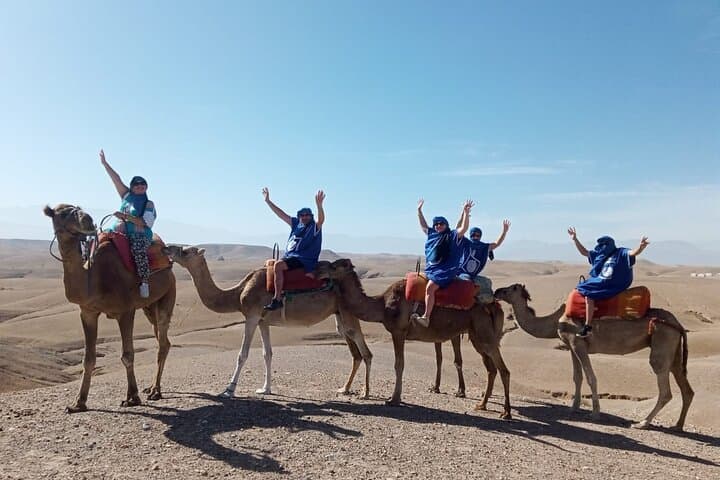
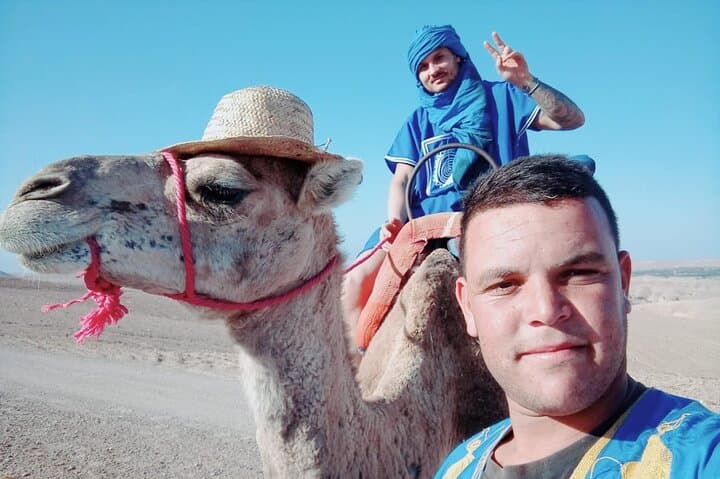
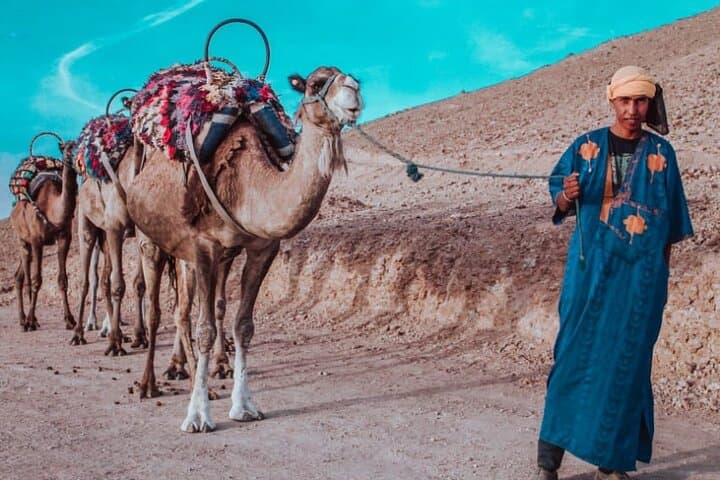
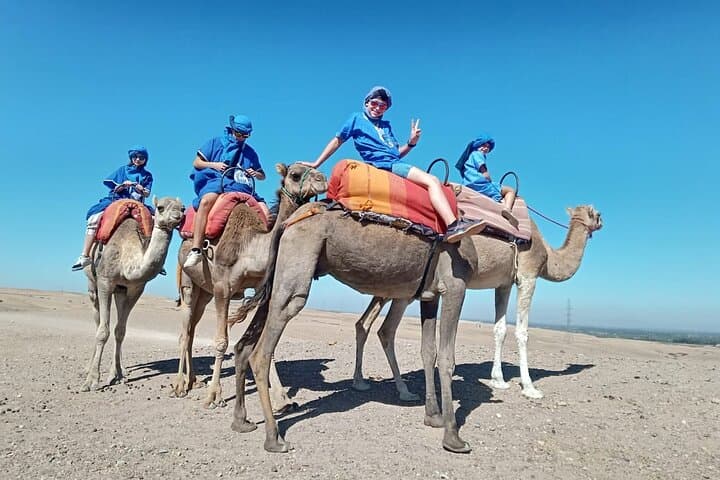
You arrive at the edge of the Agafay stone desert as the city noise thins and the horizon flattens into low, rocky plains. Camels stand patient against a pale sky while a guide checks saddles and adjusts reins; the air smells faintly of dust and orange blossom from nearby orchards. This is not the Sahara’s dunes but a stark, stony landscape where light reads like a map across ridges and dry washes.
You arrive at the edge of the Agafay stone desert as the city noise thins and the horizon flattens into low, rocky plains. Camels stand patient against a pale sky while a guide checks saddles and adjusts reins; the air smells faintly of dust and orange blossom from nearby orchards. This is not the Sahara’s dunes but a stark, stony landscape where light reads like a map across ridges and dry washes.
Geologically, Agafay is a rocky plateau formed by erosion of ancient sediments and alluvial fans—hard, compacted earth that feels like walking on fossilized waves. Historically, this plain has long served as a trade and stopping ground between Marrakech and the Atlas foothills; modern Berber camps here maintain the hospitality traditions of mint tea and shared stories.
Expect a gentle, guided camel trek lasting roughly an hour across rolling stone and sparse scrub, capped with a visit to a Berber tent for mint tea and light conversation. The pace is slow and social; the camel’s gait forces you to sync breathing and balance rather than race. Practical notes: wear closed-toe shoes, bring at least 1 liter of water, and protect skin from sun and wind. Cameras are welcome but secure straps—camels can jostle you during mounting.
Logistics are straightforward: most tours include air-conditioned pickup from central Marrakech and return within about three hours total. The experience suits first-time riders and families, but it’s not recommended for pregnant travelers or people with serious back problems. Tip: early morning or late afternoon departures mean cooler temperatures and the best light for photos.