THE ADVENTURE COLLECTIVE® · Independent discovery and booking for outdoor travel

Trade Marrakech’s medina bustle for the stony sweep of the Agafay Desert on a 1.5-hour camel ride. This 3–4 hour experience includes transfers, mint tea, a local house visit and sweeping views of the Atlas Mountains.
Trade Marrakech’s medina bustle for the stony sweep of the Agafay Desert on a 1.5-hour camel ride. This 3–4 hour experience includes transfers, mint tea, a local house visit and sweeping views of the Atlas Mountains.
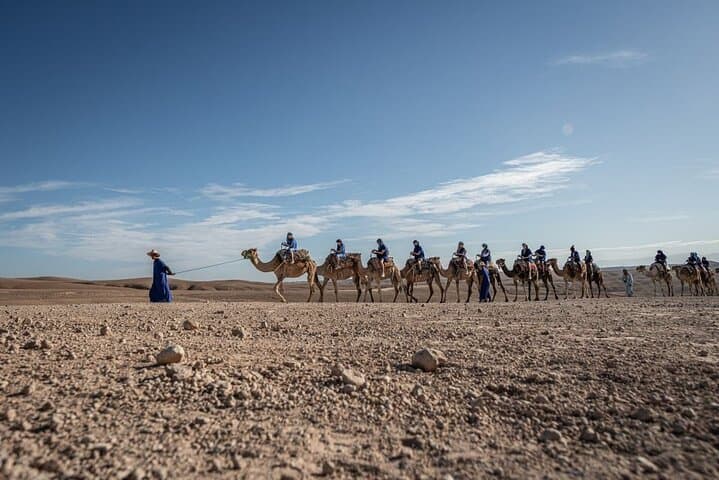
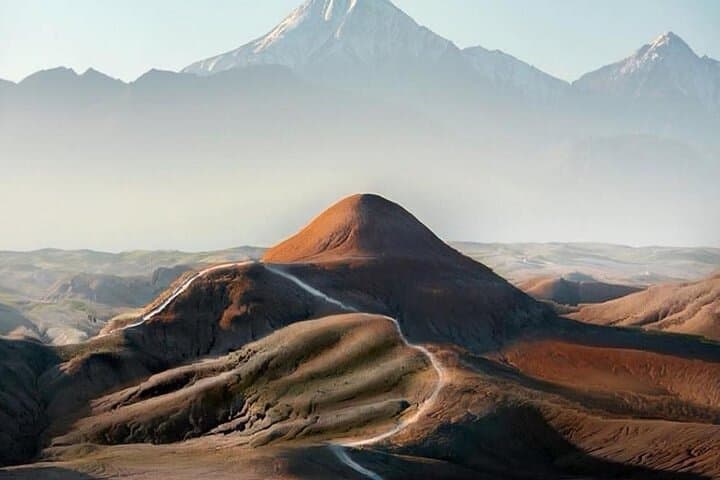
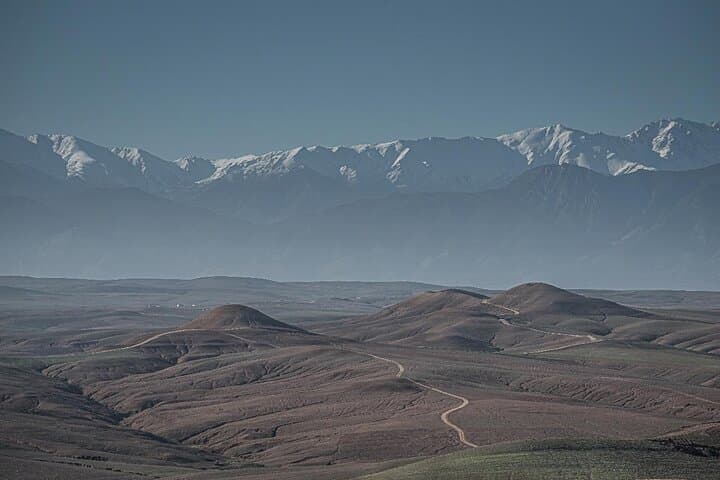
You arrive where the city’s heat thins and the landscape turns stone-smooth: low, stony hills spread under a high blue sky and a herd of camels stands like slow-moving sentries. A steaming glass of Moroccan mint tea is set before you, fragrant and sharp, while the Atlas Mountains stitch a jagged horizon—their snowy caps visible in winter.
Verified experiences and guided adventures in the surrounding area.
Operated by Morocco Transfer · Marrakech, Marrakech-Safi
You arrive where the city’s heat thins and the landscape turns stone-smooth: low, stony hills spread under a high blue sky and a herd of camels stands like slow-moving sentries. A steaming glass of Moroccan mint tea is set before you, fragrant and sharp, while the Atlas Mountains stitch a jagged horizon—their snowy caps visible in winter.
The Agafay is not Sahara sand but a reg: compacted gravel, weathered bedrock and low scrub shaped by wind and millennia of runoff from the Atlas. Historically, this corridor connected Marrakech with mountain pastures and was crossed by Berber travelers and traders; camels remain part practical transport, part cultural emblem. Local families maintain small houses and camps here, and a short break at a welcoming home offers a glance into rural life.
On the 1.5-hour camel ride you’ll cover roughly 6–8 km at an easy pace across packed earth, low ridgelines and shallow wadis. Expect minimal elevation change—perhaps 50–100 m total—so the outing is accessible but sensory: the camel’s sway, the crunch of gravel, the wind nudging at your jacket.
Practical notes: rides typically include hotel pickup in Marrakech and last about 3–4 hours round trip. Morning and late-afternoon departures avoid the midday heat and give the best light for photos. Wear closed-toe shoes, sun protection and layers; carry water and a small camera. Respect private properties, follow your guide’s instructions mounting and dismounting, and tip locally to support small hosts.
easy.
3–4 hours.
Suitable for most fitness levels; minimal stamina required but basic balance helps on the camel
The mounted portion is about 1.5 hours, while the full door-to-door tour typically runs 3–4 hours including transfers and a short local-house stop.
Yes—standard options include pickup from a range of meeting points in Marrakech; many operators offer direct hotel or riad pickup as an upgrade.
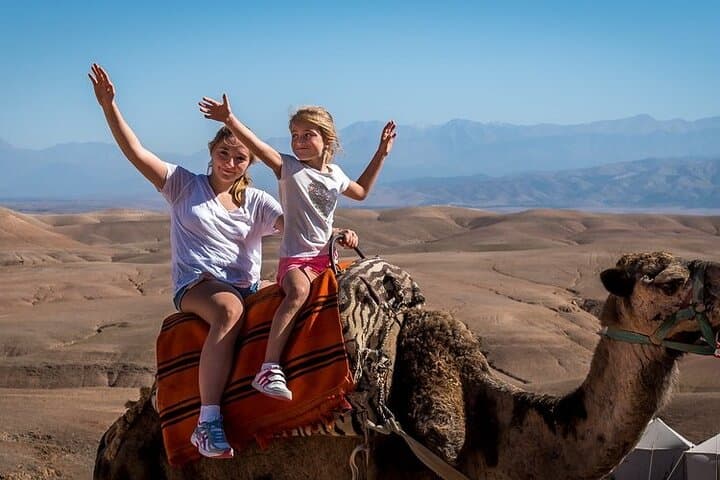
Children can usually ride with adult supervision, but the activity is not recommended for pregnant travelers—check with the operator and your doctor before booking.
Tipping is customary; consider a small cash tip for the guide and a modest contribution to the family hosting the tea stop to support local livelihoods.
The Agafay is a stony reg formed from eroded Atlas foothills and historically served as a transit zone for Berber communities traveling between mountain pastures and Marrakech.
Water is scarce and vegetation sparse—carry out all waste, stay on established routes, and support operators who respect private lands and local communities.
Morocco Transfer operates guided outdoor trips and adventures with an emphasis on safety, stewardship, and memorable experiences.
You arrive where the city’s heat thins and the landscape turns stone-smooth: low, stony hills spread under a high blue sky and a herd of camels stands like slow-moving sentries. A steaming glass of Moroccan mint tea is set before you, fragrant and sharp, while the Atlas Mountains stitch a jagged horizon—their snowy caps visible in winter.
You arrive where the city’s heat thins and the landscape turns stone-smooth: low, stony hills spread under a high blue sky and a herd of camels stands like slow-moving sentries. A steaming glass of Moroccan mint tea is set before you, fragrant and sharp, while the Atlas Mountains stitch a jagged horizon—their snowy caps visible in winter.
The Agafay is not Sahara sand but a reg: compacted gravel, weathered bedrock and low scrub shaped by wind and millennia of runoff from the Atlas. Historically, this corridor connected Marrakech with mountain pastures and was crossed by Berber travelers and traders; camels remain part practical transport, part cultural emblem. Local families maintain small houses and camps here, and a short break at a welcoming home offers a glance into rural life.
On the 1.5-hour camel ride you’ll cover roughly 6–8 km at an easy pace across packed earth, low ridgelines and shallow wadis. Expect minimal elevation change—perhaps 50–100 m total—so the outing is accessible but sensory: the camel’s sway, the crunch of gravel, the wind nudging at your jacket.
Practical notes: rides typically include hotel pickup in Marrakech and last about 3–4 hours round trip. Morning and late-afternoon departures avoid the midday heat and give the best light for photos. Wear closed-toe shoes, sun protection and layers; carry water and a small camera. Respect private properties, follow your guide’s instructions mounting and dismounting, and tip locally to support small hosts.