THE ADVENTURE COLLECTIVE® · Independent discovery and booking for outdoor travel

Ride a dromedary across Agafay’s rocky plains, then dine on slow-cooked Moroccan tagines beneath a wide, star-filled sky. This short excursion from Marrakech blends gentle outdoor time with authentic local cuisine and easy logistics.
Ride a dromedary across Agafay’s rocky plains, then dine on slow-cooked Moroccan tagines beneath a wide, star-filled sky. This short excursion from Marrakech blends gentle outdoor time with authentic local cuisine and easy logistics.
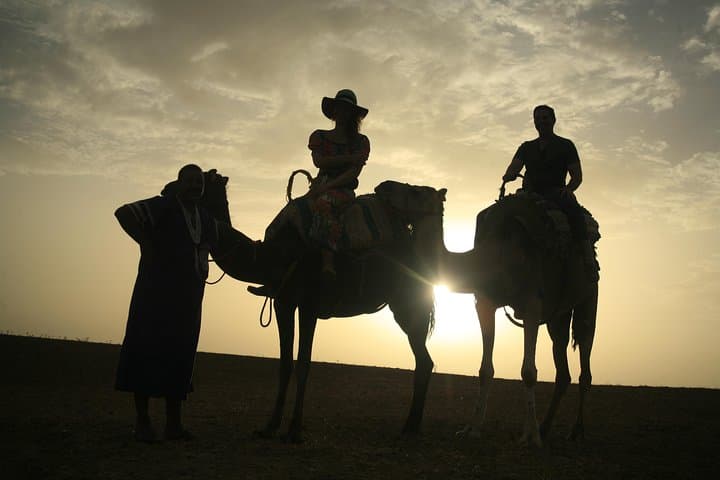
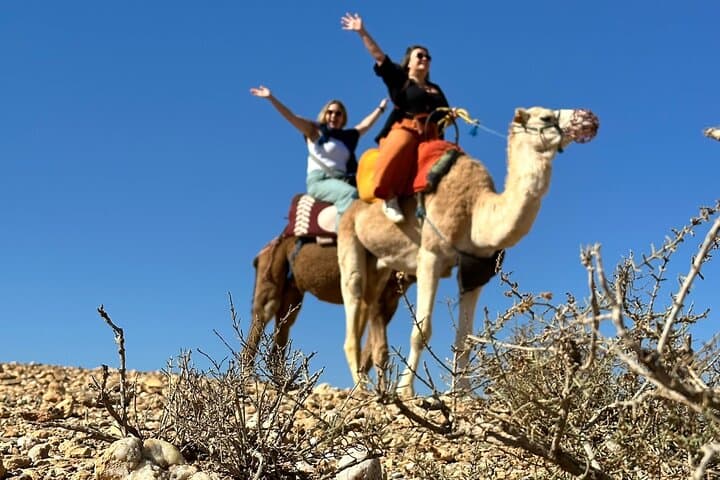
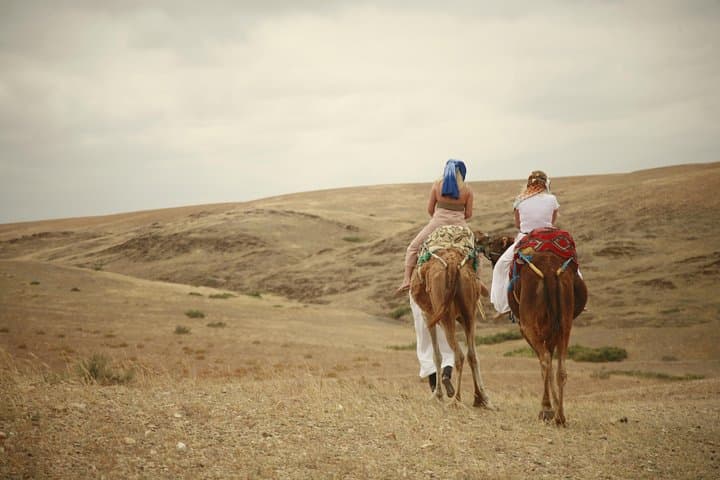
Feet in the sand, wind pressing cool and sharp against your cheeks, the Agafay plateau opens like a slow-moving film—rock and low scrub rolling toward the shadowed High Atlas. A single-file line of dromedaries carries small groups up gentle rises; the animals tread with patient confidence while the horizon widens to reveal stony ridges and the occasional olive grove.
Verified experiences and guided adventures in the surrounding area.
Operated by splendor of Morocco · Marrakech, Marrakech-Safi
Feet in the sand, wind pressing cool and sharp against your cheeks, the Agafay plateau opens like a slow-moving film—rock and low scrub rolling toward the shadowed High Atlas. A single-file line of dromedaries carries small groups up gentle rises; the animals tread with patient confidence while the horizon widens to reveal stony ridges and the occasional olive grove.
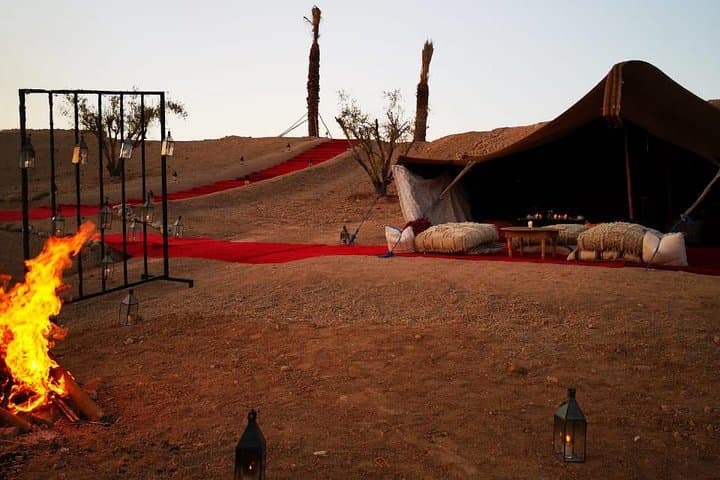
Agafay is not Sahara sand dunes but a stony, mineral-rich desert carved by millennia of erosion. Historically used for seasonal grazing and as a route between Berber villages and Marrakech, the plateau now serves as a nearby escape for city dwellers and travelers seeking desert light without the overnight Sahara trek. The modern tent camps and open-air kitchens borrow from local building and hospitality traditions—tagines are slow-cooked over embers, and mint tea is poured as stars gather.
Expect 1 hour on camelback across firm, undulating terrain with clear sightlines rather than steep climbs. The dinner component highlights seasonal Moroccan plates—harira, salads, and multiple tagines—served under an expansive sky. Guides often combine pickup from Marrakech, a short drive of roughly 35 km, and a relaxed pace tailored to families.
Practical tips: wear closed-toe shoes for mounting camels, bring sun protection and a reusable bottle, and carry a light layer after sunset when desert temperatures drop. Photography is excellent at golden hour; arrive early for the best light. Respect local staff, follow marked paths to protect fragile soils, and leave no trace behind—this keeps Agafay viable for future visits.
easy.
3–4 hours.
Suitable for light fitness—no steep hiking required, mostly seated camel travel and short flat walks
The camel portion is approximately one hour across gentle, rocky terrain designed for comfort rather than endurance.
Yes—hotel pickup and drop-off by air-conditioned minivan are typically included; confirm pickup windows when booking.
Menus usually include vegetable tagine options and salads; notify the operator of dietary needs in advance so the chef can accommodate you.
Basic restroom facilities are provided at the camp; they are often simple but maintained for guest use.
Agafay’s stony plains have long been a seasonal grazing and transit area linking mountain communities with Marrakech; its modern tourism scene grew from local camp hospitality and city demand for nearby desert experiences.
Water is scarce and soils are fragile—stay on established tracks, avoid open fires off designated areas, and support camps that hire local staff and source produce regionally.
splendor of Morocco operates guided outdoor trips and adventures with an emphasis on safety, stewardship, and memorable experiences.
Feet in the sand, wind pressing cool and sharp against your cheeks, the Agafay plateau opens like a slow-moving film—rock and low scrub rolling toward the shadowed High Atlas. A single-file line of dromedaries carries small groups up gentle rises; the animals tread with patient confidence while the horizon widens to reveal stony ridges and the occasional olive grove.
Feet in the sand, wind pressing cool and sharp against your cheeks, the Agafay plateau opens like a slow-moving film—rock and low scrub rolling toward the shadowed High Atlas. A single-file line of dromedaries carries small groups up gentle rises; the animals tread with patient confidence while the horizon widens to reveal stony ridges and the occasional olive grove.
Agafay is not Sahara sand dunes but a stony, mineral-rich desert carved by millennia of erosion. Historically used for seasonal grazing and as a route between Berber villages and Marrakech, the plateau now serves as a nearby escape for city dwellers and travelers seeking desert light without the overnight Sahara trek. The modern tent camps and open-air kitchens borrow from local building and hospitality traditions—tagines are slow-cooked over embers, and mint tea is poured as stars gather.
Expect 1 hour on camelback across firm, undulating terrain with clear sightlines rather than steep climbs. The dinner component highlights seasonal Moroccan plates—harira, salads, and multiple tagines—served under an expansive sky. Guides often combine pickup from Marrakech, a short drive of roughly 35 km, and a relaxed pace tailored to families.
Practical tips: wear closed-toe shoes for mounting camels, bring sun protection and a reusable bottle, and carry a light layer after sunset when desert temperatures drop. Photography is excellent at golden hour; arrive early for the best light. Respect local staff, follow marked paths to protect fragile soils, and leave no trace behind—this keeps Agafay viable for future visits.