THE ADVENTURE COLLECTIVE® · Independent discovery and booking for outdoor travel

Leave Marrakech for a 45-minute drive to the rocky Agafay Desert, where a 1.5-hour camel caravan delivers Atlas Mountain views, mint tea in a local house, and an accessible taste of rural Moroccan life. Ideal for a half-day outing with hotel pickup options.
Leave Marrakech for a 45-minute drive to the rocky Agafay Desert, where a 1.5-hour camel caravan delivers Atlas Mountain views, mint tea in a local house, and an accessible taste of rural Moroccan life. Ideal for a half-day outing with hotel pickup options.
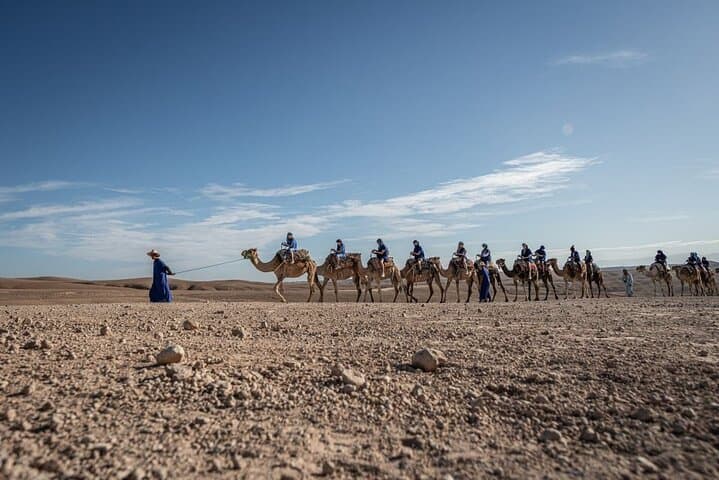
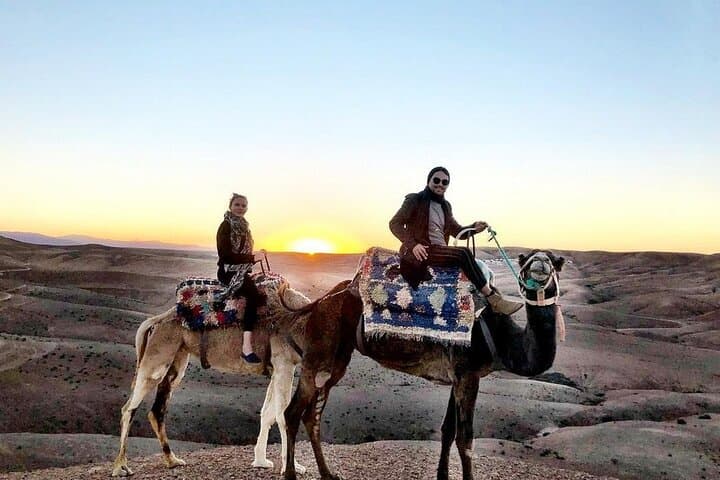
You leave Marrakech behind in an air-conditioned minivan and, within about 45 minutes, the city’s heat thins and the land opens into the Agafay’s stony plains. Camels wait at an oasis-like meeting point; the first inhalation of dry, mineral air and the sight of the Atlas range to the south set the tone. The caravan ambles over hard-packed, pebble-strewn terrain—there are no high dunes here, but a rugged, lunar pulse that gives each sway and climb a tactile honesty.
Verified experiences and guided adventures in the surrounding area.
Operated by Jemaa el-Fnaa · Marrakech, Marrakech-Safi
You leave Marrakech behind in an air-conditioned minivan and, within about 45 minutes, the city’s heat thins and the land opens into the Agafay’s stony plains. Camels wait at an oasis-like meeting point; the first inhalation of dry, mineral air and the sight of the Atlas range to the south set the tone. The caravan ambles over hard-packed, pebble-strewn terrain—there are no high dunes here, but a rugged, lunar pulse that gives each sway and climb a tactile honesty.
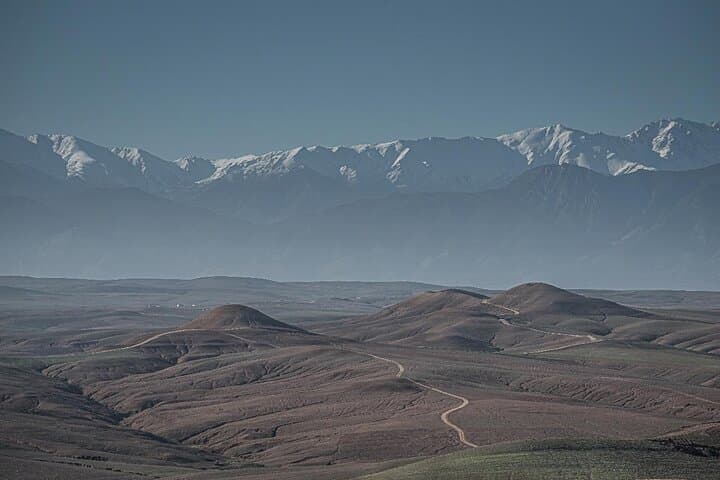
The Agafay is not Sahara sand but a rocky desert formed by ancient fluvial deposits and erosion off the Atlas foothills; local Berber communities have long used these grazing patches and seasonal wells. A short stop in a nearby house offers mint tea and a glimpse of rural life—simple hospitality, woven with stories of mountain snowmelt that feeds the plain. Winter brings crisp air and snow-capped Atlas silhouettes; summer washes the landscape in gold and heat.
Practically, the camel leg is about 1.5 hours and suitable for most travelers; the animals are accustomed to gentle tourist circuits, and guides give basic mounting instructions. Expect gentle inclines, firm footing underfoot, and a slow, steady pace that’s as much about sightseeing as motion. Bring sun protection, a light layer for wind, and enough water; the round trip from Marrakech totals roughly 3–4 hours including transport. Whether you want a sunset silhouette or a daytime panorama, this short excursion is an accessible way to connect with Morocco’s desert edge and the immovable presence of the Atlas.
easy.
3–4 hours.
Suitable for most fitness levels — mostly seated camel travel with short walking breaks at the meeting area
The advertised camel portion is around 1.5 hours; total door-to-door time including transfers is typically 3–4 hours.
Yes—this is a gentle, seated experience suitable for most ages, though infant seats and parental supervision are recommended for young children.
Pickup can be included depending on the option you choose; confirm your pickup point when booking to ensure door-to-door service.
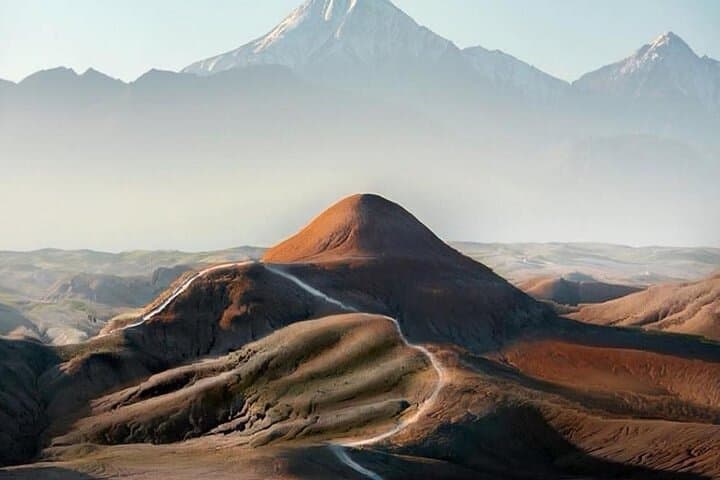
The Agafay is a rocky, stony plateau rather than sand dunes—expect compacted gravel, low ridges, and firm footing for camels.
The Agafay sits on fluvial deposits from the Atlas foothills and has long been used by Berber herders and traders as a grazing and stopping area between Marrakech and mountain passes.
Tour operators are increasingly using existing tracks to avoid damaging fragile soils; visitors should avoid leaving litter and respect private homesteads and water sources.
Jemaa el-Fnaa operates guided outdoor trips and adventures with an emphasis on safety, stewardship, and memorable experiences.
You leave Marrakech behind in an air-conditioned minivan and, within about 45 minutes, the city’s heat thins and the land opens into the Agafay’s stony plains. Camels wait at an oasis-like meeting point; the first inhalation of dry, mineral air and the sight of the Atlas range to the south set the tone. The caravan ambles over hard-packed, pebble-strewn terrain—there are no high dunes here, but a rugged, lunar pulse that gives each sway and climb a tactile honesty.
You leave Marrakech behind in an air-conditioned minivan and, within about 45 minutes, the city’s heat thins and the land opens into the Agafay’s stony plains. Camels wait at an oasis-like meeting point; the first inhalation of dry, mineral air and the sight of the Atlas range to the south set the tone. The caravan ambles over hard-packed, pebble-strewn terrain—there are no high dunes here, but a rugged, lunar pulse that gives each sway and climb a tactile honesty.
The Agafay is not Sahara sand but a rocky desert formed by ancient fluvial deposits and erosion off the Atlas foothills; local Berber communities have long used these grazing patches and seasonal wells. A short stop in a nearby house offers mint tea and a glimpse of rural life—simple hospitality, woven with stories of mountain snowmelt that feeds the plain. Winter brings crisp air and snow-capped Atlas silhouettes; summer washes the landscape in gold and heat.
Practically, the camel leg is about 1.5 hours and suitable for most travelers; the animals are accustomed to gentle tourist circuits, and guides give basic mounting instructions. Expect gentle inclines, firm footing underfoot, and a slow, steady pace that’s as much about sightseeing as motion. Bring sun protection, a light layer for wind, and enough water; the round trip from Marrakech totals roughly 3–4 hours including transport. Whether you want a sunset silhouette or a daytime panorama, this short excursion is an accessible way to connect with Morocco’s desert edge and the immovable presence of the Atlas.