THE ADVENTURE COLLECTIVE® · Independent discovery and booking for outdoor travel

A full-day loop from Marrakech across the Agafay rocky plain into Atlas foothills, combining a 30-minute camel ride, mint tea in Berber villages, and a sunset viewpoint over the mountains. Practical route notes and what to expect on trails and tracks.
A full-day loop from Marrakech across the Agafay rocky plain into Atlas foothills, combining a 30-minute camel ride, mint tea in Berber villages, and a sunset viewpoint over the mountains. Practical route notes and what to expect on trails and tracks.
You leave Marrakech behind on a morning road that narrows into ochre tracks, the city noise thinning as the land opens into the Agafay rocky plain. Stones click under the vehicle; a low, wind-swept horizon dares you to look farther. By midmorning you trade asphalt for dirt tracks that climb toward earthen Berber villages, stopping for mint tea in a courtyard where laughter and mules share the shade.
Verified experiences and guided adventures in the surrounding area.
Operated by Tours From Marrakech · Marrakech, Marrakech-Safi
You leave Marrakech behind on a morning road that narrows into ochre tracks, the city noise thinning as the land opens into the Agafay rocky plain. Stones click under the vehicle; a low, wind-swept horizon dares you to look farther. By midmorning you trade asphalt for dirt tracks that climb toward earthen Berber villages, stopping for mint tea in a courtyard where laughter and mules share the shade.
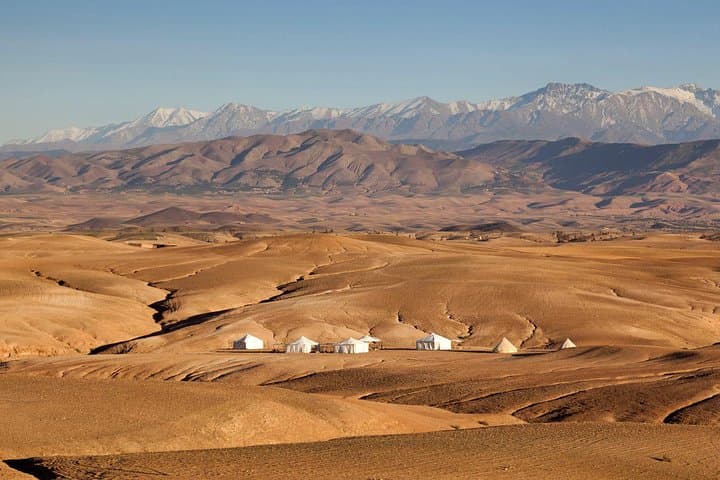
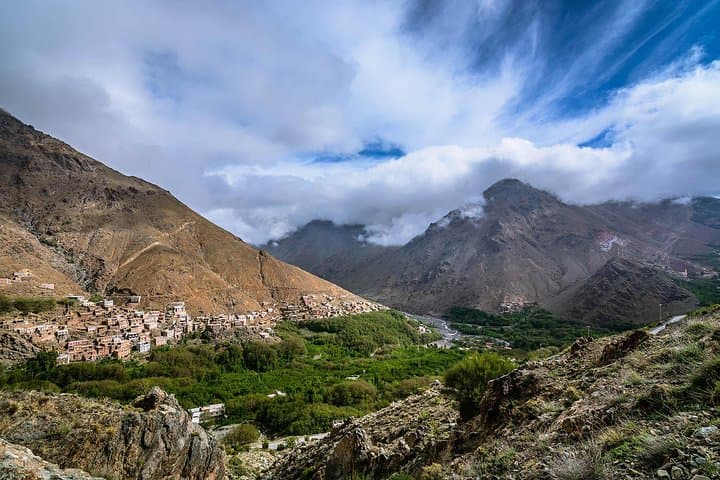
Geology here is raw: a stony, sandstone plateau formed by erosion and ancient riverbeds, with views that point toward snow-capped Jbel Toubkal (4,167 m) on clear days. The people are Amazigh (Berber), their villages built of mud brick and stone that follow age-old trails; agriculture clings to valley bottoms where seasonal water allows olive and almond groves.
Expect short village walks (1–3 km total), a 30-minute camel ride across the Agafay stones, and photo stops at Lalla Takerkoust and panoramic lookouts. Terrain ranges from hard-packed dirt and loose scree to shaded village lanes; elevation change is modest for walkers but the drive crosses several 200–400 m rises.
Practical edge: go early to avoid midday heat, carry a liter of water per person plus sunscreen and a wind layer for sunset, and bring small bills for tea and photos. Respect private homes—ask before photographing. This full-day outing returns to Marrakech in the evening with a clearer sense of how desert plateaus and mountain valleys meet in southern Morocco.
moderate.
8–10 hours.
Suitable for travelers with light to moderate fitness—short walks and a camel ride; mostly vehicle-supported.
The included camel ride is about 30 minutes across the Agafay plain—suitable for beginners, with handlers guiding the animals.
Yes, pickup and return to Marrakech are typically provided; confirm pickup location and time when booking.
Children are welcome but must be accompanied by an adult; camel rides and village terrain require supervision.
Only with explicit permission from the family—offer a polite request and a small tip if accepted.
This corridor links Marrakech to the High Atlas and has long been used by Amazigh (Berber) communities; mud-brick construction reflects centuries of local building practice.
The semi-arid plateau is susceptible to overuse and water scarcity—minimize waste, avoid off-track driving, and support local businesses respectfully.
Tours From Marrakech operates guided outdoor trips and adventures with an emphasis on safety, stewardship, and memorable experiences.
You leave Marrakech behind on a morning road that narrows into ochre tracks, the city noise thinning as the land opens into the Agafay rocky plain. Stones click under the vehicle; a low, wind-swept horizon dares you to look farther. By midmorning you trade asphalt for dirt tracks that climb toward earthen Berber villages, stopping for mint tea in a courtyard where laughter and mules share the shade.
You leave Marrakech behind on a morning road that narrows into ochre tracks, the city noise thinning as the land opens into the Agafay rocky plain. Stones click under the vehicle; a low, wind-swept horizon dares you to look farther. By midmorning you trade asphalt for dirt tracks that climb toward earthen Berber villages, stopping for mint tea in a courtyard where laughter and mules share the shade.
Geology here is raw: a stony, sandstone plateau formed by erosion and ancient riverbeds, with views that point toward snow-capped Jbel Toubkal (4,167 m) on clear days. The people are Amazigh (Berber), their villages built of mud brick and stone that follow age-old trails; agriculture clings to valley bottoms where seasonal water allows olive and almond groves.
Expect short village walks (1–3 km total), a 30-minute camel ride across the Agafay stones, and photo stops at Lalla Takerkoust and panoramic lookouts. Terrain ranges from hard-packed dirt and loose scree to shaded village lanes; elevation change is modest for walkers but the drive crosses several 200–400 m rises.
Practical edge: go early to avoid midday heat, carry a liter of water per person plus sunscreen and a wind layer for sunset, and bring small bills for tea and photos. Respect private homes—ask before photographing. This full-day outing returns to Marrakech in the evening with a clearer sense of how desert plateaus and mountain valleys meet in southern Morocco.