THE ADVENTURE COLLECTIVE® · Independent discovery and booking for outdoor travel

Escape Marrakech for a single day of Berber villages, a shaded waterfall hike, and a camel sunset on the rocky Agafay plateau. This eight-hour loop pairs cultural stops with easy walking and dramatic Atlas views.
Escape Marrakech for a single day of Berber villages, a shaded waterfall hike, and a camel sunset on the rocky Agafay plateau. This eight-hour loop pairs cultural stops with easy walking and dramatic Atlas views.
You leave Marrakech just after breakfast and the city’s ochre walls recede as the road climbs toward the High Atlas. The air thins and cools; villages of sunbaked mud houses punctuate switchbacks while distant Jebel Toubkal rises white-capped against the sky. Midday finds you walking an easy trail to a shaded waterfall, steam of mint tea still warm in the belly after a Berber family lunch. By late afternoon the Agafay’s stony plateaus glow gold and a short camel ride across its rocky expanse frames the sunset over the Atlas.
Verified experiences and guided adventures in the surrounding area.
Operated by Marrakech Outdoor Trips · Marrakech, Marrakech-Safi
You leave Marrakech just after breakfast and the city’s ochre walls recede as the road climbs toward the High Atlas. The air thins and cools; villages of sunbaked mud houses punctuate switchbacks while distant Jebel Toubkal rises white-capped against the sky. Midday finds you walking an easy trail to a shaded waterfall, steam of mint tea still warm in the belly after a Berber family lunch. By late afternoon the Agafay’s stony plateaus glow gold and a short camel ride across its rocky expanse frames the sunset over the Atlas.
Geology here is blunt and immediate: folded limestone and sandstone cut by seasonal wadis, uplifted when Africa met Eurasia. The Atlas has long been a corridor for Berber communities whose terraced fields and stone houses reflect centuries of adapting to steep slopes and scarce water. Cultural stops—tea in a village home, conversation with local guides—offer clear context for the landscape you traverse.
Expect mixed terrain: paved and dirt roads to trailheads, easy 1–3 km walks to small cascades, and flat rocky ground across Agafay where camel paths run. Elevation ranges from Marrakech’s ~470 m to foothill viewpoints around 1,000–1,200 m; trails are not technical but include loose rock and short, steep pitches.
Practical: bring sun protection, 1–2 liters of water, sturdy low-cut hiking shoes, and a light layer for wind at sunset. The full loop is an eight-hour day with hotel pickup and drop-off included—ideal for travelers who want both cultural contact and a compact taste of Morocco’s mountains and desert in one day.
moderate.
8 hours.
Suitable for most people with basic fitness—includes short hikes (1–3 km) and light walking on uneven ground; able-bodied mobility recommended.
The tour is approximately eight hours with pickup from Marrakech around 8:30–9:00 a.m., returning in the early evening (around 5–6 p.m.).
Camel rides are short and generally family-friendly, but not recommended for people with serious back or spinal problems; check with the operator for child seating policies.
Yes—lunch, bottled water, and tea are included; the lunch often takes place in a Berber family home for an authentic local experience.
The walk to the waterfall is an easy-to-moderate hike of 1–3 km over uneven terrain; it's not technical but includes some short steep sections.
Berber communities have inhabited these slopes for millennia; trade and transhumance routes across the Atlas shaped village locations and terraced agriculture.
Water is scarce—respect local practices by minimizing waste and using provided water sparingly; choose operators who support local communities and avoid disturbing wildlife.
Marrakech Outdoor Trips operates guided outdoor trips and adventures with an emphasis on safety, stewardship, and memorable experiences.
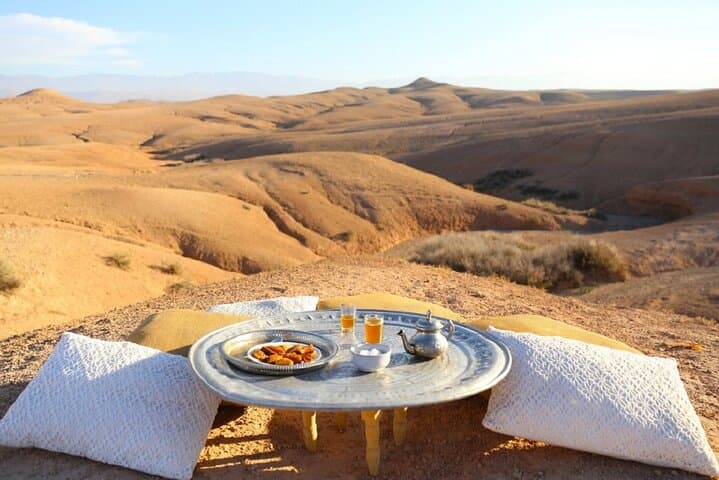

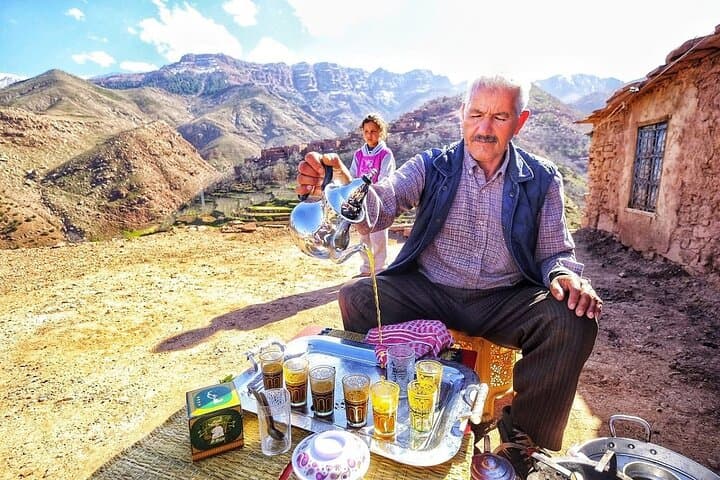
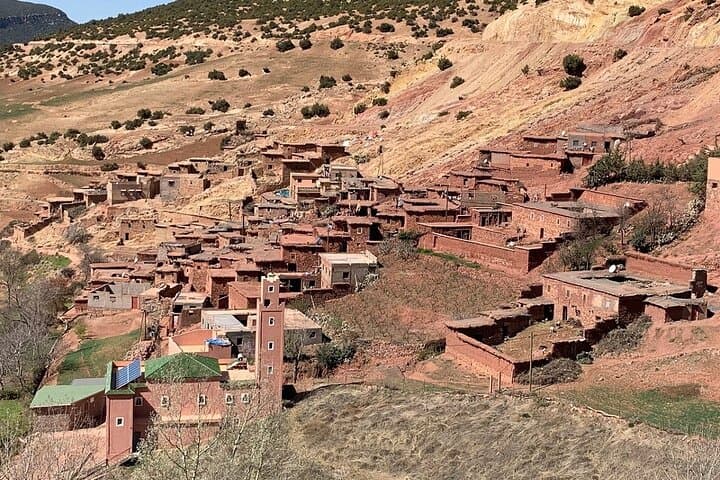
You leave Marrakech just after breakfast and the city’s ochre walls recede as the road climbs toward the High Atlas. The air thins and cools; villages of sunbaked mud houses punctuate switchbacks while distant Jebel Toubkal rises white-capped against the sky. Midday finds you walking an easy trail to a shaded waterfall, steam of mint tea still warm in the belly after a Berber family lunch. By late afternoon the Agafay’s stony plateaus glow gold and a short camel ride across its rocky expanse frames the sunset over the Atlas.
You leave Marrakech just after breakfast and the city’s ochre walls recede as the road climbs toward the High Atlas. The air thins and cools; villages of sunbaked mud houses punctuate switchbacks while distant Jebel Toubkal rises white-capped against the sky. Midday finds you walking an easy trail to a shaded waterfall, steam of mint tea still warm in the belly after a Berber family lunch. By late afternoon the Agafay’s stony plateaus glow gold and a short camel ride across its rocky expanse frames the sunset over the Atlas.
Geology here is blunt and immediate: folded limestone and sandstone cut by seasonal wadis, uplifted when Africa met Eurasia. The Atlas has long been a corridor for Berber communities whose terraced fields and stone houses reflect centuries of adapting to steep slopes and scarce water. Cultural stops—tea in a village home, conversation with local guides—offer clear context for the landscape you traverse.
Expect mixed terrain: paved and dirt roads to trailheads, easy 1–3 km walks to small cascades, and flat rocky ground across Agafay where camel paths run. Elevation ranges from Marrakech’s ~470 m to foothill viewpoints around 1,000–1,200 m; trails are not technical but include loose rock and short, steep pitches.
Practical: bring sun protection, 1–2 liters of water, sturdy low-cut hiking shoes, and a light layer for wind at sunset. The full loop is an eight-hour day with hotel pickup and drop-off included—ideal for travelers who want both cultural contact and a compact taste of Morocco’s mountains and desert in one day.