THE ADVENTURE COLLECTIVE® · Independent discovery and booking for outdoor travel

Drive from Marrakech into the High Atlas and the rocky Agafay plateau on a seven-hour day trip that mixes village walks, a Berber family lunch, Takerkoust Lake views and a desert sunset. Ideal for travelers who want a compact taste of mountain culture and open landscapes.
Drive from Marrakech into the High Atlas and the rocky Agafay plateau on a seven-hour day trip that mixes village walks, a Berber family lunch, Takerkoust Lake views and a desert sunset. Ideal for travelers who want a compact taste of mountain culture and open landscapes.
Morning light spills across Marrakech as a minivan pulls away from the medina, and within an hour the city’s hum is traded for scrubbed earth and low, rugged ridgelines. The route threads past small farms and roadside villages; by mid-morning travelers stand with mint tea in Imlil watching stone houses step up the valley toward the High Atlas.
Verified experiences and guided adventures in the surrounding area.
Operated by Things To Do From Marrakech · Marrakesh, Marrakesh-Safi
Morning light spills across Marrakech as a minivan pulls away from the medina, and within an hour the city’s hum is traded for scrubbed earth and low, rugged ridgelines. The route threads past small farms and roadside villages; by mid-morning travelers stand with mint tea in Imlil watching stone houses step up the valley toward the High Atlas.
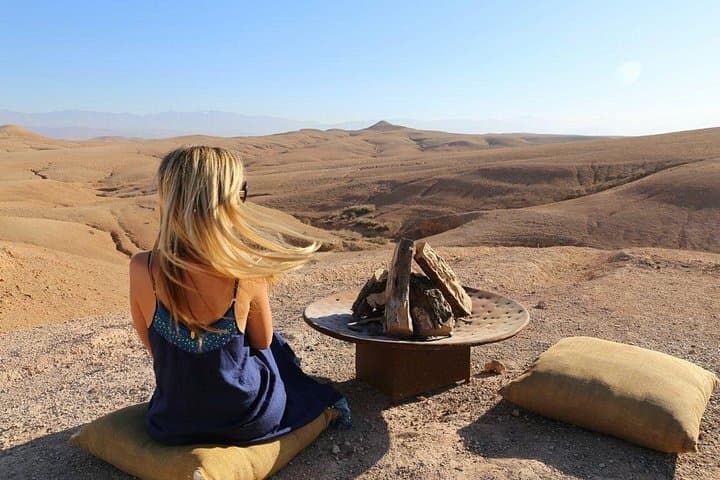
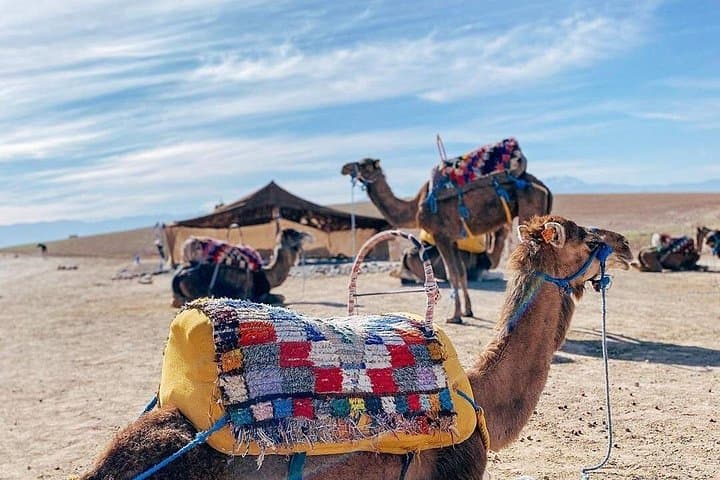
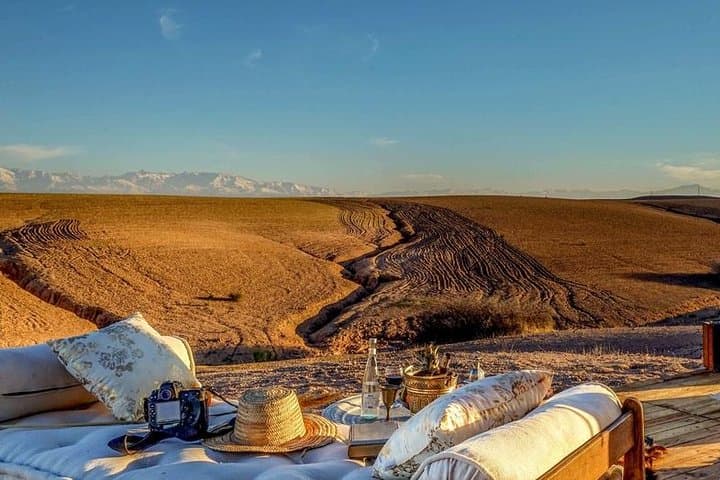
This one-day circuit pairs two distinct landscapes: the irrigated terraces and walnut orchards of the Atlas foothills — shaped for centuries by Berber (Amazigh) farming traditions — and the stony, wind-sculpted plates of the Agafay Desert. Geologically the High Atlas is young folded rock, steep and jagged; Agafay is a rocky plateau of weathered sedimentary layers rather than sand dunes, so views feel wide and raw.
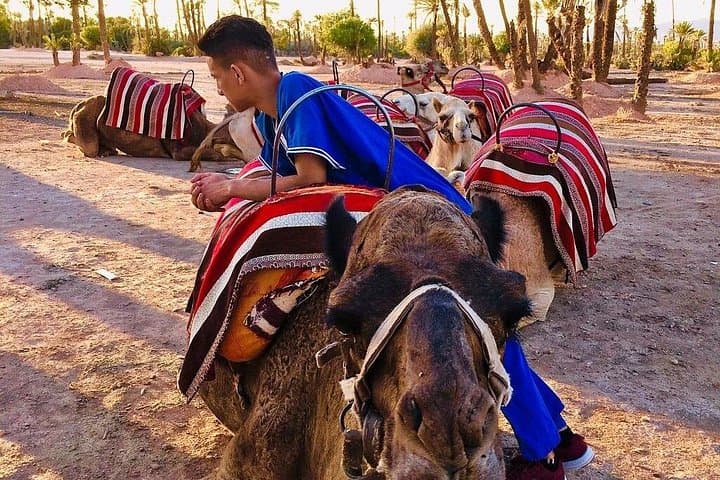
Cultural moments punctuate the drive: a market in Asni on Saturdays, conversation with a Berber family over a shared lunch in Ait Souka, and tea with locals by Takerkoust Lake. Guides explain irrigation channels, agricultural rhythms, and how mountain life adapts to seasonal water.
Practical guidance: the day runs about seven hours with multiple short walks (1–2 hours available in Imlil), pickups from Marrakech at 08:00, and a return by early evening. Wear sun protection and sturdy shoes for uneven village tracks; bring layers for cooler mountain air at higher altitude. Hydrate before and during the trip — bottled water is provided — and keep a flexible camera schedule to catch the plateau’s wide sunset. The itinerary suits travelers of most fitness levels who want a compact, varied introduction to Morocco’s mountains and desert within a single day.
easy.
7 hours.
Suitable for most travelers who can walk 1–2 hours on rough village tracks; not strenuous.
The tour is approximately seven hours and usually starts with pickup from Marrakech around 08:00, returning by early evening.
Yes — lunch with a Berber family and tea are included; bottled water is provided during the day.
Generally yes; the itinerary involves driving and short, easy walks—infant seats are available and the tour is rated suitable for most fitness levels.
No—Agafay is a rocky, stone plateau rather than a sandy desert; its appeal is broad vistas and weathered rock formations rather than dune fields.
The Atlas foothills have long been managed by Amazigh (Berber) communities; terraced agriculture and seasonal markets reflect centuries of mountain life.
Water is scarce seasonally and local communities manage irrigation carefully—stay on paths, minimize waste, and support local guides and families.
Things To Do From Marrakech operates guided outdoor trips and adventures with an emphasis on safety, stewardship, and memorable experiences.
Morning light spills across Marrakech as a minivan pulls away from the medina, and within an hour the city’s hum is traded for scrubbed earth and low, rugged ridgelines. The route threads past small farms and roadside villages; by mid-morning travelers stand with mint tea in Imlil watching stone houses step up the valley toward the High Atlas.
Morning light spills across Marrakech as a minivan pulls away from the medina, and within an hour the city’s hum is traded for scrubbed earth and low, rugged ridgelines. The route threads past small farms and roadside villages; by mid-morning travelers stand with mint tea in Imlil watching stone houses step up the valley toward the High Atlas.
This one-day circuit pairs two distinct landscapes: the irrigated terraces and walnut orchards of the Atlas foothills — shaped for centuries by Berber (Amazigh) farming traditions — and the stony, wind-sculpted plates of the Agafay Desert. Geologically the High Atlas is young folded rock, steep and jagged; Agafay is a rocky plateau of weathered sedimentary layers rather than sand dunes, so views feel wide and raw.
Cultural moments punctuate the drive: a market in Asni on Saturdays, conversation with a Berber family over a shared lunch in Ait Souka, and tea with locals by Takerkoust Lake. Guides explain irrigation channels, agricultural rhythms, and how mountain life adapts to seasonal water.
Practical guidance: the day runs about seven hours with multiple short walks (1–2 hours available in Imlil), pickups from Marrakech at 08:00, and a return by early evening. Wear sun protection and sturdy shoes for uneven village tracks; bring layers for cooler mountain air at higher altitude. Hydrate before and during the trip — bottled water is provided — and keep a flexible camera schedule to catch the plateau’s wide sunset. The itinerary suits travelers of most fitness levels who want a compact, varied introduction to Morocco’s mountains and desert within a single day.