THE ADVENTURE COLLECTIVE® · Independent discovery and booking for outdoor travel

Head out of Marrakech for a 6–7 hour loop through the stony Agafay Desert and up into the Atlas Mountains. Expect camel rides on a rocky plateau, panoramic views from Kik Plateau, and a homemade Berber lunch in Imlil Valley.
Head out of Marrakech for a 6–7 hour loop through the stony Agafay Desert and up into the Atlas Mountains. Expect camel rides on a rocky plateau, panoramic views from Kik Plateau, and a homemade Berber lunch in Imlil Valley.
You leave Marrakech as the city’s ochre walls shrink into the rearview, and the road loosens its grip. Off the tarmac the landscape changes quickly: a stony, earthen plateau opens — the Agafay Desert — where wind-buffed sandstone and dry riverbeds dare you to slow your pace. Camels pace the horizon and a steaming glass of mint tea waits at a low Berber house, fragrant and plain at once.
Verified experiences and guided adventures in the surrounding area.
Operated by Berber Adventure Day Tours · Marrakech, Marrakech-Safi
You leave Marrakech as the city’s ochre walls shrink into the rearview, and the road loosens its grip. Off the tarmac the landscape changes quickly: a stony, earthen plateau opens — the Agafay Desert — where wind-buffed sandstone and dry riverbeds dare you to slow your pace. Camels pace the horizon and a steaming glass of mint tea waits at a low Berber house, fragrant and plain at once.
Geology here is not Sahara sand but compacted sandstone and gravel plateaux cut by seasonal wadis. The drive climbs toward the Atlas: Kik Plateau at about 1,800 meters delivers 360-degree perspectives and, in spring, carpets of alpine flowers. Higher still you cross over 2,000 meters with long views to Mount Toubkal (4,167 m), often rimmed with snow late into spring.
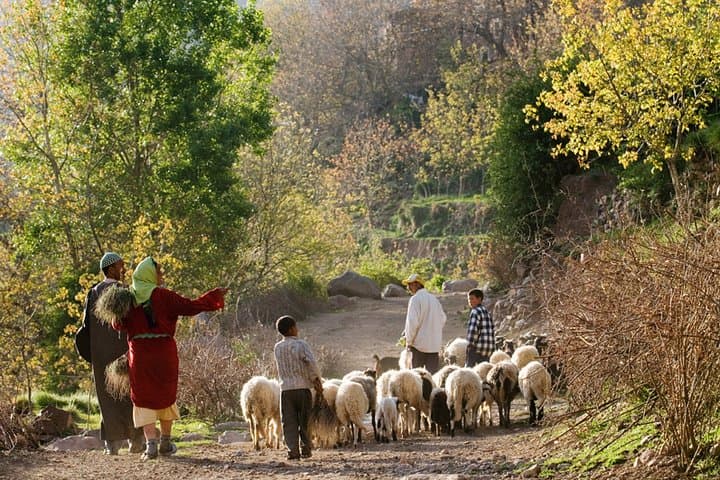
Culturally the route threads Berber villages and weekly souks — Asni’s market hums with fruit, wool, and livestock trade, reflecting centuries of mountain agriculture and transhumant routes. Lunch in Imlil Valley is homemade: tagine, couscous, orchard fruit — the kind of food that tells where it came from.
Practical side: this is a full 6–7 hour day trip from Marrakech with limited walking required but some uneven terrain during off-road stops and a short camel trek. Sun protection, layered clothing for sharp temperature swings, and cash for markets make the day smoother. Expect comfortable transport, a local guide, and an opportunity to step from city bustle into the dry, vivid quiet of Morocco’s near-desert and mountain edges.
moderate.
6–7 hours.
Suitable for most people who can handle short walks on uneven ground and brief camel rides; not strenuous but expect altitude-related temperature changes.
The excursion is approximately 6–7 hours and normally includes pickup and drop-off from Marrakech; confirm your pickup point when booking.
Yes; the camel portion is a short, guided ride on gentle terrain suitable for first-timers, with basic safety briefing provided.
Yes — bottled water and a homemade Berber lunch are included; bring small change for extra refreshments or market purchases.
On clear days you can see Mount Toubkal from higher passes and plateaux along the route; winter and spring provide the best snow-capped views.
The route follows historic Berber tracks linking highland pastures and valley orchards; many villages still practice seasonal agriculture passed down generations.
Water is scarce; avoid single-use plastics, stay on established tracks, and support local guides and homestays that invest in community-led conservation.
Berber Adventure Day Tours operates guided outdoor trips and adventures with an emphasis on safety, stewardship, and memorable experiences.
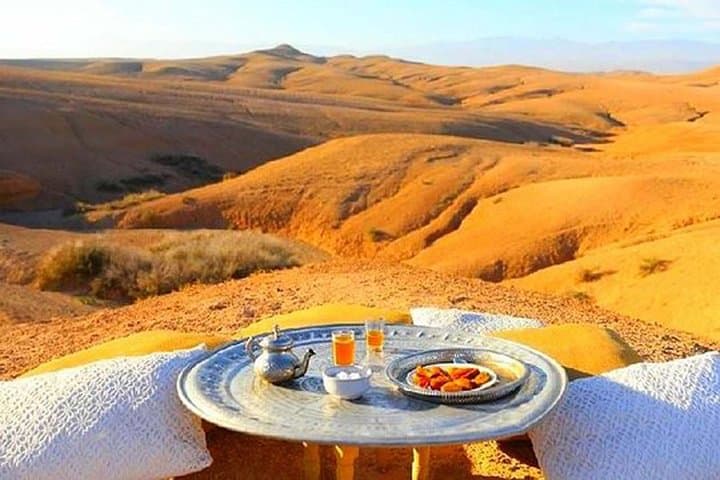
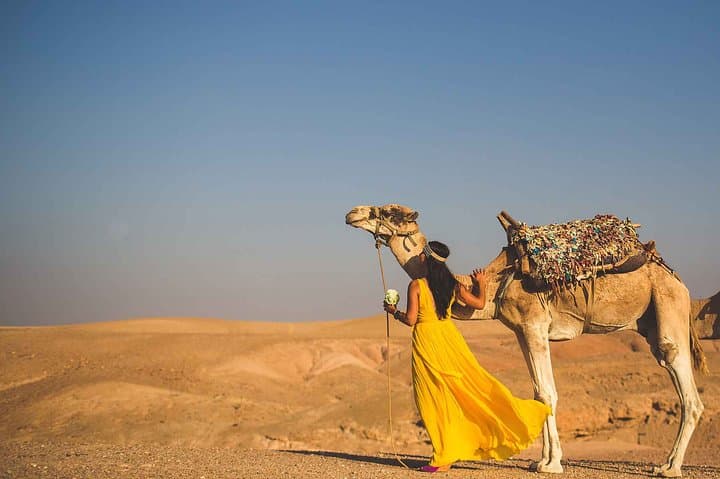
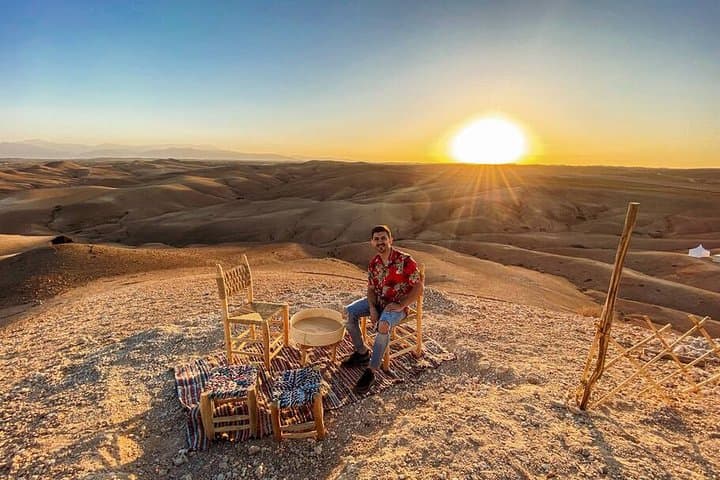
You leave Marrakech as the city’s ochre walls shrink into the rearview, and the road loosens its grip. Off the tarmac the landscape changes quickly: a stony, earthen plateau opens — the Agafay Desert — where wind-buffed sandstone and dry riverbeds dare you to slow your pace. Camels pace the horizon and a steaming glass of mint tea waits at a low Berber house, fragrant and plain at once.
You leave Marrakech as the city’s ochre walls shrink into the rearview, and the road loosens its grip. Off the tarmac the landscape changes quickly: a stony, earthen plateau opens — the Agafay Desert — where wind-buffed sandstone and dry riverbeds dare you to slow your pace. Camels pace the horizon and a steaming glass of mint tea waits at a low Berber house, fragrant and plain at once.
Geology here is not Sahara sand but compacted sandstone and gravel plateaux cut by seasonal wadis. The drive climbs toward the Atlas: Kik Plateau at about 1,800 meters delivers 360-degree perspectives and, in spring, carpets of alpine flowers. Higher still you cross over 2,000 meters with long views to Mount Toubkal (4,167 m), often rimmed with snow late into spring.
Culturally the route threads Berber villages and weekly souks — Asni’s market hums with fruit, wool, and livestock trade, reflecting centuries of mountain agriculture and transhumant routes. Lunch in Imlil Valley is homemade: tagine, couscous, orchard fruit — the kind of food that tells where it came from.
Practical side: this is a full 6–7 hour day trip from Marrakech with limited walking required but some uneven terrain during off-road stops and a short camel trek. Sun protection, layered clothing for sharp temperature swings, and cash for markets make the day smoother. Expect comfortable transport, a local guide, and an opportunity to step from city bustle into the dry, vivid quiet of Morocco’s near-desert and mountain edges.