THE ADVENTURE COLLECTIVE® · Independent discovery and booking for outdoor travel

Move from Marrakech into the stony Agafay Desert and the high valleys of the Atlas on an eight-hour day trip that blends a camel ride, a guided walk to Aremd village, and a traditional tagine lunch. Expect desert plains, mountain views of Jbel Toubkal, and authentic Berber hospitality.
Move from Marrakech into the stony Agafay Desert and the high valleys of the Atlas on an eight-hour day trip that blends a camel ride, a guided walk to Aremd village, and a traditional tagine lunch. Expect desert plains, mountain views of Jbel Toubkal, and authentic Berber hospitality.
The sun leans low over the stony Agafay plains as a caravan of camels and a line of vehicles push away from Marrakech—dust rising, the Atlas ridge cutting a cold blue silhouette to the south. Travelers move from city chaos into an open, hilly expanse where wind-carved rock and short scrub replace dunes; ahead, winter-white caps on Jbel Toubkal frame the horizon.
Verified experiences and guided adventures in the surrounding area.
Operated by Toubkal Guide · Marrakech, Marrakech-Safi
The sun leans low over the stony Agafay plains as a caravan of camels and a line of vehicles push away from Marrakech—dust rising, the Atlas ridge cutting a cold blue silhouette to the south. Travelers move from city chaos into an open, hilly expanse where wind-carved rock and short scrub replace dunes; ahead, winter-white caps on Jbel Toubkal frame the horizon.
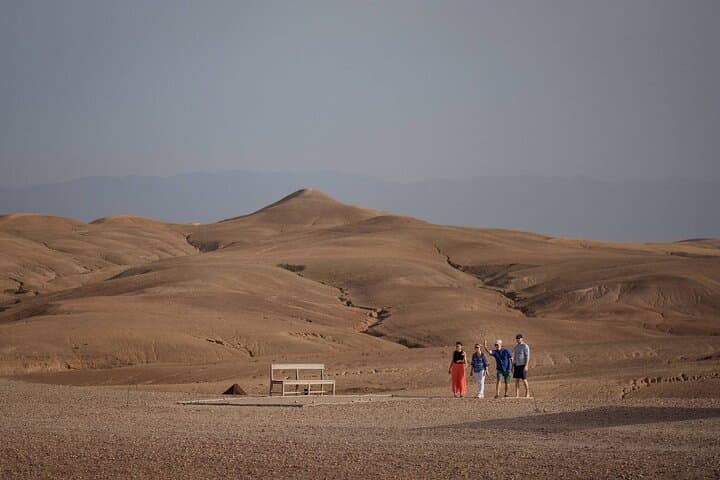
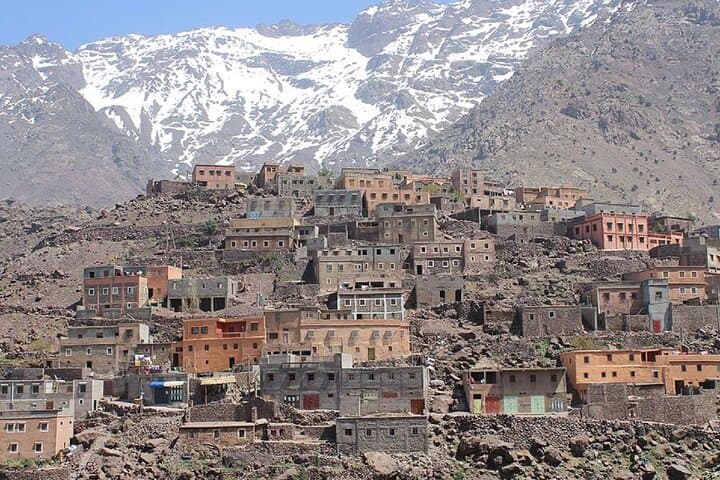
Geology here is hard and ancient: Agafay is a rocky desert of limestone and scree formed by uplift and erosion, a different experience than Sahara sand. The itinerary pairs that raw landscape with a high-valley walk in Imlil to Aremd (about 1–1.5 hours uphill to roughly 1,900 m), where traditional Berber villages and terraced fields give a quick cultural primer on mountain life. Lunch at a guesthouse overlooks the Mizane Valley; local tagine and mint tea anchor the meal.
Expect short, varied terrain—rocky plains for the camel section, steady village paths and stepped trails in the High Atlas. In winter the Toubkal massif often wears snow; in summer the plain bakes midafternoon. Guides provide context on Berber history, seasonal farming, and the environmental fragility of these slopes.
Practical tips: this is an eight-hour excursion with hotel pickup and drop-off, moderate walking at altitude, and short camel segments. Wear closed, grippy shoes for the rocky ground, layer for wind and temperature swings, bring 1–2 liters of water, and carry local currency for tips or small purchases. Plan the trip late afternoon for cooler temps and the most dramatic light as the desert dares you toward nightfall.
moderate.
8 hours.
Should be comfortable walking 1–2 hours on uneven terrain and handling brief altitude gain to ~1,900 m
Yes—short camel rides across the Agafay plains are part of the standard day-trip itinerary.
Expect about 1–1.5 hours of uphill walking to Aremd and a 30-minute return walk in Imlil; terrain is uneven but suitable for most people of average fitness.
In winter months the Toubkal massif often carries snow, offering clear, snowy views; summer rarely has snow but still gives expansive mountain vistas.
The operator notes the trip is suitable for all fitness levels and offers infant seats for vehicle transfers, but parents should consider camel comfort and walking lengths for young children.
The High Atlas villages are predominantly Amazigh (Berber), with livelihoods historically tied to seasonal herding and terraced agriculture; local guesthouses often continue these traditions.
The Agafay plains and Atlas slopes are ecologically fragile—minimize waste, avoid off-trail driving, and support local guides and family-run guesthouses to aid sustainable tourism.
Toubkal Guide operates guided outdoor trips and adventures with an emphasis on safety, stewardship, and memorable experiences.
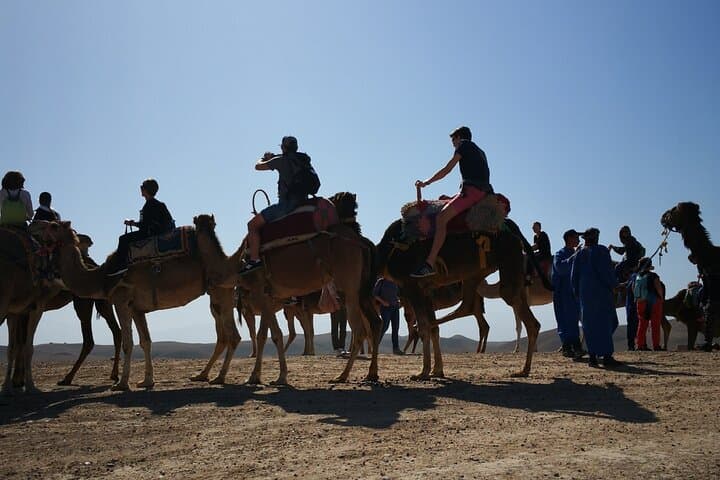
The sun leans low over the stony Agafay plains as a caravan of camels and a line of vehicles push away from Marrakech—dust rising, the Atlas ridge cutting a cold blue silhouette to the south. Travelers move from city chaos into an open, hilly expanse where wind-carved rock and short scrub replace dunes; ahead, winter-white caps on Jbel Toubkal frame the horizon.
The sun leans low over the stony Agafay plains as a caravan of camels and a line of vehicles push away from Marrakech—dust rising, the Atlas ridge cutting a cold blue silhouette to the south. Travelers move from city chaos into an open, hilly expanse where wind-carved rock and short scrub replace dunes; ahead, winter-white caps on Jbel Toubkal frame the horizon.
Geology here is hard and ancient: Agafay is a rocky desert of limestone and scree formed by uplift and erosion, a different experience than Sahara sand. The itinerary pairs that raw landscape with a high-valley walk in Imlil to Aremd (about 1–1.5 hours uphill to roughly 1,900 m), where traditional Berber villages and terraced fields give a quick cultural primer on mountain life. Lunch at a guesthouse overlooks the Mizane Valley; local tagine and mint tea anchor the meal.
Expect short, varied terrain—rocky plains for the camel section, steady village paths and stepped trails in the High Atlas. In winter the Toubkal massif often wears snow; in summer the plain bakes midafternoon. Guides provide context on Berber history, seasonal farming, and the environmental fragility of these slopes.
Practical tips: this is an eight-hour excursion with hotel pickup and drop-off, moderate walking at altitude, and short camel segments. Wear closed, grippy shoes for the rocky ground, layer for wind and temperature swings, bring 1–2 liters of water, and carry local currency for tips or small purchases. Plan the trip late afternoon for cooler temps and the most dramatic light as the desert dares you toward nightfall.