THE ADVENTURE COLLECTIVE® · Independent discovery and booking for outdoor travel

A compact full-day loop from Marrakech that pairs the rocky Agafay Desert’s stark panoramas with the verdant canals and Berber villages of the Ourika Valley. Expect light walks, a 20-minute camel ride, mint tea in a tent, and steady mountain views.
A compact full-day loop from Marrakech that pairs the rocky Agafay Desert’s stark panoramas with the verdant canals and Berber villages of the Ourika Valley. Expect light walks, a 20-minute camel ride, mint tea in a tent, and steady mountain views.
Morning light strips across the plain as the minivan leaves Marrakech and the city noise thins. You arrive first at the Agafay—a stony, ochre expanse that feels like a sea of baked rock rather than rolling dunes—where camels wait and the desert wind seems to push you forward.
Verified experiences and guided adventures in the surrounding area.
Operated by Marrakech Sweet Travel · Marrakech, Marrakesh-Safi
Morning light strips across the plain as the minivan leaves Marrakech and the city noise thins. You arrive first at the Agafay—a stony, ochre expanse that feels like a sea of baked rock rather than rolling dunes—where camels wait and the desert wind seems to push you forward.
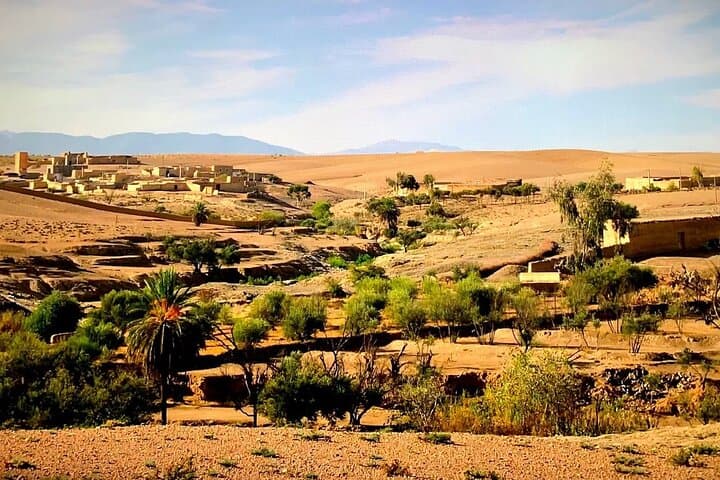
From rocky plains to the green incision of the Ourika Valley, the day traces Morocco’s dramatic transitions. Geologically the Atlas foothills fold from volcanic and sedimentary layers, guiding streams down steep channels to irrigate terraced fields. Culturally the route threads past Berber villages where mint tea is offered in low-slung tents and local craftwork hangs on wire lines. History here is practical and lived: mountain passes that once linked trade routes now host mule tracks and family orchards.
Expect short guided walks in the Ourika foothills, a 20-minute camel ride on hardpan at Agafay, and windows full of ragged peaks and cultivated valley slopes. Terrain ranges from vehicle tracks and packed rock in the desert to dirt paths and stone steps in the valley; wear sturdy shoes and be ready for sun and sudden gusts.
Practical tips: start early to avoid midday heat, carry 1–2 liters of water, and keep a lightweight layer for higher-elevation breezes. The trip is accessible for most people but includes unpaved walking and brief elevation changes. Photographers will find bold contrasts—golden rock against irrigated green—while anyone wanting a compact Atlas experience will appreciate the mix of desert quiet, mountain views, and a window into Berber village life.
easy.
7–8 hours.
Suitable for most fitness levels; requires standing and short, uneven walks but no sustained climbs
The camel ride at Agafay is approximately 20 minutes and runs on relatively flat, rocky terrain suitable for first-time riders.
Yes—children can join but may need to share camel seating arrangements and should be supervised during village walks; infant seats are available in the vehicle.
Bring small bills for village purchases, tips for guides, and any extra snacks or drinks—cards may not be accepted in small mountain shops.
Yes; the operator requests dietary requirements at booking and typically provides vegetarian options when advised.
The Ourika Valley has long been home to Berber communities whose irrigation terraces and adobe villages trace centuries of mountain agriculture and trade route connections to Marrakech.
Visitors should stick to marked paths, avoid disturbing irrigation channels, and support local businesses to keep tourism benefits in village economies.
Marrakech Sweet Travel operates guided outdoor trips and adventures with an emphasis on safety, stewardship, and memorable experiences.
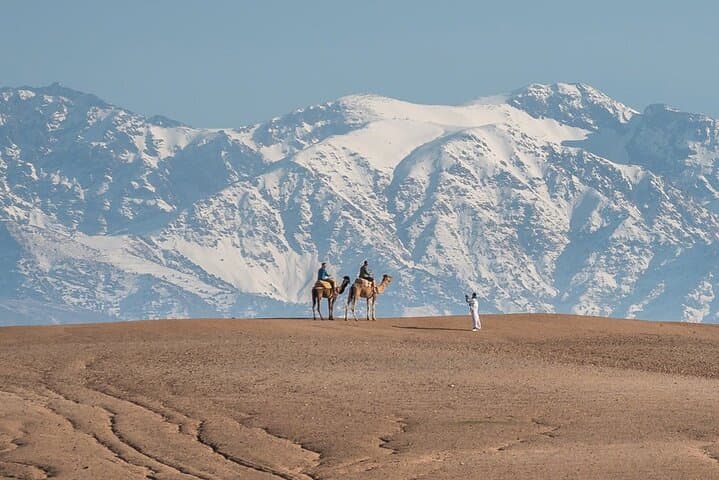
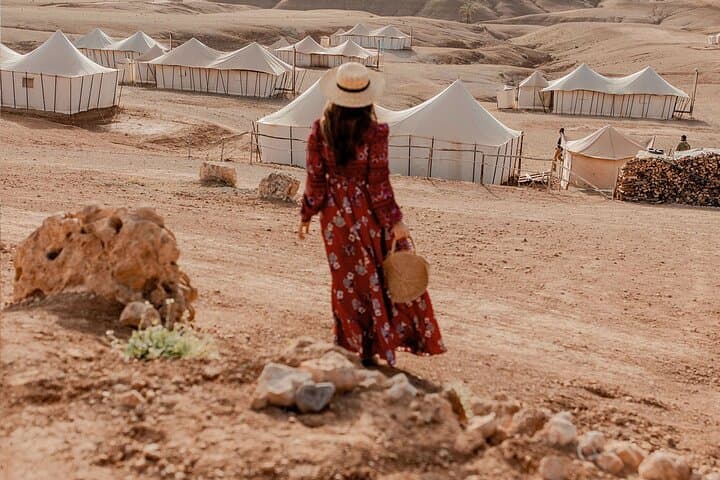
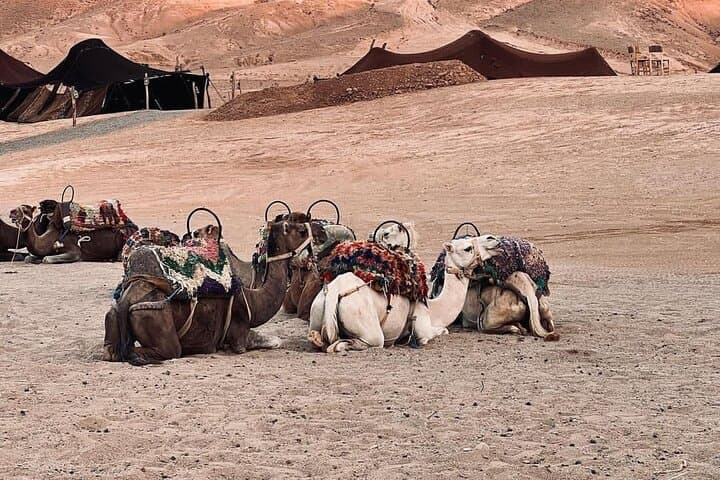
Morning light strips across the plain as the minivan leaves Marrakech and the city noise thins. You arrive first at the Agafay—a stony, ochre expanse that feels like a sea of baked rock rather than rolling dunes—where camels wait and the desert wind seems to push you forward.
Morning light strips across the plain as the minivan leaves Marrakech and the city noise thins. You arrive first at the Agafay—a stony, ochre expanse that feels like a sea of baked rock rather than rolling dunes—where camels wait and the desert wind seems to push you forward.
From rocky plains to the green incision of the Ourika Valley, the day traces Morocco’s dramatic transitions. Geologically the Atlas foothills fold from volcanic and sedimentary layers, guiding streams down steep channels to irrigate terraced fields. Culturally the route threads past Berber villages where mint tea is offered in low-slung tents and local craftwork hangs on wire lines. History here is practical and lived: mountain passes that once linked trade routes now host mule tracks and family orchards.
Expect short guided walks in the Ourika foothills, a 20-minute camel ride on hardpan at Agafay, and windows full of ragged peaks and cultivated valley slopes. Terrain ranges from vehicle tracks and packed rock in the desert to dirt paths and stone steps in the valley; wear sturdy shoes and be ready for sun and sudden gusts.
Practical tips: start early to avoid midday heat, carry 1–2 liters of water, and keep a lightweight layer for higher-elevation breezes. The trip is accessible for most people but includes unpaved walking and brief elevation changes. Photographers will find bold contrasts—golden rock against irrigated green—while anyone wanting a compact Atlas experience will appreciate the mix of desert quiet, mountain views, and a window into Berber village life.