THE ADVENTURE COLLECTIVE® · Independent discovery and booking for outdoor travel

Combine a morning in the High Atlas near Imlil with an afternoon in the stony Agafay Desert on a single, full-day excursion from Marrakech. Expect short mountain hikes, Berber hospitality, and desert activities like camel rides or quad biking.
Combine a morning in the High Atlas near Imlil with an afternoon in the stony Agafay Desert on a single, full-day excursion from Marrakech. Expect short mountain hikes, Berber hospitality, and desert activities like camel rides or quad biking.
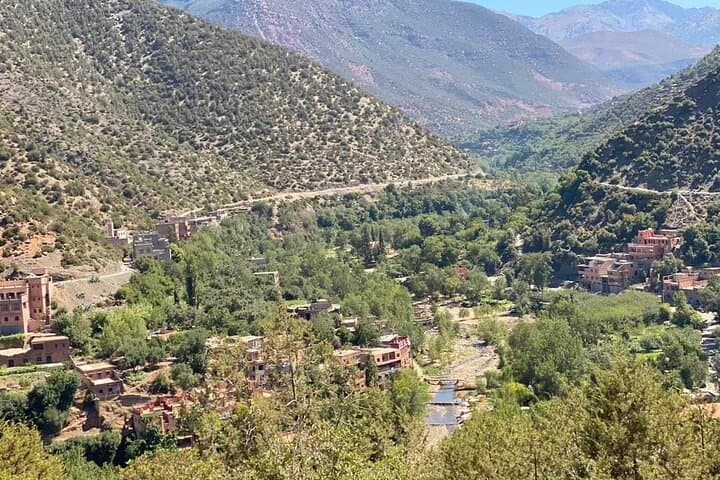
You leave Marrakech behind as the city’s ochre walls shrink and the road tilts toward stone and scrub. By midmorning the Atlas rises: terraces and needle-like ridgelines frame the car window, and the air cools as you climb into the Berber villages above Imlil. A local guide meets you there; paths lead through fields and mule tracks that have carried people and trade for centuries, while the High Atlas itself—a young, rugged range of folded schist and granite—keeps its weather quick and honest.
Verified experiences and guided adventures in the surrounding area.
Operated by Morocco Imperial Tours · Marrakech, Marrakech-Safi
You leave Marrakech behind as the city’s ochre walls shrink and the road tilts toward stone and scrub. By midmorning the Atlas rises: terraces and needle-like ridgelines frame the car window, and the air cools as you climb into the Berber villages above Imlil. A local guide meets you there; paths lead through fields and mule tracks that have carried people and trade for centuries, while the High Atlas itself—a young, rugged range of folded schist and granite—keeps its weather quick and honest.
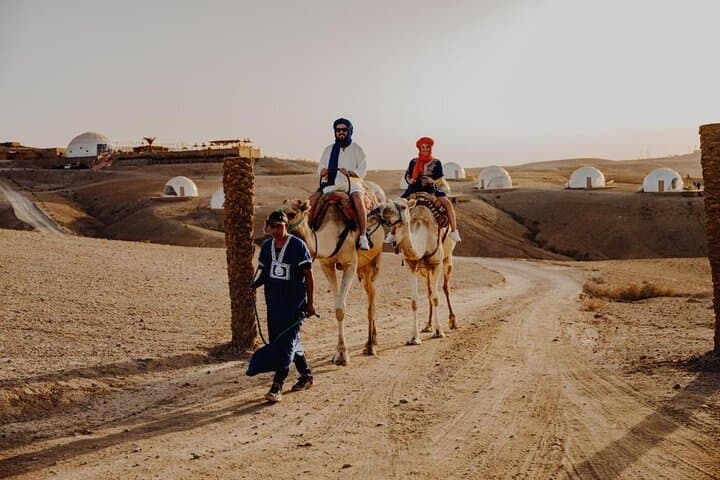
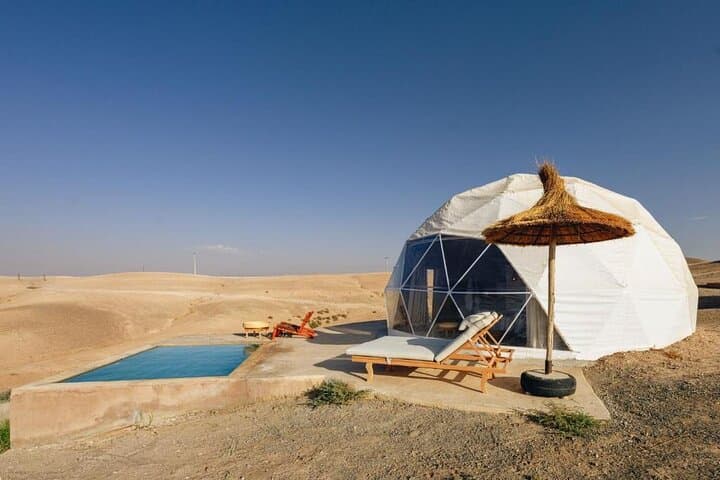
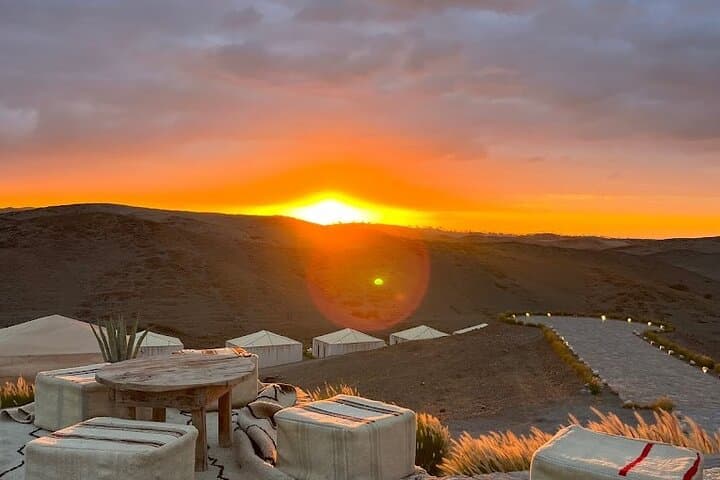
The day stitches two landscapes together: mountain culture and arid plateaus. In Imlil you get a close read on Amazigh daily life, simple mountain farms, and views toward Jebel Toubkal where snow stays most winters. Later you descend toward the Agafay stone desert outside Marrakech, a stony plain of weathered rock and grasses where camels pace and quad bikes kick up dust under a wide sky. This is less a sea of sand than a lunar, wind-sculpted mosaic that makes for strong light at sunset and clear stars after dark.
Practical guidance: expect a full 5–8 hour day with some short hikes on uneven, sometimes loose terrain—sturdy shoes and layered clothing are musts. Hydrate early, carry cash for local purchases, and discuss any mobility or dietary needs at booking. If you plan to ride ATVs or camels, confirm age and safety rules ahead of time. Time your trip for morning mountain air and late-afternoon desert light if you want the best photos and comfortable temps.
moderate.
5–8 hours.
Moderate fitness: able to walk 1–3 miles on uneven ground and handle short elevation changes.
Yes—hotel pickup and drop-off in Marrakech are included; confirm your pickup point when booking.
Activities at Agafay like camel rides or quad biking are available on the tour; confirm availability and any age or weight limits when you book.
Yes—families often join, but children should be supervised during activities and adhere to operator safety rules.
Imlil sits around 1,600–1,800 m; most people acclimatize fine on a day trip, but anyone with cardiovascular concerns should consult a doctor first.
The High Atlas is home to Amazigh (Berber) communities whose agricultural terraces and transhumance routes go back centuries; the region served as a crossroads between mountain and lowland life.
Choose operators that limit ATV use to designated tracks and follow leave-no-trace practices—stone deserts and mountain soils recover slowly from erosion and excessive vehicle traffic.
Morocco Imperial Tours operates guided outdoor trips and adventures with an emphasis on safety, stewardship, and memorable experiences.
You leave Marrakech behind as the city’s ochre walls shrink and the road tilts toward stone and scrub. By midmorning the Atlas rises: terraces and needle-like ridgelines frame the car window, and the air cools as you climb into the Berber villages above Imlil. A local guide meets you there; paths lead through fields and mule tracks that have carried people and trade for centuries, while the High Atlas itself—a young, rugged range of folded schist and granite—keeps its weather quick and honest.
You leave Marrakech behind as the city’s ochre walls shrink and the road tilts toward stone and scrub. By midmorning the Atlas rises: terraces and needle-like ridgelines frame the car window, and the air cools as you climb into the Berber villages above Imlil. A local guide meets you there; paths lead through fields and mule tracks that have carried people and trade for centuries, while the High Atlas itself—a young, rugged range of folded schist and granite—keeps its weather quick and honest.
The day stitches two landscapes together: mountain culture and arid plateaus. In Imlil you get a close read on Amazigh daily life, simple mountain farms, and views toward Jebel Toubkal where snow stays most winters. Later you descend toward the Agafay stone desert outside Marrakech, a stony plain of weathered rock and grasses where camels pace and quad bikes kick up dust under a wide sky. This is less a sea of sand than a lunar, wind-sculpted mosaic that makes for strong light at sunset and clear stars after dark.
Practical guidance: expect a full 5–8 hour day with some short hikes on uneven, sometimes loose terrain—sturdy shoes and layered clothing are musts. Hydrate early, carry cash for local purchases, and discuss any mobility or dietary needs at booking. If you plan to ride ATVs or camels, confirm age and safety rules ahead of time. Time your trip for morning mountain air and late-afternoon desert light if you want the best photos and comfortable temps.