THE ADVENTURE COLLECTIVE® · Independent discovery and booking for outdoor travel

Trade Marrakech’s medina for stony dunes, eucalyptus-scented roads and a rooftop Berber lunch. This full-day tour mixes a gentle camel ride on the Agafay, village walks on the Kik Plateau, and mint tea by Lalla Takerkoust.
Trade Marrakech’s medina for stony dunes, eucalyptus-scented roads and a rooftop Berber lunch. This full-day tour mixes a gentle camel ride on the Agafay, village walks on the Kik Plateau, and mint tea by Lalla Takerkoust.
You leave Marrakech’s ochre walls before dawn and the road peels open into low, arid hills; eucalyptus lines blur past and the skyline opens to the jagged silhouette of the High Atlas.
Verified experiences and guided adventures in the surrounding area.
Operated by Marrakech Tours · Marrakech, Marrakech-Safi
You leave Marrakech’s ochre walls before dawn and the road peels open into low, arid hills; eucalyptus lines blur past and the skyline opens to the jagged silhouette of the High Atlas.
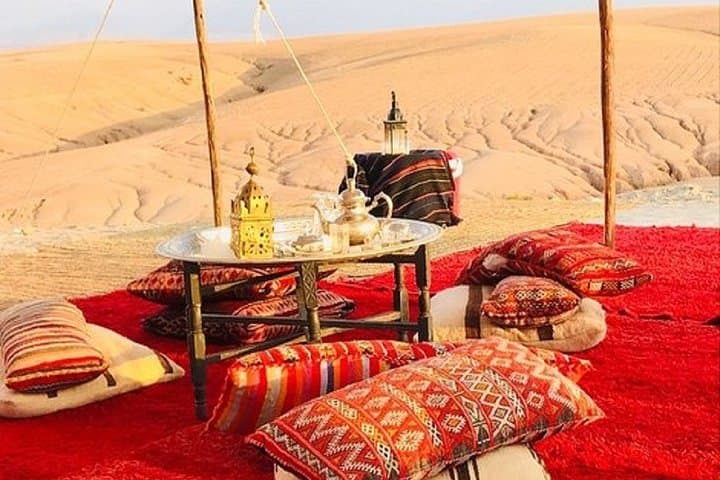
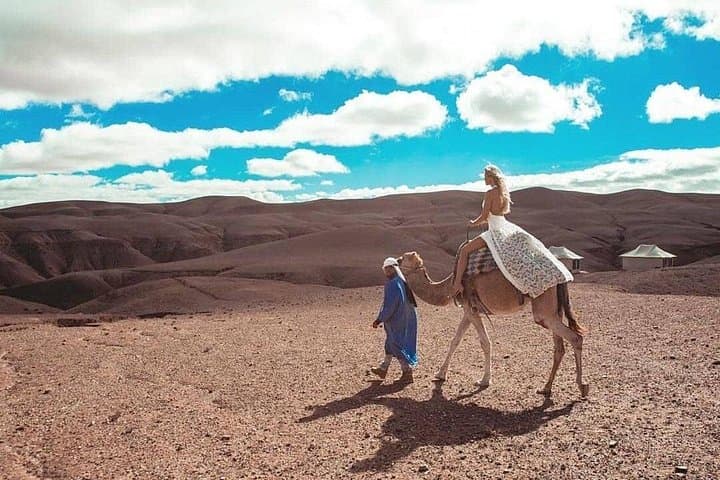
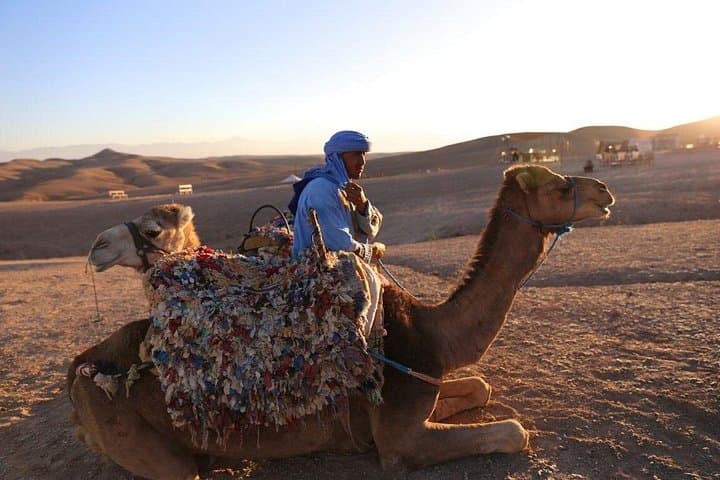
The route climbs onto the Kik Plateau where wind-sculpted rock and stony dunes of the Agafay desert roll toward snow-capped peaks. A half-hour camel stroll across the rocky dunes offers a slow, steady rhythm—camels seeming indifferent to the view—before you descend into scattered Berber hamlets and irrigated fields that contrast sharply with the desert’s bones.
This landscape sits at the cultural crossroads of Marrakech and Toubkal National Park: Berber villages trace centuries-old routes, and the plateaus are basaltic and sedimentary terraces carved by seasonal runoff. The family lunch—served on a rooftop with mint tea—gives a practical window into local hospitality, traditional tagines and the weekly markets of Asni or Tahanaout where villagers trade produce and livestock.
Plan for sun and dust: morning light is best for photos and cooler for walking; afternoons heat quickly. Footwear should handle dusty tracks and uneven village lanes. Bring a refillable water bottle, sunscreen and a lightweight layer for higher-elevation breezes. Market days are Tuesdays and Saturdays—ideal if you want a busier, more authentic experience.
This is a full-day, accessible outing that pairs easy cultural walking with simple desert travel—no technical skill required, but good timing and basic sun safety make the visit comfortable and respectful to the communities you pass through.
moderate.
6–7 hours.
Suitable for most fitness levels; involves short walks and a half-hour camel ride—able-bodied travelers should be fine.
Most tours pick up and drop off in central Marrakech; confirm your pickup point when booking and expect hotel pickup early in the morning.
The camel ride is a supervised, gentle 30-minute experience suitable for most ages; children should be accompanied and follow guides’ safety instructions.
Yes—this tour includes a rooftop Berber family lunch plus coffee/tea and bottled water as listed in the inclusions.
Yes—on Tuesdays and Saturdays the itinerary typically includes a stop at Asni or Tahanaout market; confirm the exact schedule when you book.
The Kik Plateau and nearby valleys have long been inhabited by Amazigh (Berber) communities whose seasonal trade routes link the mountains and Marrakech; traditional agriculture remains visible in terraced fields.
Water is precious here—support local families and guides, avoid single-use plastics when possible, and stay on established tracks to limit erosion.
Marrakech Tours operates guided outdoor trips and adventures with an emphasis on safety, stewardship, and memorable experiences.
You leave Marrakech’s ochre walls before dawn and the road peels open into low, arid hills; eucalyptus lines blur past and the skyline opens to the jagged silhouette of the High Atlas.
You leave Marrakech’s ochre walls before dawn and the road peels open into low, arid hills; eucalyptus lines blur past and the skyline opens to the jagged silhouette of the High Atlas.
The route climbs onto the Kik Plateau where wind-sculpted rock and stony dunes of the Agafay desert roll toward snow-capped peaks. A half-hour camel stroll across the rocky dunes offers a slow, steady rhythm—camels seeming indifferent to the view—before you descend into scattered Berber hamlets and irrigated fields that contrast sharply with the desert’s bones.
This landscape sits at the cultural crossroads of Marrakech and Toubkal National Park: Berber villages trace centuries-old routes, and the plateaus are basaltic and sedimentary terraces carved by seasonal runoff. The family lunch—served on a rooftop with mint tea—gives a practical window into local hospitality, traditional tagines and the weekly markets of Asni or Tahanaout where villagers trade produce and livestock.
Plan for sun and dust: morning light is best for photos and cooler for walking; afternoons heat quickly. Footwear should handle dusty tracks and uneven village lanes. Bring a refillable water bottle, sunscreen and a lightweight layer for higher-elevation breezes. Market days are Tuesdays and Saturdays—ideal if you want a busier, more authentic experience.
This is a full-day, accessible outing that pairs easy cultural walking with simple desert travel—no technical skill required, but good timing and basic sun safety make the visit comfortable and respectful to the communities you pass through.