THE ADVENTURE COLLECTIVE® · Independent discovery and booking for outdoor travel

Spend a day outside Marrakech exploring the rocky Agafay Desert by camel, then drive into the High Atlas for guided village walks, waterfalls, and a visit to an argan women’s cooperative. This full-day private tour blends nature, culture, and short hikes.
Spend a day outside Marrakech exploring the rocky Agafay Desert by camel, then drive into the High Atlas for guided village walks, waterfalls, and a visit to an argan women’s cooperative. This full-day private tour blends nature, culture, and short hikes.
Morning light strips across low, rocky dunes as your driver pulls away from Marrakech — the citys bustle shrinking behind you and a wide, stony plain unfolding. The Agafay Desert doesn't have Sahara sand; it has a moonscape of shattered rock and low scrub that pushes you toward quiet. A camel clip-clops across the plain, and the slow forward rhythm makes the landscape feel larger, sharper.
Verified experiences and guided adventures in the surrounding area.
Operated by Morocco Sahara Desert Travel · Marrakech, Marrakech-Safi
Morning light strips across low, rocky dunes as your driver pulls away from Marrakech — the citys bustle shrinking behind you and a wide, stony plain unfolding. The Agafay Desert doesn't have Sahara sand; it has a moonscape of shattered rock and low scrub that pushes you toward quiet. A camel clip-clops across the plain, and the slow forward rhythm makes the landscape feel larger, sharper.
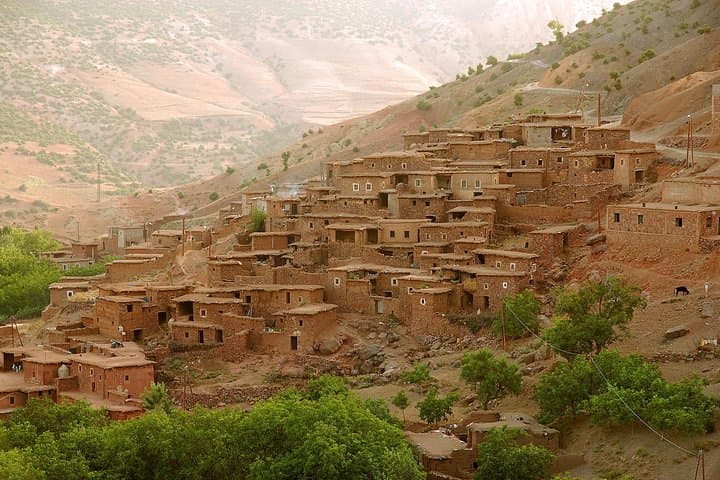
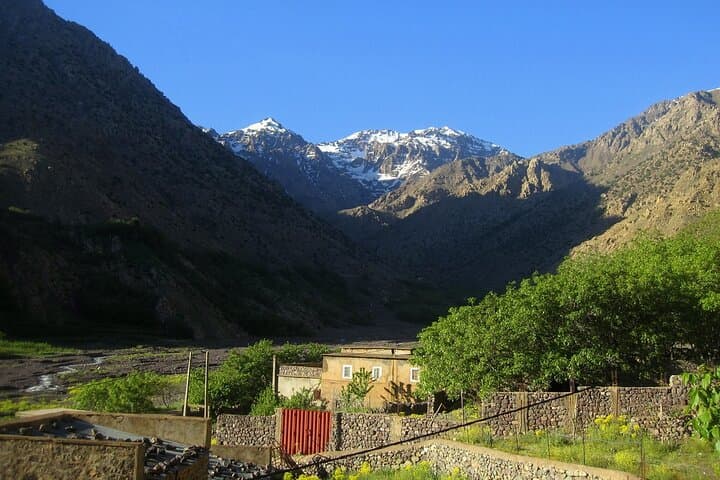
Geology here is recent uplift and weathering: the Agafay is an eroded piedmont below the High Atlas, where terraces and valleys fall away toward Marrakech. The Atlas Mountains rise to the south in stepped ridgelines where Berber villages cling to terraces, a lived-in hillside shaped by centuries of dry farming and mountain pastoralism. Along the route you may visit a cooperative where women extract argan oil by hand — an economic and cultural pillar for the region.
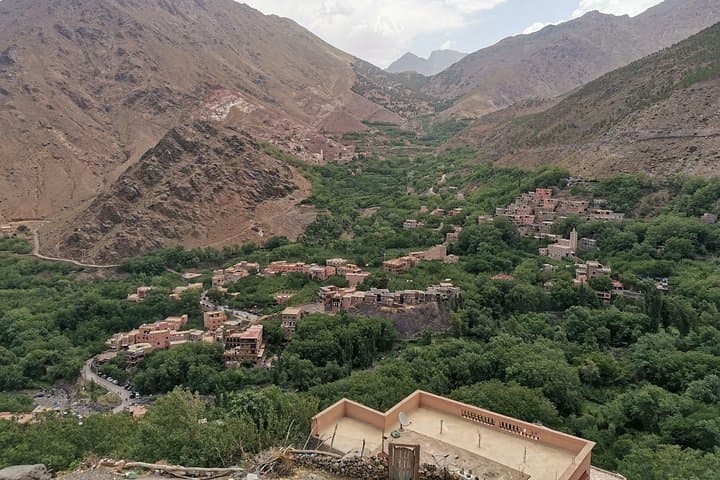
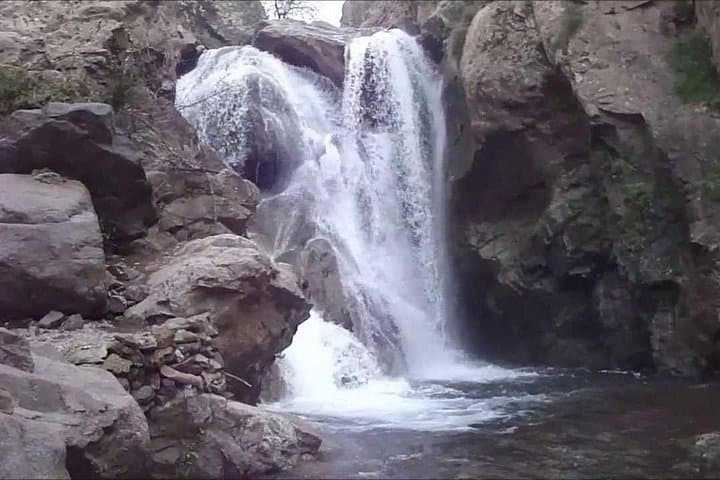
Expect a full-day rhythm: hotel pickup, one-hour camel ride, a scenic drive through olive groves, a guided walk in Imlil past terraced fields and waterfalls, an optional home-cooked lunch, and a stop at an argan cooperative before returning to the city. The walk in Imlil is moderate: uneven paths, short climbs, and loose rock.
Practical tips: wear closed-toe walking shoes, carry sun protection and at least 1.5 liters of water, and dress in layers for changing mountain temperatures. Bring cash for cooperatives and tips. Travelers with back, heart, or pregnancy concerns should avoid the camel ride. This trip blends easy desert calm with mountain walking and cultural exchange — a compact day that shows two faces of Moroccan landscape.
moderate.
9 hours.
Moderate fitness: able to walk 2–4 miles on uneven paths and manage short climbs at altitude.
The excursion is about nine hours with typical pickup around 09:00; exact pickup time is confirmed when you book.
Yes; the camels used for short rides are experienced and handlers assist mounting and dismounting, but those with back problems or pregnancy should avoid riding.
Lunch in a Berber home is optional and usually not included unless specified; bring cash if you plan to eat with a local family.
A local guide is provided for the Imlil walk to explain trails, customs, and the landscape; this enhances safety and cultural understanding.
The High Atlas is home to Amazigh (Berber) communities whose terraced agriculture and craftsmanship, including argan oil production, date back centuries.
Argan forests and water resources are fragile; support local cooperatives and avoid single-use plastics to reduce your footprint.
Morocco Sahara Desert Travel operates guided outdoor trips and adventures with an emphasis on safety, stewardship, and memorable experiences.
Morning light strips across low, rocky dunes as your driver pulls away from Marrakech — the citys bustle shrinking behind you and a wide, stony plain unfolding. The Agafay Desert doesn't have Sahara sand; it has a moonscape of shattered rock and low scrub that pushes you toward quiet. A camel clip-clops across the plain, and the slow forward rhythm makes the landscape feel larger, sharper.
Morning light strips across low, rocky dunes as your driver pulls away from Marrakech — the citys bustle shrinking behind you and a wide, stony plain unfolding. The Agafay Desert doesn't have Sahara sand; it has a moonscape of shattered rock and low scrub that pushes you toward quiet. A camel clip-clops across the plain, and the slow forward rhythm makes the landscape feel larger, sharper.
Geology here is recent uplift and weathering: the Agafay is an eroded piedmont below the High Atlas, where terraces and valleys fall away toward Marrakech. The Atlas Mountains rise to the south in stepped ridgelines where Berber villages cling to terraces, a lived-in hillside shaped by centuries of dry farming and mountain pastoralism. Along the route you may visit a cooperative where women extract argan oil by hand — an economic and cultural pillar for the region.
Expect a full-day rhythm: hotel pickup, one-hour camel ride, a scenic drive through olive groves, a guided walk in Imlil past terraced fields and waterfalls, an optional home-cooked lunch, and a stop at an argan cooperative before returning to the city. The walk in Imlil is moderate: uneven paths, short climbs, and loose rock.
Practical tips: wear closed-toe walking shoes, carry sun protection and at least 1.5 liters of water, and dress in layers for changing mountain temperatures. Bring cash for cooperatives and tips. Travelers with back, heart, or pregnancy concerns should avoid the camel ride. This trip blends easy desert calm with mountain walking and cultural exchange — a compact day that shows two faces of Moroccan landscape.