THE ADVENTURE COLLECTIVE® · Independent discovery and booking for outdoor travel

Watch goats perched in argan trees, visit a women’s argan cooperative, and haggle through Souk El Had on a guided half‑day tour of Agadir. Expect close wildlife viewing, market navigation tips, and a cultural introduction to Morocco’s argan economy.
Watch goats perched in argan trees, visit a women’s argan cooperative, and haggle through Souk El Had on a guided half‑day tour of Agadir. Expect close wildlife viewing, market navigation tips, and a cultural introduction to Morocco’s argan economy.
You step off the air‑conditioned minivan into a sunlit argan grove and look up: goats balance among branches, chewing leaves as the wind tussles their coats. The scent of dust, citrus, and cumin drifts in from the valley while the guide points out how these animals climb to reach the argan fruit.
Verified experiences and guided adventures in the surrounding area.
Operated by The best guide '' king mohamed 7" · Agadir, Souss-Massa
You step off the air‑conditioned minivan into a sunlit argan grove and look up: goats balance among branches, chewing leaves as the wind tussles their coats. The scent of dust, citrus, and cumin drifts in from the valley while the guide points out how these animals climb to reach the argan fruit.
Argan trees are endemic to southwestern Morocco and their nut — now prized as oil — has shaped local livelihoods for centuries. The argan landscape sits on semiarid soils above coastal plains; the region’s geology funnels seasonal runoff into sparse terraces that the local Berber communities have long managed. A visit to a women’s cooperative reveals traditional hand‑cracking and pressing methods and explains how argan oil fuels both kitchens and small businesses.
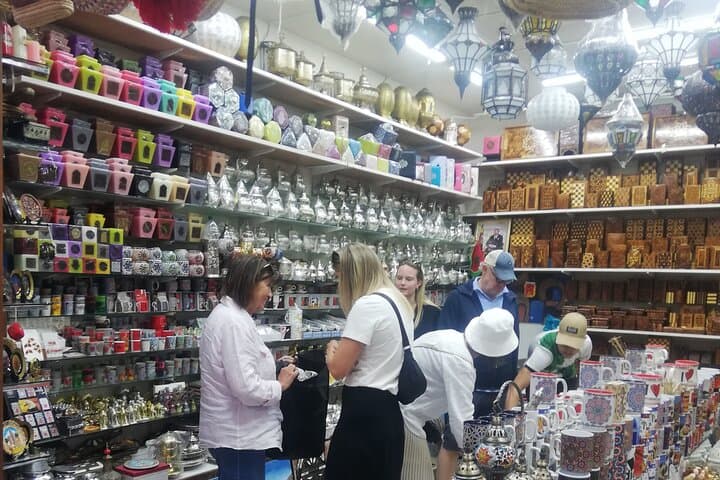
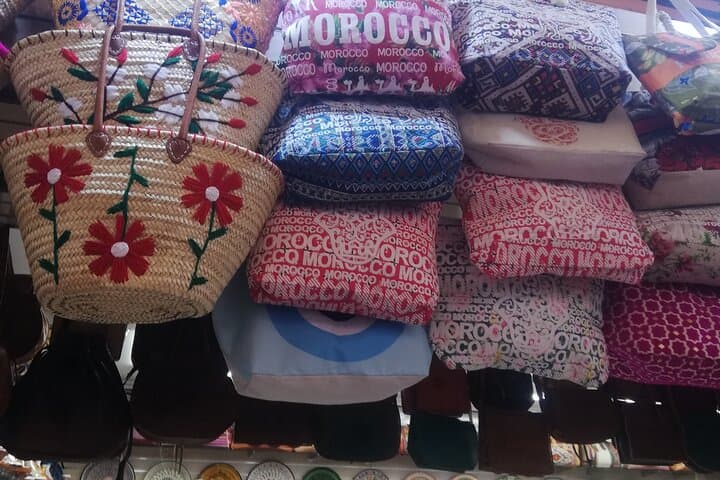
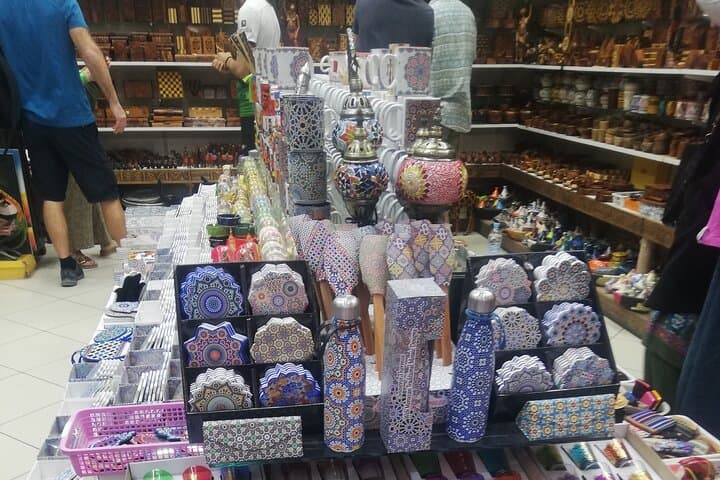
From the grove you’ll move into Souk El Had, Agadir’s expansive 13‑hectare market where vendors sell spices, leather, and woven goods. Expect narrow aisles, colorful piles of saffron‑colored turmeric, and the practiced bargaining rhythm that defines Moroccan markets.
Practical guidance: this is a half‑day tour (about 3–4 hours) with short walks on compacted dirt around the trees and tiled or paved market alleys. Wear sun protection and comfortable shoes; bring small bills for purchases and ask before photographing people. The tour includes hotel pickup and is suitable for most mobility levels, though some ground around trees is uneven. Morning departures keep temperatures pleasant and increase the chance of seeing goats in the branches. Support cooperatives by tasting and buying directly — it’s the clearest way to ensure benefits reach local women and the landscape they steward.
easy.
3–4 hours.
Light walking ability; suitable for most travelers. Expect short walks up to about 1–2 km total and some standing.
Tree‑climbing goats are common but not guaranteed; sightings are most reliable in dry months and earlier in the day when animals forage the argan branches.
Yes — the tour includes hotel pickup and drop‑off in Agadir, with an air‑conditioned vehicle as noted in the inclusions.
Most stalls do not display fixed prices; bargaining is expected — allow time and use your guide for language and fair offers.
The operator lists stroller and wheelchair accessibility; however, some ground around argan trees is uneven, so check specific pickup logistics and mobility needs when booking.
Argan forests are native to southwestern Morocco and have supported Berber communities for generations; women’s cooperatives arose recently as a response to market demand for argan oil and to increase local incomes.
Overgrazing and land conversion threaten argan stands; buying directly from certified cooperatives and minimizing plastic waste helps support sustainable harvesting and local livelihoods.
The best guide '' king mohamed 7" operates guided outdoor trips and adventures with an emphasis on safety, stewardship, and memorable experiences.
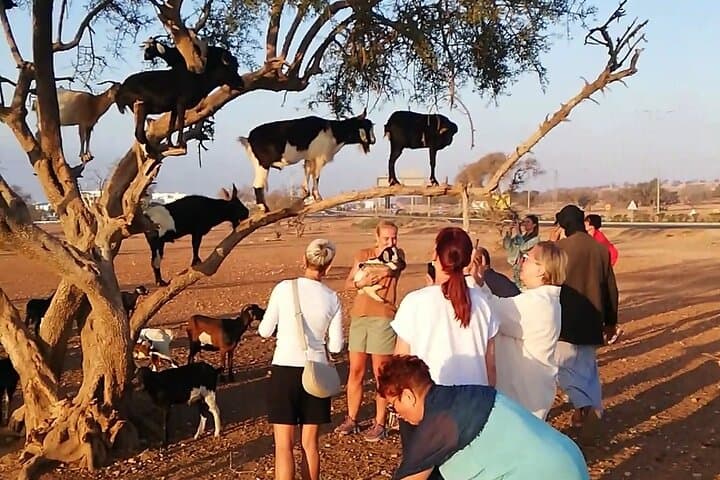
You step off the air‑conditioned minivan into a sunlit argan grove and look up: goats balance among branches, chewing leaves as the wind tussles their coats. The scent of dust, citrus, and cumin drifts in from the valley while the guide points out how these animals climb to reach the argan fruit.
You step off the air‑conditioned minivan into a sunlit argan grove and look up: goats balance among branches, chewing leaves as the wind tussles their coats. The scent of dust, citrus, and cumin drifts in from the valley while the guide points out how these animals climb to reach the argan fruit.
Argan trees are endemic to southwestern Morocco and their nut — now prized as oil — has shaped local livelihoods for centuries. The argan landscape sits on semiarid soils above coastal plains; the region’s geology funnels seasonal runoff into sparse terraces that the local Berber communities have long managed. A visit to a women’s cooperative reveals traditional hand‑cracking and pressing methods and explains how argan oil fuels both kitchens and small businesses.
From the grove you’ll move into Souk El Had, Agadir’s expansive 13‑hectare market where vendors sell spices, leather, and woven goods. Expect narrow aisles, colorful piles of saffron‑colored turmeric, and the practiced bargaining rhythm that defines Moroccan markets.
Practical guidance: this is a half‑day tour (about 3–4 hours) with short walks on compacted dirt around the trees and tiled or paved market alleys. Wear sun protection and comfortable shoes; bring small bills for purchases and ask before photographing people. The tour includes hotel pickup and is suitable for most mobility levels, though some ground around trees is uneven. Morning departures keep temperatures pleasant and increase the chance of seeing goats in the branches. Support cooperatives by tasting and buying directly — it’s the clearest way to ensure benefits reach local women and the landscape they steward.