THE ADVENTURE COLLECTIVE® · Independent discovery and booking for outdoor travel

See Morocco’s rare tree-climbing goats on a short rural drive from Agadir. This two‑hour excursion combines up‑close wildlife viewing with an introduction to argan oil and local cooperatives.
See Morocco’s rare tree-climbing goats on a short rural drive from Agadir. This two‑hour excursion combines up‑close wildlife viewing with an introduction to argan oil and local cooperatives.
You step out of a low-slung minivan and the scrubby argan branches lean into the wind like hands beckoning you closer. A herd of goats, improbably poised on thick limbs, stares back with a steady, unhurried curiosity — an image that has become shorthand for southern Morocco’s argan zone.
Verified experiences and guided adventures in the surrounding area.
Operated by Transouth Tours Agadir · Agadir, Souss-Massa
You step out of a low-slung minivan and the scrubby argan branches lean into the wind like hands beckoning you closer. A herd of goats, improbably poised on thick limbs, stares back with a steady, unhurried curiosity — an image that has become shorthand for southern Morocco’s argan zone.
The phenomenon is simple ecology and complex culture at once: goats browse the fruit of the argan tree, whose nut supports local women’s cooperatives that press the prized oil. The argan forest around Agadir sits on ancient sandstone and coastal terraces of the Souss plain; its deep roots hold fragile soils and host a mix of drought-adapted shrubs and migratory birds.
This short excursion (roughly a 30-minute rural drive each way) pairs a photo stop with a brief cultural introduction to argan oil production and local life. Guides explain how cooperatives extract kernels by hand, and how grazing patterns help shape the landscape — for better and worse. Plan for strong light, dusty tracks, and close animal encounters; goats are calm but unpredictable.
Practical notes: tours run in the cooler morning hours and last about two hours total. Wear sturdy shoes for uneven ground, a hat for sun, and bring small bills if you want to buy oil from a cooperative. Respect local customs and keep a respectful distance from livestock. The visit is short, accessible, and photographic — an efficient window into Morocco’s rural economy and one of the region’s most unusual wildlife spectacles.
easy.
2 hours.
Suitable for all fitness levels; requires short walks on uneven ground.
The excursion is about two hours total, including a roughly 30-minute drive each way and time on site for photos and a short cooperative visit.
Yes — the tour is rated easy with minimal walking; infants can sit on laps and specialized seats are often available.
You may approach for photos but avoid feeding or startling the animals; always follow your guide’s directions for safety.
Yes — many tours stop at local cooperatives where you can purchase cold-pressed argan oil; bring cash and check packaging/labels for authenticity.
The argan landscape around Agadir has supported Berber communities for centuries; the Arganeraie was designated a UNESCO Biosphere Reserve for its cultural and ecological value.
Argan forests face pressure from overgrazing and land conversion; buying from certified cooperatives supports sustainable harvests and local stewardship.
Transouth Tours Agadir operates guided outdoor trips and adventures with an emphasis on safety, stewardship, and memorable experiences.
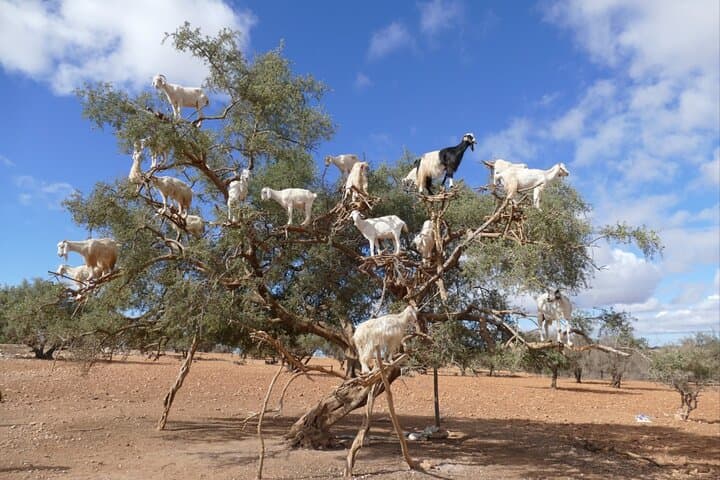
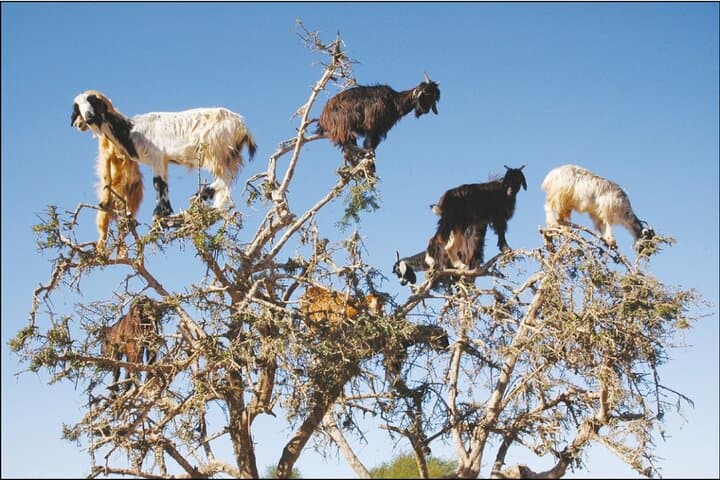
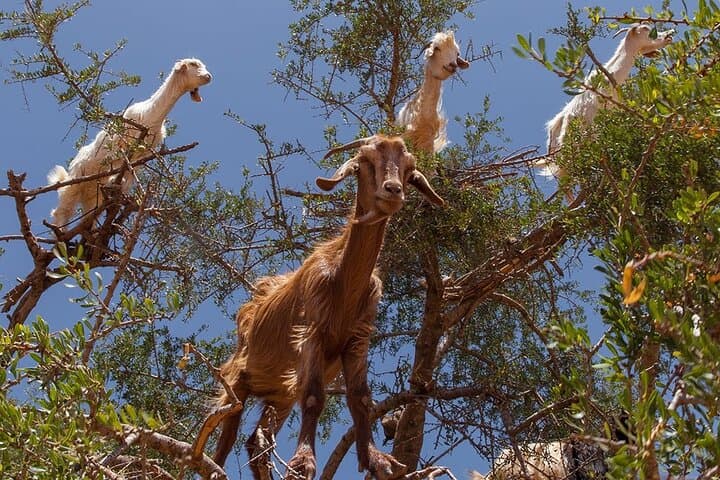
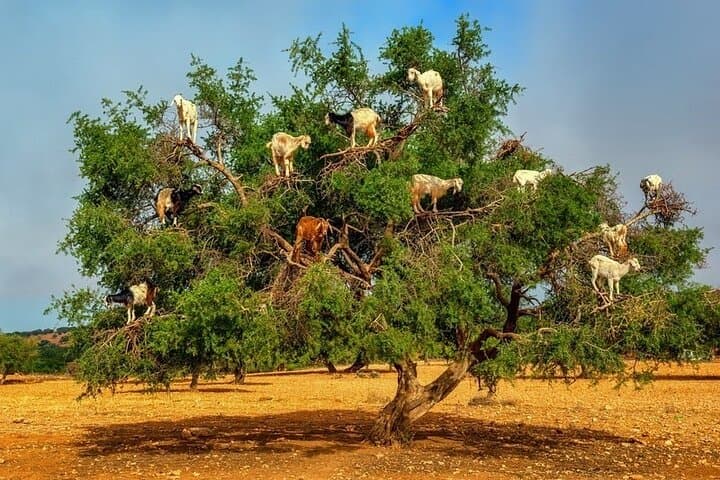
You step out of a low-slung minivan and the scrubby argan branches lean into the wind like hands beckoning you closer. A herd of goats, improbably poised on thick limbs, stares back with a steady, unhurried curiosity — an image that has become shorthand for southern Morocco’s argan zone.
You step out of a low-slung minivan and the scrubby argan branches lean into the wind like hands beckoning you closer. A herd of goats, improbably poised on thick limbs, stares back with a steady, unhurried curiosity — an image that has become shorthand for southern Morocco’s argan zone.
The phenomenon is simple ecology and complex culture at once: goats browse the fruit of the argan tree, whose nut supports local women’s cooperatives that press the prized oil. The argan forest around Agadir sits on ancient sandstone and coastal terraces of the Souss plain; its deep roots hold fragile soils and host a mix of drought-adapted shrubs and migratory birds.
This short excursion (roughly a 30-minute rural drive each way) pairs a photo stop with a brief cultural introduction to argan oil production and local life. Guides explain how cooperatives extract kernels by hand, and how grazing patterns help shape the landscape — for better and worse. Plan for strong light, dusty tracks, and close animal encounters; goats are calm but unpredictable.
Practical notes: tours run in the cooler morning hours and last about two hours total. Wear sturdy shoes for uneven ground, a hat for sun, and bring small bills if you want to buy oil from a cooperative. Respect local customs and keep a respectful distance from livestock. The visit is short, accessible, and photographic — an efficient window into Morocco’s rural economy and one of the region’s most unusual wildlife spectacles.