THE ADVENTURE COLLECTIVE® · Independent discovery and booking for outdoor travel

Drive from Agadir over the Atlas to the Erg Chebbi dunes in this compact 4‑day loop that mixes kasbahs, gorges and a night under desert stars. Expect long drives, soft sand, and sunrise views from the high dunes.
Drive from Agadir over the Atlas to the Erg Chebbi dunes in this compact 4‑day loop that mixes kasbahs, gorges and a night under desert stars. Expect long drives, soft sand, and sunrise views from the high dunes.
Morning light on the Atlantic gives way to ochre horizons as this four-day loop peels away from Agadir and pushes east into the High Atlas and the wide Saharan plain. On day one the road climbs past argan-studded slopes toward Ouarzazate; by the second morning the road has thinned to tracks and palm-lined oases, and the dunes of Erg Chebbi begin to rise like liquid sand.
Verified experiences and guided adventures in the surrounding area.
Operated by MarrakechAttraction.com · Merzouga, Drâa-Tafilalet
Morning light on the Atlantic gives way to ochre horizons as this four-day loop peels away from Agadir and pushes east into the High Atlas and the wide Saharan plain. On day one the road climbs past argan-studded slopes toward Ouarzazate; by the second morning the road has thinned to tracks and palm-lined oases, and the dunes of Erg Chebbi begin to rise like liquid sand.
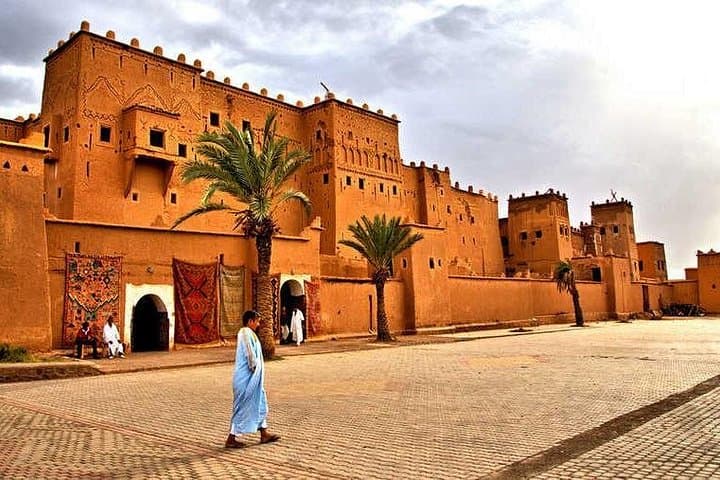
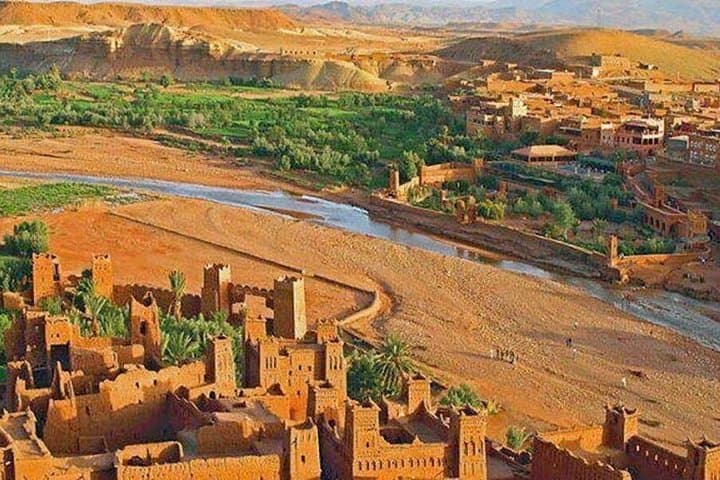
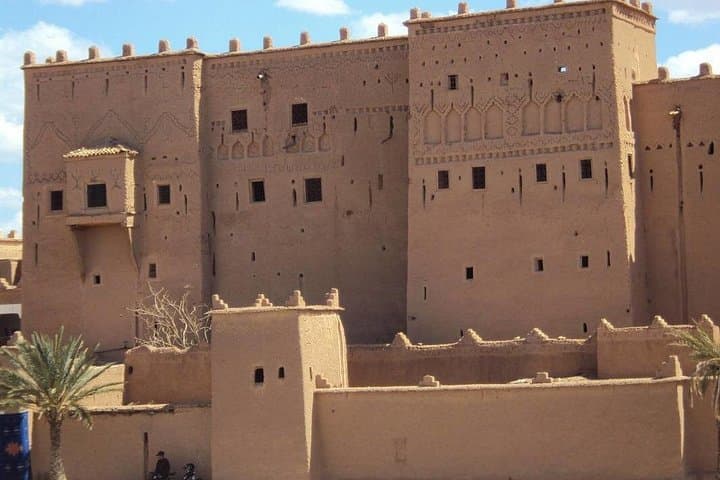
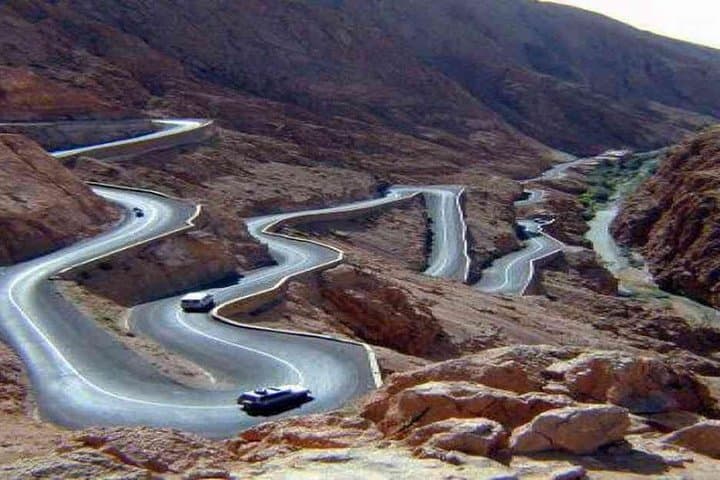
The route threads through Morocco’s layered history: Taroudant’s market rhythms, the red-clay fortifications of Aït Ben Haddou (a UNESCO kasbah that doubled for Hollywood epics), and the narrow basalt walls of Todra Gorge carved by ancient rivers. Geologically the trip moves from coastal alluvial plains to uplifted Atlas formations and finally to wind-sculpted erg—fields of mobile dunes built by Saharan winds over millennia.
Cultural notes arrive in small goods: rose products from the Valley of Roses, woven Berber carpets in Taznakht, and the slow caravan rhythms at a desert camp where you can ride or walk alongside camel handlers. Nights are spent in riads and a desert bivouac beneath wide, star-heavy sky; mornings reward early risers with cold light sliding down dune faces.
Practical guidance: prepare for long drives and uneven sand—wear layered clothing, sun protection, sturdy shoes for rocky stops and lightweight footwear for sand, and bring at least 2–3 liters of water per day. Expect basic desert camp facilities and limited cell coverage around Merzouga. Timing your walks for dawn or dusk reduces heat and rewards you with the desert’s best light.
moderate.
4 days / 3 nights.
Suitable for travellers in reasonable health; dune walking and camel rides require basic balance and stamina.
No; camel rides to the erg are offered but you can walk alongside guides or use vehicle transfers to/from the camp.
Accommodations range from local riads and small hotels to a traditional Berber bivouac in desert camps with basic sleeping arrangements.
The itinerary includes long drives and sand; parts are wheelchair-accessible by vehicle but dune walking and camel mounts are not ideal for limited mobility.
Most breakfasts and dinners are included as listed; expect local cuisine and simple camp meals in the desert.
This corridor follows ancient caravan tracks between Saharan oases and Atlas trade routes; Aït Ben Haddou marks an important medieval trade and defensive site.
The desert ecosystem is fragile—avoid collecting wood or disturbing vegetation, and follow local guidance to minimize campsite impact.
MarrakechAttraction.com operates guided outdoor trips and adventures with an emphasis on safety, stewardship, and memorable experiences.
Morning light on the Atlantic gives way to ochre horizons as this four-day loop peels away from Agadir and pushes east into the High Atlas and the wide Saharan plain. On day one the road climbs past argan-studded slopes toward Ouarzazate; by the second morning the road has thinned to tracks and palm-lined oases, and the dunes of Erg Chebbi begin to rise like liquid sand.
Morning light on the Atlantic gives way to ochre horizons as this four-day loop peels away from Agadir and pushes east into the High Atlas and the wide Saharan plain. On day one the road climbs past argan-studded slopes toward Ouarzazate; by the second morning the road has thinned to tracks and palm-lined oases, and the dunes of Erg Chebbi begin to rise like liquid sand.
The route threads through Morocco’s layered history: Taroudant’s market rhythms, the red-clay fortifications of Aït Ben Haddou (a UNESCO kasbah that doubled for Hollywood epics), and the narrow basalt walls of Todra Gorge carved by ancient rivers. Geologically the trip moves from coastal alluvial plains to uplifted Atlas formations and finally to wind-sculpted erg—fields of mobile dunes built by Saharan winds over millennia.
Cultural notes arrive in small goods: rose products from the Valley of Roses, woven Berber carpets in Taznakht, and the slow caravan rhythms at a desert camp where you can ride or walk alongside camel handlers. Nights are spent in riads and a desert bivouac beneath wide, star-heavy sky; mornings reward early risers with cold light sliding down dune faces.
Practical guidance: prepare for long drives and uneven sand—wear layered clothing, sun protection, sturdy shoes for rocky stops and lightweight footwear for sand, and bring at least 2–3 liters of water per day. Expect basic desert camp facilities and limited cell coverage around Merzouga. Timing your walks for dawn or dusk reduces heat and rewards you with the desert’s best light.