THE ADVENTURE COLLECTIVE® · Independent discovery and booking for outdoor travel

Learn to ride the forgiving Atlantic breaks of Agadir in a focused two-hour lesson. Expect hands-on instruction, ocean safety briefing, and photos of your first waves.
Learn to ride the forgiving Atlantic breaks of Agadir in a focused two-hour lesson. Expect hands-on instruction, ocean safety briefing, and photos of your first waves.
The morning air off Agadir's crescent beach smells of salt and warmed sand; the Atlantic throws a steady series of soft, whitewater waves that dare you to stand. In a two-hour lesson this coastline feels immediate—surfboards lined like tools, instructors watching sets and reading the current as if it were a language.
Verified experiences and guided adventures in the surrounding area.
Operated by Dopamine Surf Morocco · Agadir, Souss-Massa
The morning air off Agadir's crescent beach smells of salt and warmed sand; the Atlantic throws a steady series of soft, whitewater waves that dare you to stand. In a two-hour lesson this coastline feels immediate—surfboards lined like tools, instructors watching sets and reading the current as if it were a language.
Agadir grew from a fishing and trading port into a modern seaside city after the 1960 earthquake; its broad bay and sandy shelf are shaped by the Atlas Mountains' runoff and Atlantic swell patterns. Geologically the beach sits on a gentle continental shelf that produces consistent, forgiving break—one reason beginners find it reliable year-round. Culturally, lessons often come with multilingual instructors and a snapshot of southern Moroccan life: fishermen mending nets, cafés filling with mint tea, and markets a short walk from the promenade.
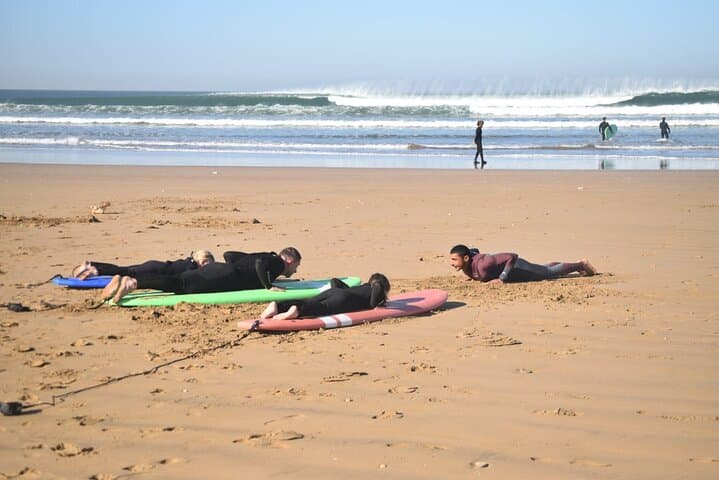
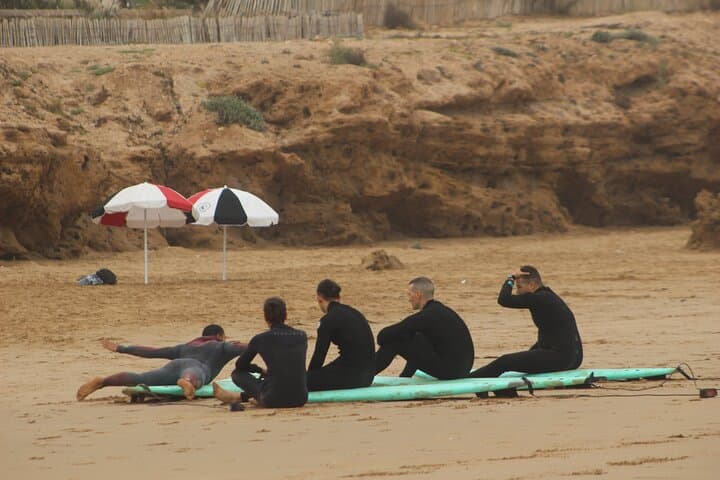
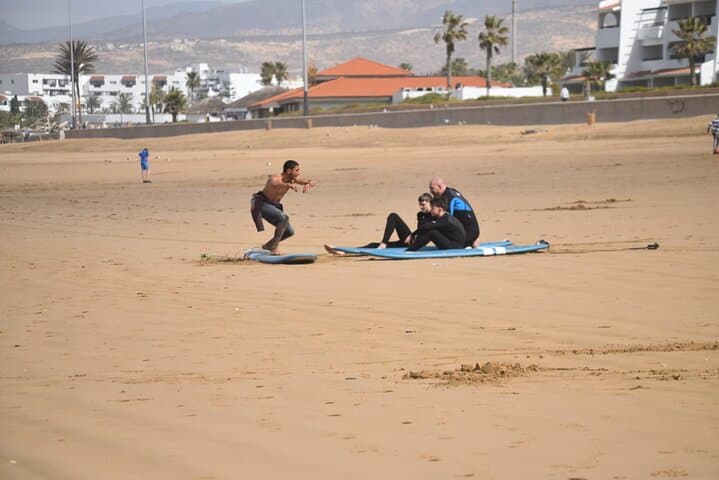
Practical guidance: arrive 20–30 minutes early for gear fitting and the safety briefing; that sand drill for your pop-up is more useful than it sounds. Wear a secure swimsuit under the provided wetsuit and apply reef-safe sunscreen—tides and sun are the two things to respect here. Hydrate before you paddle out and keep knees and core engaged to reduce fatigue.
Timing matters—mornings usually have cleaner, smaller waves, while afternoons can bring stronger wind. Expect hands-on coaching in the whitewater zone, steady encouragement, and photos or video of your attempts. By lesson's end most students paddle in with at least one unbroken wave under their feet and a clearer sense of ocean awareness to build on.
moderate.
2 hours.
Moderate—comfortable swimming ability, basic core strength and balance helpful; suitable for most active beginners.
Yes—basic swimming ability and comfort in moving water are required; instructors keep beginners in the whitewater zone until they're ready to progress.
Lessons usually accept a wide age range, but providers ask for ages during booking; confirm minimums for children with the operator.
Yes—surfboard and wetsuit are included alongside a safety and ocean-awareness briefing.
Lessons can be canceled for safety in rough conditions; operators typically refund or reschedule if the sea state is unsafe.
Agadir was largely rebuilt after the 1960 earthquake; the bay's layout and modern promenade reflect post-1960 urban planning and Morocco's coastal tourism growth.
Use reef-safe sunscreen and avoid trampling dunes; local operators emphasize minimizing plastic waste and respecting marked nesting areas.
Dopamine Surf Morocco operates guided outdoor trips and adventures with an emphasis on safety, stewardship, and memorable experiences.
The morning air off Agadir's crescent beach smells of salt and warmed sand; the Atlantic throws a steady series of soft, whitewater waves that dare you to stand. In a two-hour lesson this coastline feels immediate—surfboards lined like tools, instructors watching sets and reading the current as if it were a language.
The morning air off Agadir's crescent beach smells of salt and warmed sand; the Atlantic throws a steady series of soft, whitewater waves that dare you to stand. In a two-hour lesson this coastline feels immediate—surfboards lined like tools, instructors watching sets and reading the current as if it were a language.
Agadir grew from a fishing and trading port into a modern seaside city after the 1960 earthquake; its broad bay and sandy shelf are shaped by the Atlas Mountains' runoff and Atlantic swell patterns. Geologically the beach sits on a gentle continental shelf that produces consistent, forgiving break—one reason beginners find it reliable year-round. Culturally, lessons often come with multilingual instructors and a snapshot of southern Moroccan life: fishermen mending nets, cafés filling with mint tea, and markets a short walk from the promenade.
Practical guidance: arrive 20–30 minutes early for gear fitting and the safety briefing; that sand drill for your pop-up is more useful than it sounds. Wear a secure swimsuit under the provided wetsuit and apply reef-safe sunscreen—tides and sun are the two things to respect here. Hydrate before you paddle out and keep knees and core engaged to reduce fatigue.
Timing matters—mornings usually have cleaner, smaller waves, while afternoons can bring stronger wind. Expect hands-on coaching in the whitewater zone, steady encouragement, and photos or video of your attempts. By lesson's end most students paddle in with at least one unbroken wave under their feet and a clearer sense of ocean awareness to build on.