THE ADVENTURE COLLECTIVE® · Independent discovery and booking for outdoor travel

Step into Souk El Had with a licensed guide and navigate Agadir’s largest weekend market like a local. Learn what to buy, when to go, and how to move through its busy alleys with confidence.
Step into Souk El Had with a licensed guide and navigate Agadir’s largest weekend market like a local. Learn what to buy, when to go, and how to move through its busy alleys with confidence.
The air at Souk El Had hits you before the buildings do: spices sharpen the breeze, vendors call across narrow aisles, and the slow clack of cart wheels sets a walking rhythm. A licensed guide threads you through covered lanes, pointing out the stalls where argan oil, woven baskets and fresh produce claim space alongside imported textiles.
Verified experiences and guided adventures in the surrounding area.
Operated by Souk El Had d'Agadir · Agadir, Souss-Massa
The air at Souk El Had hits you before the buildings do: spices sharpen the breeze, vendors call across narrow aisles, and the slow clack of cart wheels sets a walking rhythm. A licensed guide threads you through covered lanes, pointing out the stalls where argan oil, woven baskets and fresh produce claim space alongside imported textiles.
Souk El Had is more than a marketplace — it’s a living node in Agadir’s trade history. Markets of this region have run along the Souss valley for centuries, shifting with the rhythm of harvests and caravan routes. The stall roofs and concrete blocks of modern Agadir sit atop geologic plains shaped by coastal erosion and seismic events; the city itself was rebuilt after the 1960 earthquake, and the souk evolved with that urban renewal.
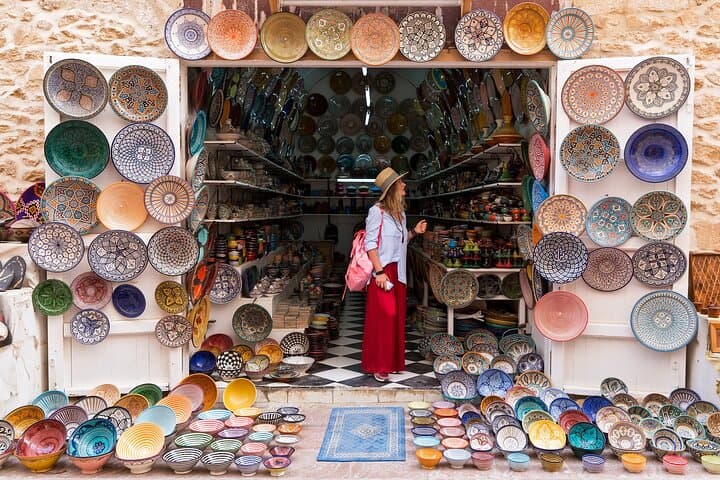
Culturally, the market reflects Berber and Arab influences: artisans from nearby villages sell handcrafted goods while fishmongers and spice sellers preserve long-standing techniques. Your guide will decode bargaining customs and point out signs of authentic craftsmanship versus tourist-made items.
Practicalities matter: Souk El Had runs busiest on Sundays and is closed on Mondays. Expect two hours of mostly flat walking on paved and packed-earth surfaces; comfortable shoes and a small backpack keep the experience manageable. Carry cash in small denominations, keep valuables secure, and plan mid-morning or late afternoon visits to avoid peak sun. With a little preparation this guide-led market walk is an efficient, culturally rich way to read Agadir’s public life up close.
easy.
2 hours.
Light walking; suitable for most fitness levels with frequent stops
Yes — the market tour is rated easy and accessible for most ages; infants must sit on laps and infant seats are available on request.
Licensed guides commonly speak French, Arabic and basic English; confirm language needs at booking.
No — admissions and purchases are not included; the tour provides orientation and cultural context while shopping remains at your discretion.
The market is busiest on Sundays and is closed on Mondays; smaller commerce can occur other days but Sunday offers the fullest experience.
Souk El Had grew from regional trading routes and became central to Agadir’s commercial life; the modern market expanded after the 1960 earthquake reshaped the city.
Vendors and local authorities have run initiatives to reduce single-use plastics and encourage reusable bags; support local artisans to keep traditional crafts economically viable.
Souk El Had d'Agadir operates guided outdoor trips and adventures with an emphasis on safety, stewardship, and memorable experiences.
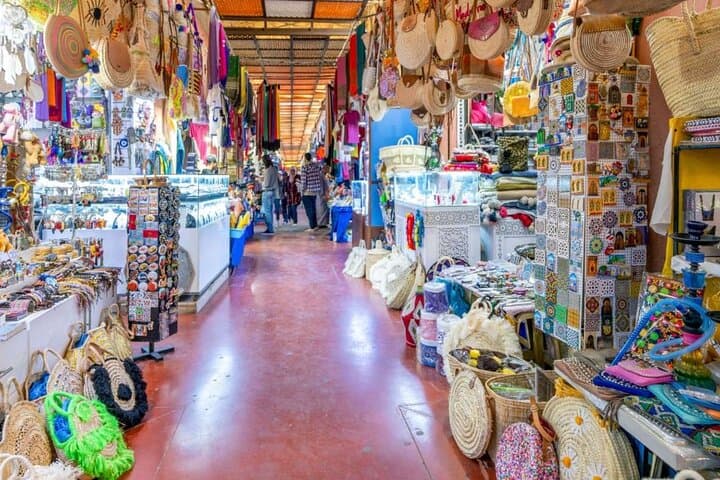

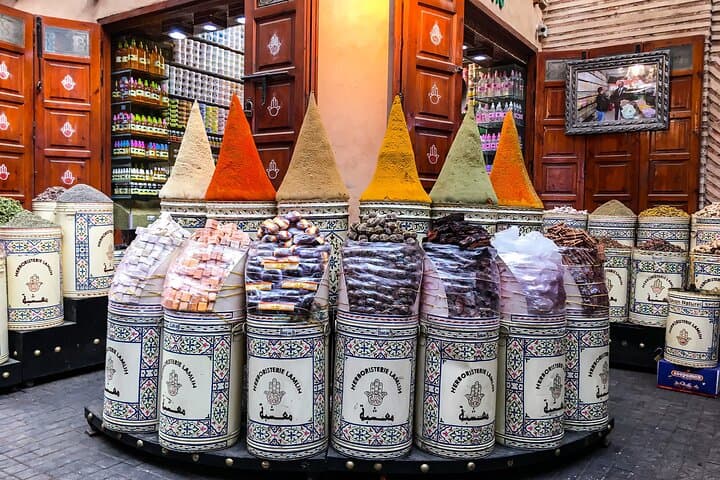
The air at Souk El Had hits you before the buildings do: spices sharpen the breeze, vendors call across narrow aisles, and the slow clack of cart wheels sets a walking rhythm. A licensed guide threads you through covered lanes, pointing out the stalls where argan oil, woven baskets and fresh produce claim space alongside imported textiles.
The air at Souk El Had hits you before the buildings do: spices sharpen the breeze, vendors call across narrow aisles, and the slow clack of cart wheels sets a walking rhythm. A licensed guide threads you through covered lanes, pointing out the stalls where argan oil, woven baskets and fresh produce claim space alongside imported textiles.
Souk El Had is more than a marketplace — it’s a living node in Agadir’s trade history. Markets of this region have run along the Souss valley for centuries, shifting with the rhythm of harvests and caravan routes. The stall roofs and concrete blocks of modern Agadir sit atop geologic plains shaped by coastal erosion and seismic events; the city itself was rebuilt after the 1960 earthquake, and the souk evolved with that urban renewal.
Culturally, the market reflects Berber and Arab influences: artisans from nearby villages sell handcrafted goods while fishmongers and spice sellers preserve long-standing techniques. Your guide will decode bargaining customs and point out signs of authentic craftsmanship versus tourist-made items.
Practicalities matter: Souk El Had runs busiest on Sundays and is closed on Mondays. Expect two hours of mostly flat walking on paved and packed-earth surfaces; comfortable shoes and a small backpack keep the experience manageable. Carry cash in small denominations, keep valuables secure, and plan mid-morning or late afternoon visits to avoid peak sun. With a little preparation this guide-led market walk is an efficient, culturally rich way to read Agadir’s public life up close.