THE ADVENTURE COLLECTIVE® · Independent discovery and booking for outdoor travel

Climb red dunes, ride a camel at sunset, and explore rocky canyons outside Agadir on a half‑day adventure that pairs beginner-friendly sandboarding with a regional meal. Expect dramatic light, wind-sculpted sand, and hands‑on local insights from your guide.
Climb red dunes, ride a camel at sunset, and explore rocky canyons outside Agadir on a half‑day adventure that pairs beginner-friendly sandboarding with a regional meal. Expect dramatic light, wind-sculpted sand, and hands‑on local insights from your guide.
You step out of the air‑conditioned van and the dunes meet you: a low, burning ridge of red sand that rises and dares you to the top. Wind combs the slopes into sharp lines, the Atlas peaks watching from inland as gulls wheel over the Atlantic—the landscape both spare and immediate.
Verified experiences and guided adventures in the surrounding area.
Operated by Amodou cheval Tamraght · Agadir, Souss-Massa
You step out of the air‑conditioned van and the dunes meet you: a low, burning ridge of red sand that rises and dares you to the top. Wind combs the slopes into sharp lines, the Atlas peaks watching from inland as gulls wheel over the Atlantic—the landscape both spare and immediate.
The dunes outside Tamri are recent by geological standards, shaped from Atlantic sediments and wind rather than ancient desert strata. Nearby canyons cut into soft sandstone and volcanic outcrops, evidence of Morocco’s tectonic lifts and the erosive patience of seasonal water. Culturally the region is part of greater Souss-Massa, where Berber communities and argan groves define the countryside and local cuisine leans on olive oil, preserved lemon, and slow‑cooked tagines.
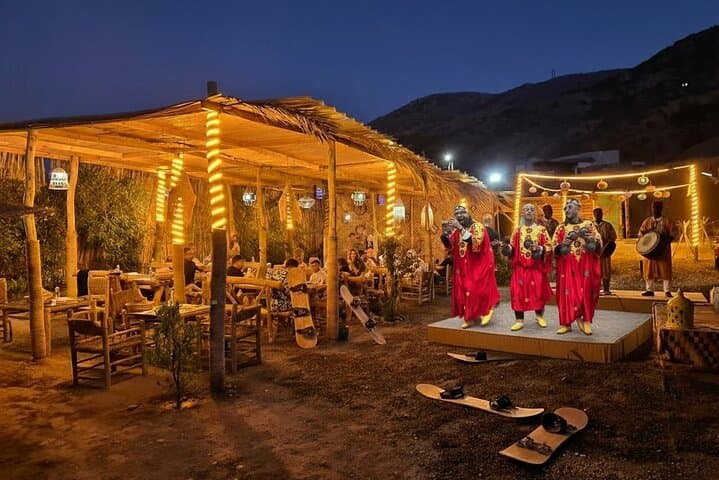
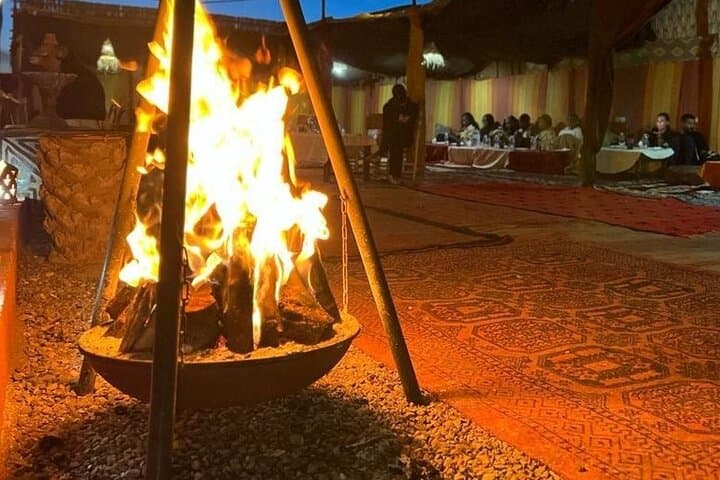
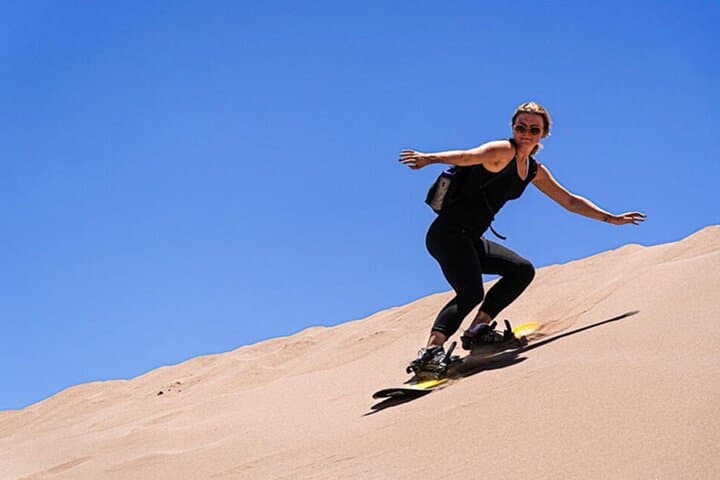
On this half‑day outing expect a safety briefing, short dune climbs, and guided sandboarding runs suitable for beginners; guides provide boards and quick coaching. A camel ride stretches into a calmer pace, giving photographers low, moving vantage points as light slants across the sand. The canyon walk is dryer and rockier—sturdy shoes help—and your meal at the end showcases regional ingredients, a fitting finish.
Practical guidance: go late afternoon for cooler sand and better photos, carry 1–2 liters of water, and layer a windbreaker for gusts off the coast. Footwear with good tread makes the return climbs easier. If you’re sensitive to sun or dust, bring a buff, quality sunscreen, and sunglasses.
This trip balances playful sport with local landscape and flavor—ideal for travelers who want active rhythm and a grounded connection to Morocco’s southern coast.
moderate.
4–5 hours.
Participants should have moderate fitness—able to climb sandy slopes and walk short canyon sections; suitable for families with older children.
No—tours include a safety briefing and beginner coaching; boards and basic protective gear are provided, so first-timers can participate.
Camel rides are low-impact and seated; the most physical part is climbing back up dunes, not the ride itself.
Yes—your booking includes a local lunch or dinner depending on departure time, featuring regional ingredients and simple Moroccan dishes.
Children are generally welcome, but the operator does not recommend participation for pregnant travelers due to dune climbs and camel motion.
The Souss-Massa coast has long been a meeting zone between maritime trade and Berber hinterlands; local villages historically supported fishing and argan oil production.
Stick to marked paths and avoid trampling dune vegetation; local guides work to minimize vehicle and foot traffic impacts and support sustainable argan cooperatives.
Amodou cheval Tamraght operates guided outdoor trips and adventures with an emphasis on safety, stewardship, and memorable experiences.
You step out of the air‑conditioned van and the dunes meet you: a low, burning ridge of red sand that rises and dares you to the top. Wind combs the slopes into sharp lines, the Atlas peaks watching from inland as gulls wheel over the Atlantic—the landscape both spare and immediate.
You step out of the air‑conditioned van and the dunes meet you: a low, burning ridge of red sand that rises and dares you to the top. Wind combs the slopes into sharp lines, the Atlas peaks watching from inland as gulls wheel over the Atlantic—the landscape both spare and immediate.
The dunes outside Tamri are recent by geological standards, shaped from Atlantic sediments and wind rather than ancient desert strata. Nearby canyons cut into soft sandstone and volcanic outcrops, evidence of Morocco’s tectonic lifts and the erosive patience of seasonal water. Culturally the region is part of greater Souss-Massa, where Berber communities and argan groves define the countryside and local cuisine leans on olive oil, preserved lemon, and slow‑cooked tagines.
On this half‑day outing expect a safety briefing, short dune climbs, and guided sandboarding runs suitable for beginners; guides provide boards and quick coaching. A camel ride stretches into a calmer pace, giving photographers low, moving vantage points as light slants across the sand. The canyon walk is dryer and rockier—sturdy shoes help—and your meal at the end showcases regional ingredients, a fitting finish.
Practical guidance: go late afternoon for cooler sand and better photos, carry 1–2 liters of water, and layer a windbreaker for gusts off the coast. Footwear with good tread makes the return climbs easier. If you’re sensitive to sun or dust, bring a buff, quality sunscreen, and sunglasses.
This trip balances playful sport with local landscape and flavor—ideal for travelers who want active rhythm and a grounded connection to Morocco’s southern coast.