THE ADVENTURE COLLECTIVE® · Independent discovery and booking for outdoor travel

Race across Agadir’s coastal dunes and argan fields on a 2-hour quad or buggy tour that combines off-road tracks with a Berber tea stop. Expect sandy washes, coastal views, and practical driving challenges suitable for those with moderate fitness.
Race across Agadir’s coastal dunes and argan fields on a 2-hour quad or buggy tour that combines off-road tracks with a Berber tea stop. Expect sandy washes, coastal views, and practical driving challenges suitable for those with moderate fitness.
The engine growls, sand sprays at the wheels, and the Atlantic wind pushes the heat away as you cut a line through Agadir’s ochre dunes. For two hours you trade the city’s palm-lined boulevards for wide sandy tracks, argan groves, and narrow dirt alleys where the smell of toasted argan and mint tea drifts up from a roadside stop.
Verified experiences and guided adventures in the surrounding area.
Operated by Abdo Tour Agadir · Agadir, Souss-Massa
The engine growls, sand sprays at the wheels, and the Atlantic wind pushes the heat away as you cut a line through Agadir’s ochre dunes. For two hours you trade the city’s palm-lined boulevards for wide sandy tracks, argan groves, and narrow dirt alleys where the smell of toasted argan and mint tea drifts up from a roadside stop.
This stretch of Morocco sits on the edge of the Anti-Atlas and the Souss plain, a meeting place of coastal geology and human history. Agadir’s shoreline has been shaped by Atlantic swells and sediment from the Souss River; inland, low-lying argan trees—domesticated by Amazigh (Berber) communities—dot the landscape. The area’s modern identity is braided with Berber hospitality and the city’s recovery after the 1960 earthquake, which reshaped local architecture and coastal development.
Expect raw, physical terrain: sandy washes, compacted dirt tracks, occasional rocky sections and narrow alleys that demand steady steering more than technical skill. A common itinerary includes a safety briefing, gear fitting, roughly 38 km of driving, and a tea break with a local to experience Berber hospitality.
Practical guidance: wear closed-toe shoes and eye protection, bring water and sun protection, and listen closely during the safety briefing—dust and sudden ruts can surprise even experienced drivers. Drivers should be comfortable with basic vehicle control; passengers should secure loose items. Morning or late-afternoon departures offer cooler temperatures and better light for photos. Leave no trace: keep to tracks to limit dune erosion and support local cooperatives when buying argan products.
moderate.
2 hours.
Moderate fitness—able to handle bumpy terrain, quick direction changes, and short periods standing on footrests.
Most operators require a valid driving license for drivers; passengers do not need a license. Confirm with the operator at booking.
No specialist experience is required, but basic vehicle handling skills and comfort with uneven terrain are important.
Children may be allowed as passengers depending on age and size—operators often require infants to sit on laps and set minimum age rules; check before booking.
Tours may be canceled or rescheduled in heavy rain or high winds for safety; operators typically notify guests in advance.
This coastline has long been inhabited by Amazigh (Berber) communities; Agadir was rebuilt after a major 1960 earthquake and today mixes coastal trade with traditional argan production.
Argan trees are ecologically important and overharvesting is a concern—support certified cooperatives and stick to designated tracks to limit dune erosion.
Abdo Tour Agadir operates guided outdoor trips and adventures with an emphasis on safety, stewardship, and memorable experiences.

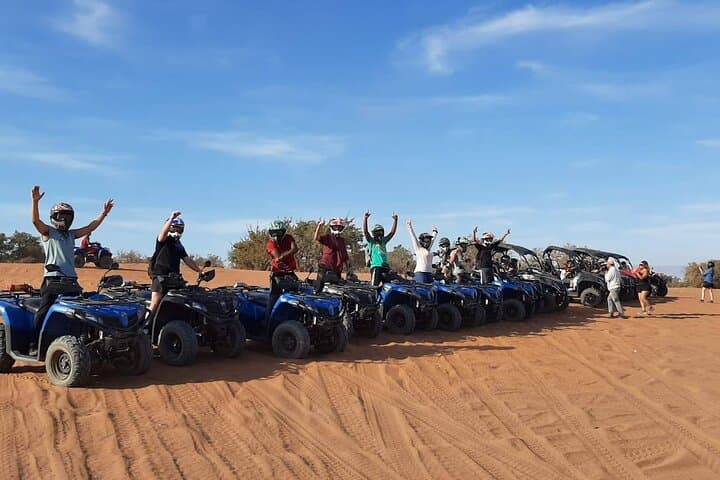
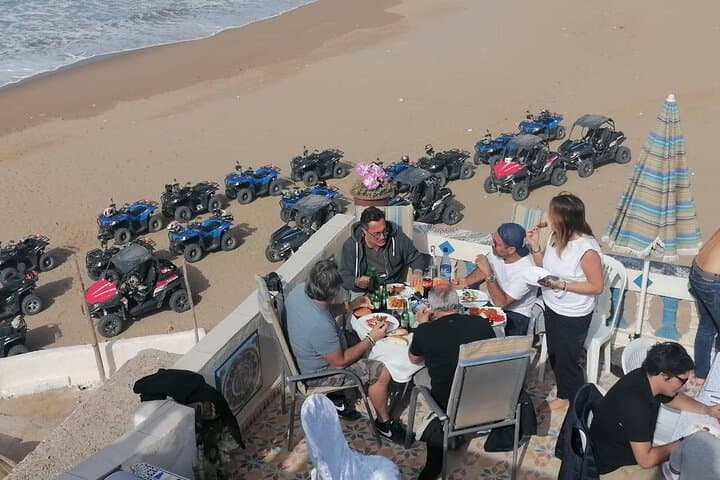
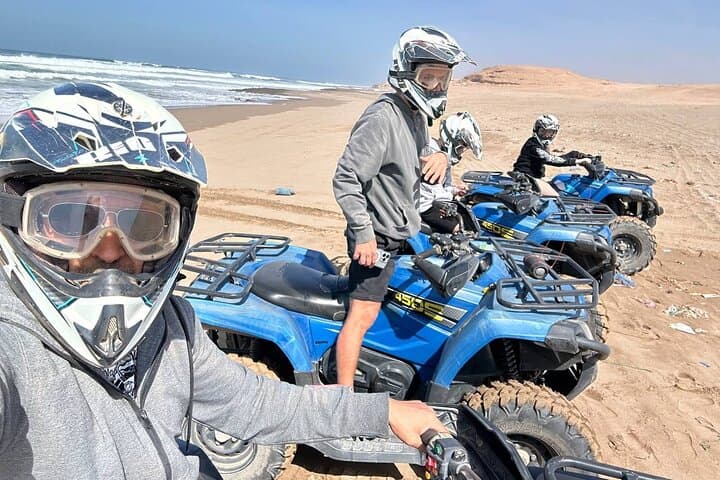
The engine growls, sand sprays at the wheels, and the Atlantic wind pushes the heat away as you cut a line through Agadir’s ochre dunes. For two hours you trade the city’s palm-lined boulevards for wide sandy tracks, argan groves, and narrow dirt alleys where the smell of toasted argan and mint tea drifts up from a roadside stop.
The engine growls, sand sprays at the wheels, and the Atlantic wind pushes the heat away as you cut a line through Agadir’s ochre dunes. For two hours you trade the city’s palm-lined boulevards for wide sandy tracks, argan groves, and narrow dirt alleys where the smell of toasted argan and mint tea drifts up from a roadside stop.
This stretch of Morocco sits on the edge of the Anti-Atlas and the Souss plain, a meeting place of coastal geology and human history. Agadir’s shoreline has been shaped by Atlantic swells and sediment from the Souss River; inland, low-lying argan trees—domesticated by Amazigh (Berber) communities—dot the landscape. The area’s modern identity is braided with Berber hospitality and the city’s recovery after the 1960 earthquake, which reshaped local architecture and coastal development.
Expect raw, physical terrain: sandy washes, compacted dirt tracks, occasional rocky sections and narrow alleys that demand steady steering more than technical skill. A common itinerary includes a safety briefing, gear fitting, roughly 38 km of driving, and a tea break with a local to experience Berber hospitality.
Practical guidance: wear closed-toe shoes and eye protection, bring water and sun protection, and listen closely during the safety briefing—dust and sudden ruts can surprise even experienced drivers. Drivers should be comfortable with basic vehicle control; passengers should secure loose items. Morning or late-afternoon departures offer cooler temperatures and better light for photos. Leave no trace: keep to tracks to limit dune erosion and support local cooperatives when buying argan products.