THE ADVENTURE COLLECTIVE® · Independent discovery and booking for outdoor travel

Two hours of dunes, dusty tracks and a Berber tea stop just outside Agadir. This guided quad tour pairs short bursts of speed with local culture and sweeping coastal plains.
Two hours of dunes, dusty tracks and a Berber tea stop just outside Agadir. This guided quad tour pairs short bursts of speed with local culture and sweeping coastal plains.
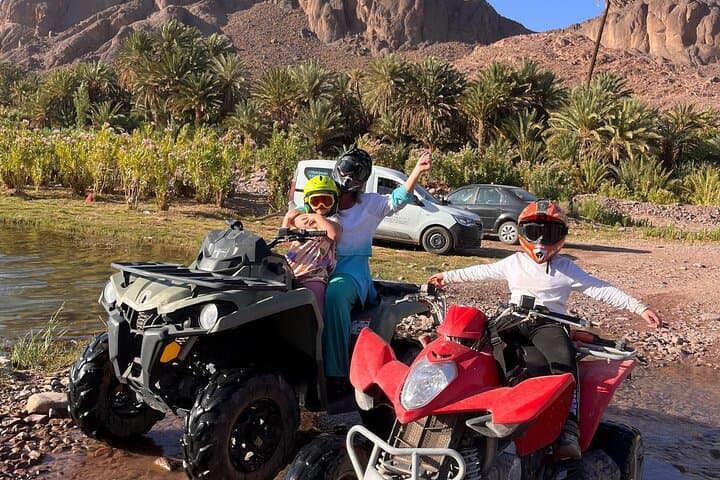
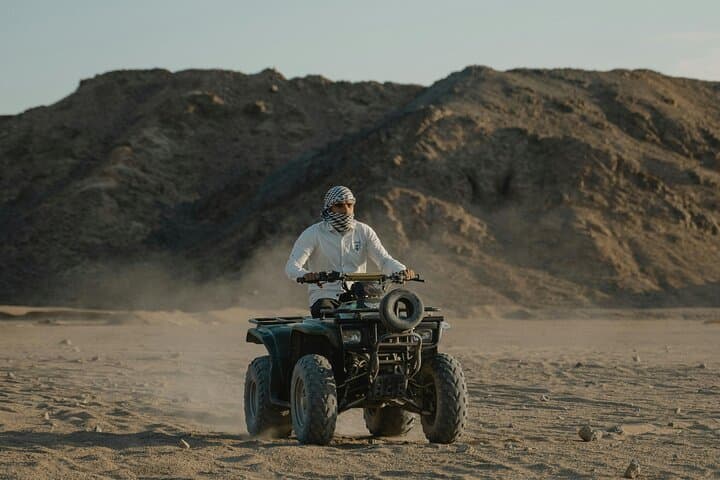
You kick up dust as the quad settles into a rhythm, the Atlantic breeze briefing you on the coast’s mood while dunes and rocky plains unfold ahead.
Verified experiences and guided adventures in the surrounding area.
Operated by Go Booking Tours · Agadir, Souss-Massa
You kick up dust as the quad settles into a rhythm, the Atlantic breeze briefing you on the coast’s mood while dunes and rocky plains unfold ahead.
Out from Agadir’s seaside strip the landscape opens into the Souss plain and the foothills that peel off the Anti-Atlas. The terrain alternates between hard-packed tracks, wind-sculpted sand ridges and scattered limestone outcrops. Local Berber hamlets punctuate the route—flat-roofed houses and men pausing their work to watch the machines pass—where guides often stop for photos and a short chat.
Agadir’s human history is visible in small ways: the region’s Amazigh (Berber) culture, centuries of trade along coastal routes, and the post-1960 reconstruction that reshaped the modern city. Geologically, the area is coastal sediment and alluvial fans, with dunes formed by Atlantic-driven winds and dunes that dare you to climb them on a line.
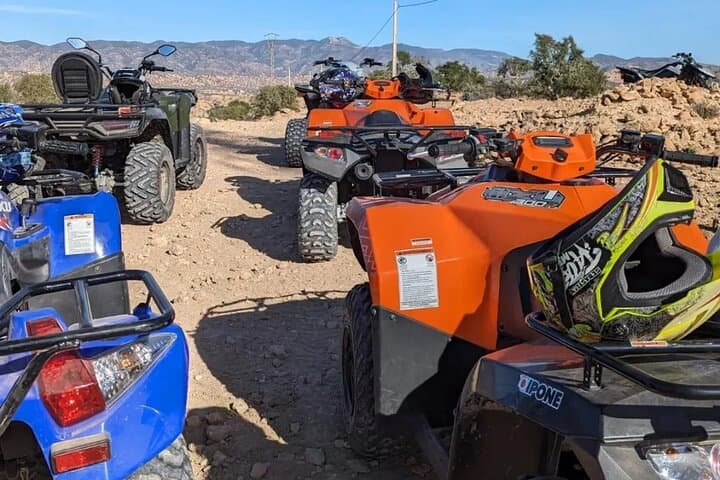
Practically, the two-hour excursion is compact and guided: a safety briefing, vehicle familiarization, and a mix of dusty tracks, plains and short dune runs. Morning or late-afternoon departures are best to avoid peak heat; an air-conditioned transfer and a mint tea break at a Berber camp are usually included. Expect sand in crevices, sun on exposed skin and a pulse quickened by short bursts of speed rather than long climbs.
Wear closed-toe shoes, protective eyewear and sunscreen; follow the guide’s instructions and don’t outpace your skill level. Treat villages respectfully, carry out trash, and be ready for a brief, authentic taste of rural life and expansive Atlantic skies.
easy.
2 hours.
Suitable for most fitness levels; requires ability to sit, grip and follow simple instructions for short bursts of activity.
No—briefings and adaptation time are provided and guides lead the group; basic comfort on off-road tracks is helpful.
Most bookings include air-conditioned transfers to and from meeting points—confirm pickup details when you book.
Policies vary; infants may be required to sit on an adult’s lap and operators often set minimum age bands—check the booking requirements.
Closed-toe shoes, sun protection, and a light wind layer for cooler mornings; avoid loose items that may blow away.
The Souss region has long been inhabited by Amazigh (Berber) communities and saw major urban rebuilding after the 1960 Agadir earthquake, shaping the modern city.
Stick to marked tracks to avoid eroding fragile dune vegetation; support local guides who follow low-impact practices.
Go Booking Tours operates guided outdoor trips and adventures with an emphasis on safety, stewardship, and memorable experiences.
You kick up dust as the quad settles into a rhythm, the Atlantic breeze briefing you on the coast’s mood while dunes and rocky plains unfold ahead.
You kick up dust as the quad settles into a rhythm, the Atlantic breeze briefing you on the coast’s mood while dunes and rocky plains unfold ahead.
Out from Agadir’s seaside strip the landscape opens into the Souss plain and the foothills that peel off the Anti-Atlas. The terrain alternates between hard-packed tracks, wind-sculpted sand ridges and scattered limestone outcrops. Local Berber hamlets punctuate the route—flat-roofed houses and men pausing their work to watch the machines pass—where guides often stop for photos and a short chat.
Agadir’s human history is visible in small ways: the region’s Amazigh (Berber) culture, centuries of trade along coastal routes, and the post-1960 reconstruction that reshaped the modern city. Geologically, the area is coastal sediment and alluvial fans, with dunes formed by Atlantic-driven winds and dunes that dare you to climb them on a line.
Practically, the two-hour excursion is compact and guided: a safety briefing, vehicle familiarization, and a mix of dusty tracks, plains and short dune runs. Morning or late-afternoon departures are best to avoid peak heat; an air-conditioned transfer and a mint tea break at a Berber camp are usually included. Expect sand in crevices, sun on exposed skin and a pulse quickened by short bursts of speed rather than long climbs.
Wear closed-toe shoes, protective eyewear and sunscreen; follow the guide’s instructions and don’t outpace your skill level. Treat villages respectfully, carry out trash, and be ready for a brief, authentic taste of rural life and expansive Atlantic skies.