THE ADVENTURE COLLECTIVE® · Independent discovery and booking for outdoor travel

Spend a morning between shaded botanical paths and argan-studded hills—visit Crocoparc to see crocodiles and reptiles, then watch goats scale argan trees and learn about traditional argan oil production. A compact, family-friendly half-day that blends wildlife, culture, and easy walking.
Spend a morning between shaded botanical paths and argan-studded hills—visit Crocoparc to see crocodiles and reptiles, then watch goats scale argan trees and learn about traditional argan oil production. A compact, family-friendly half-day that blends wildlife, culture, and easy walking.
You arrive on a low-slung road out of Agadir and the air shifts—salted wind from the Atlantic mixes with the vegetal scent of heated leaves. In sixty minutes the walkways of Crocoparc open into shaded paths lined with palms and hibiscus, where crocodiles laze in sun-warmed ponds and anacondas sleep under glass. The park’s botanical layout eases visitors from reptile enclosures into curious aviaries and a small tropical garden that contrasts sharply with the surrounding semi-arid hills.
Verified experiences and guided adventures in the surrounding area.
Operated by Sahara Sights Tours · Agadir, Souss-Massa
You arrive on a low-slung road out of Agadir and the air shifts—salted wind from the Atlantic mixes with the vegetal scent of heated leaves. In sixty minutes the walkways of Crocoparc open into shaded paths lined with palms and hibiscus, where crocodiles laze in sun-warmed ponds and anacondas sleep under glass. The park’s botanical layout eases visitors from reptile enclosures into curious aviaries and a small tropical garden that contrasts sharply with the surrounding semi-arid hills.
This half-day loop ties natural spectacle to local culture. Crocoparc was established to showcase Nile crocodiles outside their native range and pairs captive exhibits with curated plantings; nearby, the argan woodlands—geologically recent terraces and erosion-formed hills—support a unique ecosystem. Goats clamber into argan trees to reach fruit, a behavior adapted to scarce ground forage and one of the region’s most iconic sights. A short visit to an argan cooperative then connects that scene to a centuries-old Berber tradition of hand-pressing oil.
Practical guidance: expect a 3-hour excursion with short, flat walking paths at each stop; minimal elevation gain. Bring sun protection, comfortable shoes, and local currency for cooperative purchases. Photography is excellent during morning light; the goats are most active on warm, calm days. The pace suits families and travelers looking for an accessible wildlife encounter with cultural context—watch the animals, listen to the guides, and leave the landscape as you found it.
easy.
3 hours.
Suitable for most fitness levels—short walks on flat, paved or compacted paths; not strenuous
The tour runs about 3 hours, including park time, the goat-viewing stop, and a visit to an argan cooperative.
Yes—paths are family-friendly and enclosures are secure; however children should be supervised around exhibits and water features.
Yes, local cooperatives sell hand-pressed argan oil and cosmetic products; bring cash and check labels for 100% pure oil.
Goats are commonly seen in argan trees, especially within 15 km south of Agadir, but sightings depend on season and grazing patterns and cannot be guaranteed.
Argan oil production is rooted in Berber culinary and medicinal traditions; cooperatives help preserve artisanal pressing techniques and provide local livelihoods.
Support local cooperatives and stay on paths—argan woodlands are vulnerable to overgrazing and erosion; responsible tourism helps fund conservation and sustainable harvests.
Sahara Sights Tours operates guided outdoor trips and adventures with an emphasis on safety, stewardship, and memorable experiences.
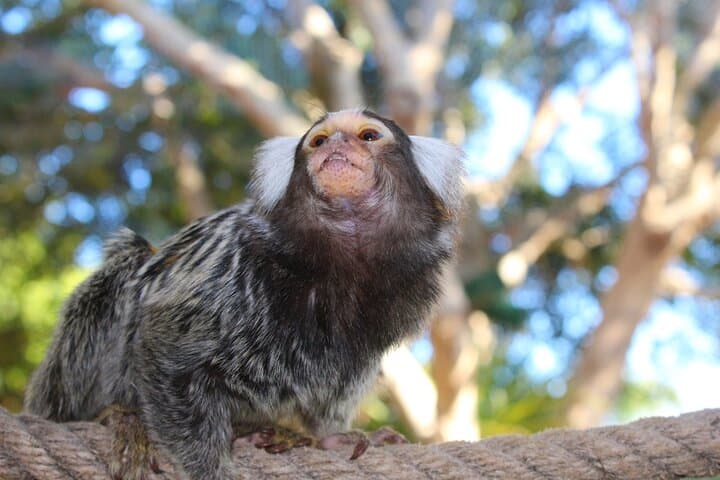
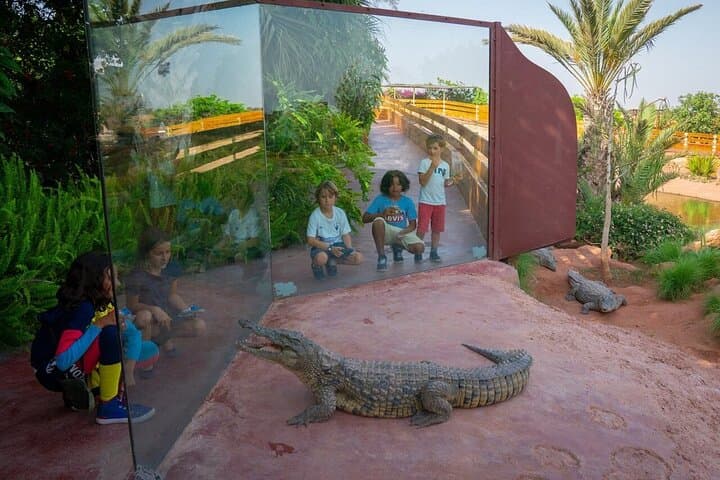
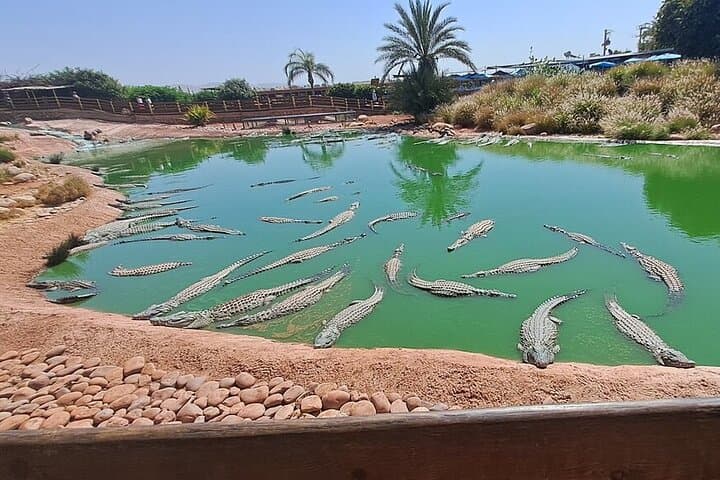
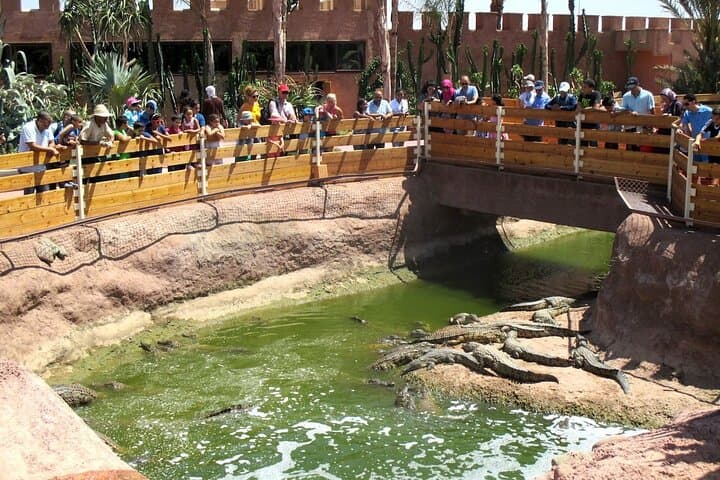
You arrive on a low-slung road out of Agadir and the air shifts—salted wind from the Atlantic mixes with the vegetal scent of heated leaves. In sixty minutes the walkways of Crocoparc open into shaded paths lined with palms and hibiscus, where crocodiles laze in sun-warmed ponds and anacondas sleep under glass. The park’s botanical layout eases visitors from reptile enclosures into curious aviaries and a small tropical garden that contrasts sharply with the surrounding semi-arid hills.
You arrive on a low-slung road out of Agadir and the air shifts—salted wind from the Atlantic mixes with the vegetal scent of heated leaves. In sixty minutes the walkways of Crocoparc open into shaded paths lined with palms and hibiscus, where crocodiles laze in sun-warmed ponds and anacondas sleep under glass. The park’s botanical layout eases visitors from reptile enclosures into curious aviaries and a small tropical garden that contrasts sharply with the surrounding semi-arid hills.
This half-day loop ties natural spectacle to local culture. Crocoparc was established to showcase Nile crocodiles outside their native range and pairs captive exhibits with curated plantings; nearby, the argan woodlands—geologically recent terraces and erosion-formed hills—support a unique ecosystem. Goats clamber into argan trees to reach fruit, a behavior adapted to scarce ground forage and one of the region’s most iconic sights. A short visit to an argan cooperative then connects that scene to a centuries-old Berber tradition of hand-pressing oil.
Practical guidance: expect a 3-hour excursion with short, flat walking paths at each stop; minimal elevation gain. Bring sun protection, comfortable shoes, and local currency for cooperative purchases. Photography is excellent during morning light; the goats are most active on warm, calm days. The pace suits families and travelers looking for an accessible wildlife encounter with cultural context—watch the animals, listen to the guides, and leave the landscape as you found it.