THE ADVENTURE COLLECTIVE® · Independent discovery and booking for outdoor travel

Cover Agadir’s seaside highlights in a single private three‑hour loop: corniche views, the Kasbah overlook, the busy fishing port and Souk El Had. This compact tour mixes local history with practical stops at an argan cooperative and photo-friendly viewpoints.
Cover Agadir’s seaside highlights in a single private three‑hour loop: corniche views, the Kasbah overlook, the busy fishing port and Souk El Had. This compact tour mixes local history with practical stops at an argan cooperative and photo-friendly viewpoints.
A brisk Atlantic breeze meets your face as the driver eases out from Agadir’s hotel strip and the city unfolds: a low-lying crescent of sand, the marina’s varnished masts, and the weathered silhouette of the Kasbah high on the western headland. In three hours you move with purpose—coastline, port, market—snapping photos, tasting street-side energy, and learning why this seaside city feels both modern and rooted.
Verified experiences and guided adventures in the surrounding area.
Operated by Private Marrakech Tours · Agadir, Souss-Massa
A brisk Atlantic breeze meets your face as the driver eases out from Agadir’s hotel strip and the city unfolds: a low-lying crescent of sand, the marina’s varnished masts, and the weathered silhouette of the Kasbah high on the western headland. In three hours you move with purpose—coastline, port, market—snapping photos, tasting street-side energy, and learning why this seaside city feels both modern and rooted.
Agadir’s modern layout is largely a response to the 1960 earthquake that flattened the old town in 1960; what you see today is a coastal city rebuilt on wide boulevards and seaside promenades. Geologically, the bay sits where the Anti-Atlas foothills meet the Atlantic—sandy beaches blur into rocky headlands and a busy fishing fleet. Culturally, the region carries strong Amazigh (Berber) influences; Souk El Had is a sensory classroom for spices, leather and argan products crafted by local cooperatives.
Practical guidance: expect short walks of 10–30 minutes at each stop—the Kasbah viewpoint requires climbing uneven stone steps—so wear sturdy shoes and bring sun protection. The guide times visits to the Souk El Had and an argan cooperative, leaving 20–30 minutes per stop for photos and sampling. Cash (Moroccan dirhams) is handy for small purchases and tipping; bargaining is normal in markets but polite negotiating goes further. Mobile reception is reliable along the corniche; the private vehicle provides a swift way to cover ground without tiring. Plan this as an orientation: it’s compact, informative, and built to give you the landmarks, local stories, and logistical sense to explore Agadir on foot later.
easy.
3 hours.
Light activity: short walks and easy stair climbs; suitable for most fitness levels
The tour lasts about three hours and includes brief walks at each stop—typically 10–30 minutes—so it’s mostly seated in the vehicle with short on-foot visits.
This private tour generally covers transportation; specific attraction admissions are not included unless stated—confirm with the operator when booking.
Yes; private tours usually allow flexible stops and timing—ask your guide about preferred sites or timing when you book.
Yes; the tour is rated easy and stroller-accessible, though infants may need to sit on laps and specialized seats may be available on request.
Agadir was largely rebuilt after the 1960 earthquake; the current city reflects mid-20th-century urban planning with traditional Amazigh crafts concentrated in the Souk El Had.
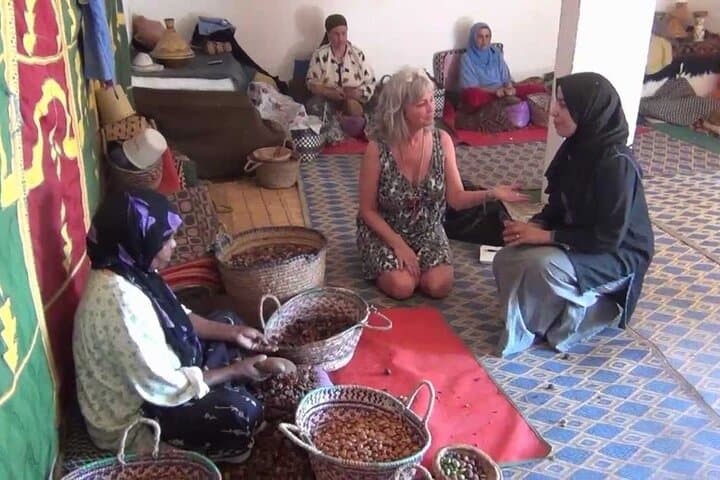
Argan cooperatives support local female-led economies and sustainable harvesting; avoid buying products with non-certified wild argan ingredients to reduce pressure on local ecosystems.
Private Marrakech Tours operates guided outdoor trips and adventures with an emphasis on safety, stewardship, and memorable experiences.
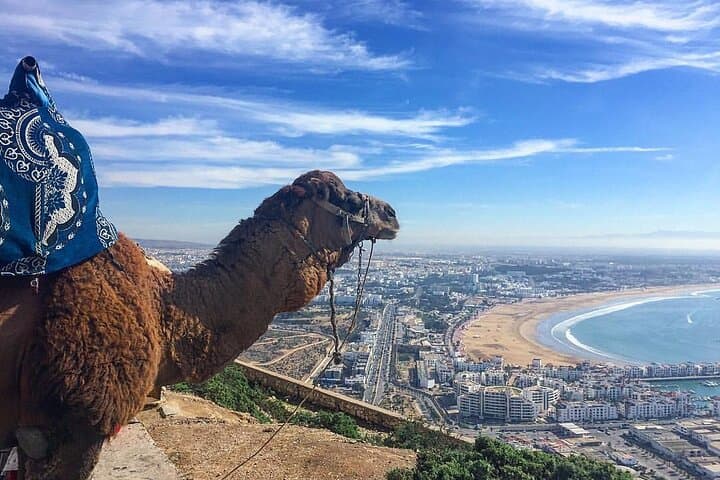
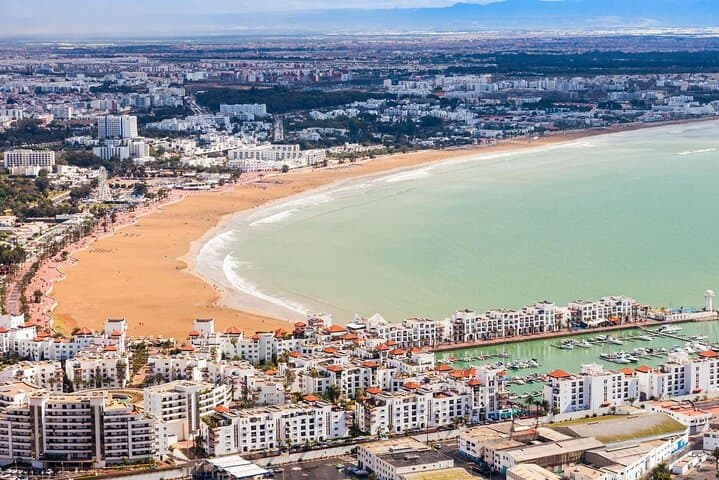
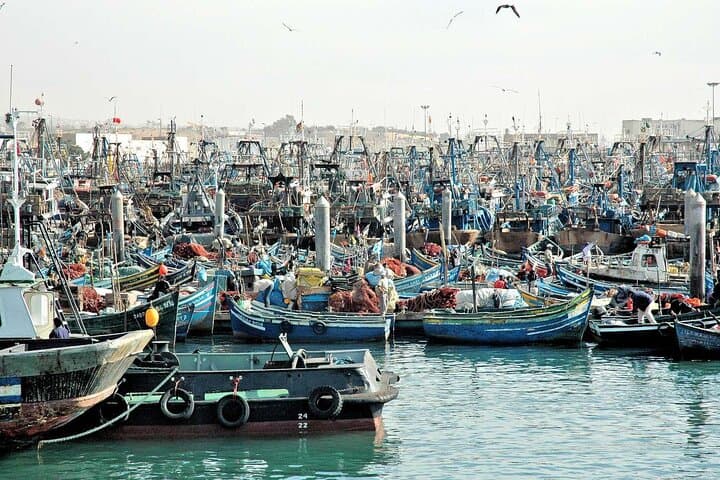
A brisk Atlantic breeze meets your face as the driver eases out from Agadir’s hotel strip and the city unfolds: a low-lying crescent of sand, the marina’s varnished masts, and the weathered silhouette of the Kasbah high on the western headland. In three hours you move with purpose—coastline, port, market—snapping photos, tasting street-side energy, and learning why this seaside city feels both modern and rooted.
A brisk Atlantic breeze meets your face as the driver eases out from Agadir’s hotel strip and the city unfolds: a low-lying crescent of sand, the marina’s varnished masts, and the weathered silhouette of the Kasbah high on the western headland. In three hours you move with purpose—coastline, port, market—snapping photos, tasting street-side energy, and learning why this seaside city feels both modern and rooted.
Agadir’s modern layout is largely a response to the 1960 earthquake that flattened the old town in 1960; what you see today is a coastal city rebuilt on wide boulevards and seaside promenades. Geologically, the bay sits where the Anti-Atlas foothills meet the Atlantic—sandy beaches blur into rocky headlands and a busy fishing fleet. Culturally, the region carries strong Amazigh (Berber) influences; Souk El Had is a sensory classroom for spices, leather and argan products crafted by local cooperatives.
Practical guidance: expect short walks of 10–30 minutes at each stop—the Kasbah viewpoint requires climbing uneven stone steps—so wear sturdy shoes and bring sun protection. The guide times visits to the Souk El Had and an argan cooperative, leaving 20–30 minutes per stop for photos and sampling. Cash (Moroccan dirhams) is handy for small purchases and tipping; bargaining is normal in markets but polite negotiating goes further. Mobile reception is reliable along the corniche; the private vehicle provides a swift way to cover ground without tiring. Plan this as an orientation: it’s compact, informative, and built to give you the landmarks, local stories, and logistical sense to explore Agadir on foot later.