THE ADVENTURE COLLECTIVE® · Independent discovery and booking for outdoor travel

Spend a half-day exploring Agadir’s marina, the windswept Kasbah ruins and the bustling Souk El Had with a private guide and hotel pickup. This 3.5-hour tour mixes panoramic coastal viewpoints with hands-on market culture and urban history.
Spend a half-day exploring Agadir’s marina, the windswept Kasbah ruins and the bustling Souk El Had with a private guide and hotel pickup. This 3.5-hour tour mixes panoramic coastal viewpoints with hands-on market culture and urban history.
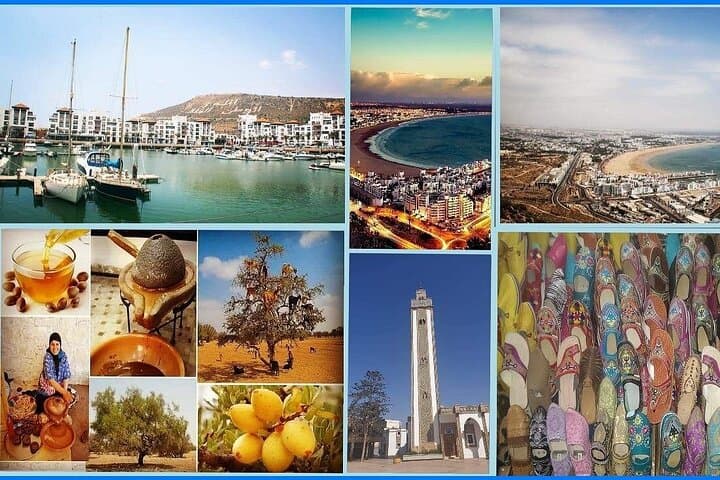
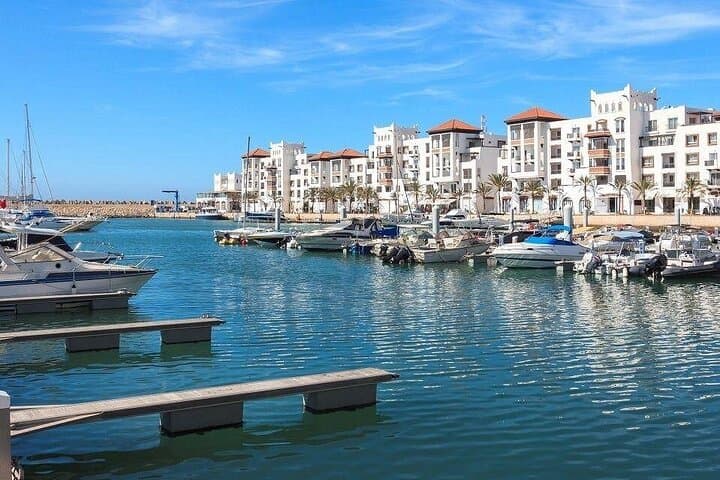
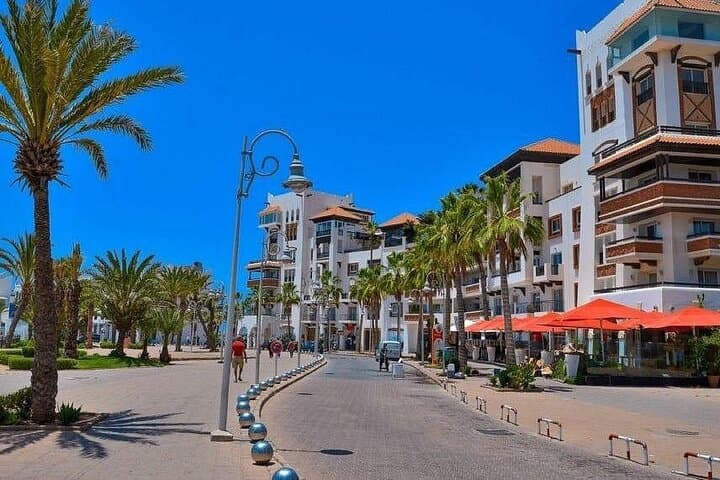
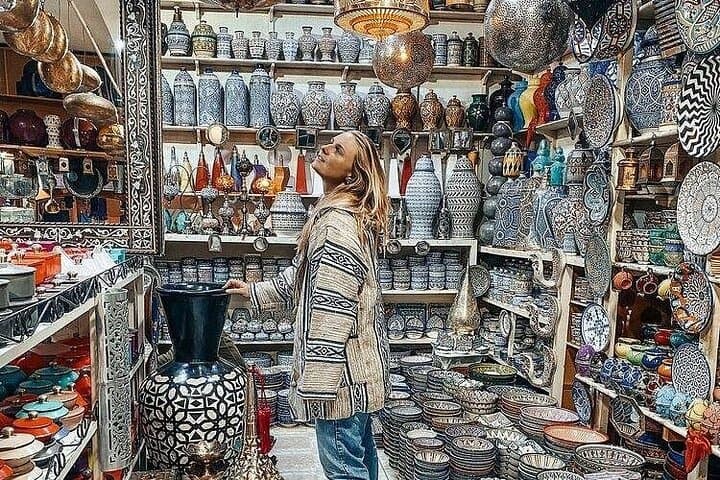
Morning light hits Agadir’s palm-lined promenade as your guide meets you for pickup; the Atlantic smells of salt and grilled fish drift from the marina while yachts rock gently on glassy water. The day moves from the harbor’s tidy luxury to the raw, wind-swept silhouette of Agadir Oufella — the kasbah ruins that watch the bay — then down into the lively alleys of Souk El Had where spices, leather and conversation crowd narrow passages.
Verified experiences and guided adventures in the surrounding area.
Operated by Cross Morocco Tours · Agadir, Souss-Massa
Morning light hits Agadir’s palm-lined promenade as your guide meets you for pickup; the Atlantic smells of salt and grilled fish drift from the marina while yachts rock gently on glassy water. The day moves from the harbor’s tidy luxury to the raw, wind-swept silhouette of Agadir Oufella — the kasbah ruins that watch the bay — then down into the lively alleys of Souk El Had where spices, leather and conversation crowd narrow passages.
Agadir’s modern face is shaped by geology and history: a coastal plain backed by low sandstone hills, the city was dramatically rebuilt after the 1960 earthquake of 1960; the Kasbah remains a weathered high point, a lookout carved into the rock. Culture here mixes Amazigh (Berber) traditions and Arabic customs visible in architecture, market crafts, and daily rhythms. The medina of Coco Polizzi and Mohamed V Mosque offer architectural notes, while Souk El Had is the city’s beating commercial heart.
Practically, expect a 3.5-hour private tour with hotel pickup, air-conditioned minivan transport, and moderate walking on paved and uneven surfaces with some stair climbs to viewpoints. Bring sun protection, a reusable water bottle, and small bills for market purchases; modest dress is recommended for mosque areas. Photography is fine at most sites but check with your guide for restricted areas. The pace suits most fitness levels and provides a compact introduction to Agadir’s coast, culture, and commerce — a recommendable first stop for visitors who want orientation and local insight before striking further into Morocco.
easy.
3–4 hours.
Suitable for most; involves 1–3 miles of walking with several stair climbs to viewpoints.
Yes — the tour includes hotel pickup and drop-off within Agadir; confirm your pickup point at booking.
Non-Muslims are generally not permitted inside most Moroccan mosques; you can admire the mosque’s exterior and ornate details with your guide.
Expect moderate walking—roughly 1–3 miles on paved streets, with stair climbs at the Kasbah and short strolls through market alleys.
Guides commonly speak English, French and Arabic, but confirm language availability when you book to ensure a comfortable tour.
Agadir was largely rebuilt after a devastating 1960 earthquake; the Kasbah ruins predate the modern reconstruction and remain a primary historical lookout over the bay.
Coastal development and beach pollution are local issues; reduce plastic use, support vendors who follow local waste practices, and follow guides’ instructions to protect fragile sites.
Cross Morocco Tours operates guided outdoor trips and adventures with an emphasis on safety, stewardship, and memorable experiences.
Morning light hits Agadir’s palm-lined promenade as your guide meets you for pickup; the Atlantic smells of salt and grilled fish drift from the marina while yachts rock gently on glassy water. The day moves from the harbor’s tidy luxury to the raw, wind-swept silhouette of Agadir Oufella — the kasbah ruins that watch the bay — then down into the lively alleys of Souk El Had where spices, leather and conversation crowd narrow passages.
Morning light hits Agadir’s palm-lined promenade as your guide meets you for pickup; the Atlantic smells of salt and grilled fish drift from the marina while yachts rock gently on glassy water. The day moves from the harbor’s tidy luxury to the raw, wind-swept silhouette of Agadir Oufella — the kasbah ruins that watch the bay — then down into the lively alleys of Souk El Had where spices, leather and conversation crowd narrow passages.
Agadir’s modern face is shaped by geology and history: a coastal plain backed by low sandstone hills, the city was dramatically rebuilt after the 1960 earthquake of 1960; the Kasbah remains a weathered high point, a lookout carved into the rock. Culture here mixes Amazigh (Berber) traditions and Arabic customs visible in architecture, market crafts, and daily rhythms. The medina of Coco Polizzi and Mohamed V Mosque offer architectural notes, while Souk El Had is the city’s beating commercial heart.
Practically, expect a 3.5-hour private tour with hotel pickup, air-conditioned minivan transport, and moderate walking on paved and uneven surfaces with some stair climbs to viewpoints. Bring sun protection, a reusable water bottle, and small bills for market purchases; modest dress is recommended for mosque areas. Photography is fine at most sites but check with your guide for restricted areas. The pace suits most fitness levels and provides a compact introduction to Agadir’s coast, culture, and commerce — a recommendable first stop for visitors who want orientation and local insight before striking further into Morocco.