THE ADVENTURE COLLECTIVE® · Independent discovery and booking for outdoor travel

See goats perched in argan trees, haggle through the vast Souk Al Had and ride the cable car to Agadir Oufella for coastal panoramas. This half-day tour blends wildlife, culture and quick mountain views—ideal for travelers with limited time in Agadir.
See goats perched in argan trees, haggle through the vast Souk Al Had and ride the cable car to Agadir Oufella for coastal panoramas. This half-day tour blends wildlife, culture and quick mountain views—ideal for travelers with limited time in Agadir.
A single lane of highway leaves Agadir and opens into low, scrubby argan forest; within minutes you are close enough to hear goat hooves on branch and see animals balancing where trunks fork. The goats climb the Argania spinosa to eat fruit—an odd, photogenic behavior that has become shorthand for southern Morocco’s coast.
Verified experiences and guided adventures in the surrounding area.
Operated by The best guide '' king mohamed 7" · Agadir, Souss-Massa
A single lane of highway leaves Agadir and opens into low, scrubby argan forest; within minutes you are close enough to hear goat hooves on branch and see animals balancing where trunks fork. The goats climb the Argania spinosa to eat fruit—an odd, photogenic behavior that has become shorthand for southern Morocco’s coast.
History here is visible in stone and salt air: Agadir’s Oufella hill holds the ruins of a 16th-century kasbah and the scar from the 1960 earthquake, while the argan tree evolved over millennia to survive the Souss plain’s thin soils and seasonal droughts. Berber women continue traditional oil-pressing methods at cooperatives, using hand-crushing and cold-press techniques to produce argan oil sold at the market.
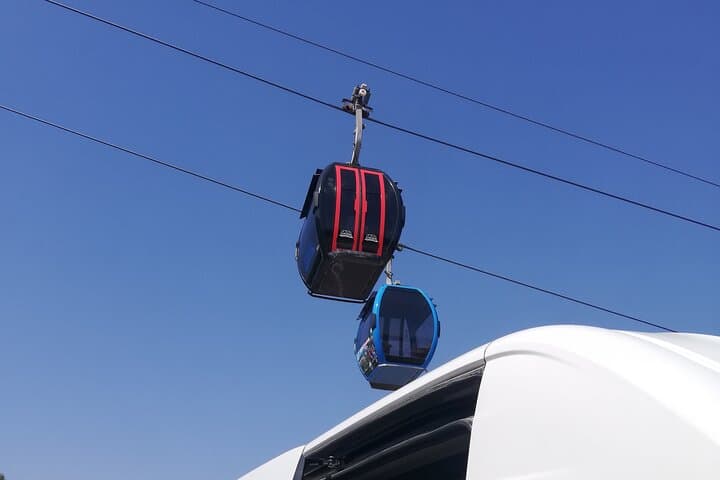
Start the circuit 15 km south of Agadir to watch tree-climbing goats, then move to Souk Al Had — roughly 13 hectares with some 6,000 stalls — where the market’s lanes demand attention and local bargaining. Finish by taking the one-way cable car up to Agadir Oufella (about 236 m elevation) for sweeping views over the bay and Atlantic.
Practical guide: the tour is largely short walks, busy market lanes, and a brief ascent by cable car, so bring sun protection, carry small cash for purchases, and be ready for crowds at Souk Al Had (best in the morning). Respect cooperative etiquette—ask before photographing people—and avoid feeding wildlife. Hydrate in the dry air and wear closed shoes for uneven market cobbles and short dirt tracks.
easy.
4–5 hours.
Suitable for most fitness levels; involves short walks, standing, and brief walking on uneven surfaces at the market and viewpoint
The tour runs about 4–5 hours (270 minutes) including drive time, market time, a cooperative visit and a one-way cable car ride.
The goats naturally climb argan trees to reach fruit; they are semi-wild and should not be fed or chased—observe from a respectful distance.
Souk Al Had is large (around 13 hectares, ~6,000 stalls) and busy, especially mornings; you can buy spices, textiles and prepared foods—use caution with street food if you have a sensitive stomach.
The cable car station and transportation options are generally accessible, but check with the operator about specific mobility needs and boarding assistance.
Agadir’s kasbah on Oufella dates back centuries but was heavily damaged in the 1960 earthquake; the ruins now frame panoramic views and local memory.
Argan forests are protected due to their ecological and cultural value; support local cooperatives that pay fair wages and avoid disturbing wildlife or uprooting trees.
The best guide '' king mohamed 7" operates guided outdoor trips and adventures with an emphasis on safety, stewardship, and memorable experiences.


A single lane of highway leaves Agadir and opens into low, scrubby argan forest; within minutes you are close enough to hear goat hooves on branch and see animals balancing where trunks fork. The goats climb the Argania spinosa to eat fruit—an odd, photogenic behavior that has become shorthand for southern Morocco’s coast.
A single lane of highway leaves Agadir and opens into low, scrubby argan forest; within minutes you are close enough to hear goat hooves on branch and see animals balancing where trunks fork. The goats climb the Argania spinosa to eat fruit—an odd, photogenic behavior that has become shorthand for southern Morocco’s coast.
History here is visible in stone and salt air: Agadir’s Oufella hill holds the ruins of a 16th-century kasbah and the scar from the 1960 earthquake, while the argan tree evolved over millennia to survive the Souss plain’s thin soils and seasonal droughts. Berber women continue traditional oil-pressing methods at cooperatives, using hand-crushing and cold-press techniques to produce argan oil sold at the market.
Start the circuit 15 km south of Agadir to watch tree-climbing goats, then move to Souk Al Had — roughly 13 hectares with some 6,000 stalls — where the market’s lanes demand attention and local bargaining. Finish by taking the one-way cable car up to Agadir Oufella (about 236 m elevation) for sweeping views over the bay and Atlantic.
Practical guide: the tour is largely short walks, busy market lanes, and a brief ascent by cable car, so bring sun protection, carry small cash for purchases, and be ready for crowds at Souk Al Had (best in the morning). Respect cooperative etiquette—ask before photographing people—and avoid feeding wildlife. Hydrate in the dry air and wear closed shoes for uneven market cobbles and short dirt tracks.