THE ADVENTURE COLLECTIVE® · Independent discovery and booking for outdoor travel

Travel from Marrakech to Agadir in a single day to stand on a windswept Kasbah ridge, stroll Souk El Had’s market halls, and walk a 6 km beachfront prized for sun and sea. This practical day-trip guide covers what to expect and how to prepare.
Travel from Marrakech to Agadir in a single day to stand on a windswept Kasbah ridge, stroll Souk El Had’s market halls, and walk a 6 km beachfront prized for sun and sea. This practical day-trip guide covers what to expect and how to prepare.
Late morning light flattens the Atlantic into a silver band as the coach eases into Agadir’s low-rise coastline. The city opens with a long, sandy promenade and a 6 km beach that stretches past fishermen’s berths and modern marinas; above it, the crumbled outline of the old Kasbah perches on the ridge, a short, steep climb that offers a clean panorama of the bay.
Verified experiences and guided adventures in the surrounding area.
Operated by Tombouctour · Agadir, Souss-Massa
Late morning light flattens the Atlantic into a silver band as the coach eases into Agadir’s low-rise coastline. The city opens with a long, sandy promenade and a 6 km beach that stretches past fishermen’s berths and modern marinas; above it, the crumbled outline of the old Kasbah perches on the ridge, a short, steep climb that offers a clean panorama of the bay.
Agadir’s modern face was rebuilt after the 1960 earthquake of 1960; the exposed ruins of Kasbah Oufella are a tangible reminder of that history. The shoreline sits on a coastal plain carved from Quaternary deposits and backed by the foothills of the High Atlas, where argan trees are harvested into the region’s famous oil. Culture here is pragmatic and ocean-tuned: Souk El Had still runs as a market hub of daily life, with specialized doors opening onto alleys of spices, textiles and cooperatives selling cold-pressed argan.
Practical guidance: expect a long day on the road from Marrakech — plan for 3–4 hours each way by private vehicle and several short walks on uneven surfaces in the souk and Kasbah approach. Bring cash (MAD) for small vendors, sun protection for the exposed beach, and comfortable shoes for cobbled alleys and the Kasbah ascent. If you want a shorter visit, prioritize the Souk El Had for shopping and the Kasbah viewpoint for photography; allow extra time if you intend to sample a short horseback or camel ride along the foreshore.
easy.
10–14 hours.
Suitable for travelers in average fitness; expect light walking, short climbs and long periods in a vehicle
Expect roughly 3–4 hours each way by private vehicle depending on traffic; the route is about 250–260 km on the main A7/N8 corridor.
Yes — hotel pickup and drop-off are included as part of the standard tour inclusions.
The tour notes that specialized infant seats are available and the itinerary is suitable for all fitness levels, but check the minimum-booking requirement (typically two people) before booking.
Yes — cooperatives and vendors at the souk sell locally produced argan oil; inspect packaging and ask about cold-pressed production for higher-quality oil.
Agadir was largely rebuilt after the devastating 1960 earthquake; the ruins of Kasbah Oufella on the ridge remain a visible link to the pre-earthquake city and provide panoramic views of the new bayfront.
Argan oil production supports local cooperatives and sustainable harvesting practices; visitors should avoid single-use plastics on the beach and consider buying oils from certified local producers.
Tombouctour operates guided outdoor trips and adventures with an emphasis on safety, stewardship, and memorable experiences.
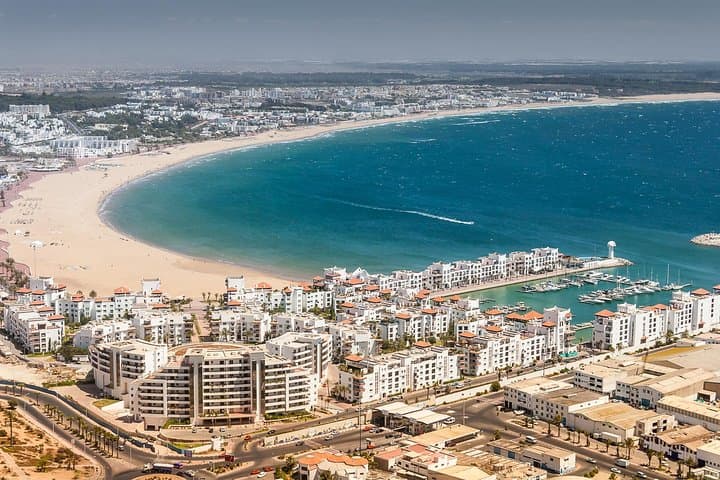
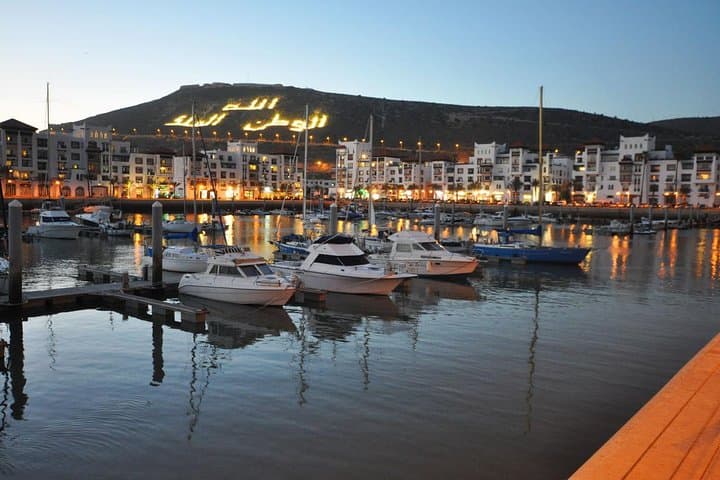
Late morning light flattens the Atlantic into a silver band as the coach eases into Agadir’s low-rise coastline. The city opens with a long, sandy promenade and a 6 km beach that stretches past fishermen’s berths and modern marinas; above it, the crumbled outline of the old Kasbah perches on the ridge, a short, steep climb that offers a clean panorama of the bay.
Late morning light flattens the Atlantic into a silver band as the coach eases into Agadir’s low-rise coastline. The city opens with a long, sandy promenade and a 6 km beach that stretches past fishermen’s berths and modern marinas; above it, the crumbled outline of the old Kasbah perches on the ridge, a short, steep climb that offers a clean panorama of the bay.
Agadir’s modern face was rebuilt after the 1960 earthquake of 1960; the exposed ruins of Kasbah Oufella are a tangible reminder of that history. The shoreline sits on a coastal plain carved from Quaternary deposits and backed by the foothills of the High Atlas, where argan trees are harvested into the region’s famous oil. Culture here is pragmatic and ocean-tuned: Souk El Had still runs as a market hub of daily life, with specialized doors opening onto alleys of spices, textiles and cooperatives selling cold-pressed argan.
Practical guidance: expect a long day on the road from Marrakech — plan for 3–4 hours each way by private vehicle and several short walks on uneven surfaces in the souk and Kasbah approach. Bring cash (MAD) for small vendors, sun protection for the exposed beach, and comfortable shoes for cobbled alleys and the Kasbah ascent. If you want a shorter visit, prioritize the Souk El Had for shopping and the Kasbah viewpoint for photography; allow extra time if you intend to sample a short horseback or camel ride along the foreshore.