THE ADVENTURE COLLECTIVE® · Independent discovery and booking for outdoor travel

Spend a half-day at Agadir’s Crocoparc with a local guide—see Nile crocodiles, giant tortoises and curated botanical gardens. This practical guide explains what to expect and how to prepare for a smooth visit.
Spend a half-day at Agadir’s Crocoparc with a local guide—see Nile crocodiles, giant tortoises and curated botanical gardens. This practical guide explains what to expect and how to prepare for a smooth visit.
The afternoon heat thins as the coach winds through Agadir and drops you at the gates of Crocoparc, where a row of sun-baked rocks and low palms frames a lagoon of slow-moving reptiles. The park’s Nile crocodiles line the pools like living fossils, eyes half-closed while giant tortoises shuffle among blooms and green iguanas slither through the understory. A local guide threads facts and friendly warnings between exhibits, bringing the animals and the gardens into clearer focus.
Verified experiences and guided adventures in the surrounding area.
Operated by Face Tours · Agadir, Souss-Massa
The afternoon heat thins as the coach winds through Agadir and drops you at the gates of Crocoparc, where a row of sun-baked rocks and low palms frames a lagoon of slow-moving reptiles. The park’s Nile crocodiles line the pools like living fossils, eyes half-closed while giant tortoises shuffle among blooms and green iguanas slither through the understory. A local guide threads facts and friendly warnings between exhibits, bringing the animals and the gardens into clearer focus.
Crocoparc opened in the early 2000s as a private collection turned public attraction; over time it grew into a compact wildlife-and-botanical site focused on education and visitor access rather than wild exhibition. The park sits on Agadir’s coastal plain where sandy soils and irrigation support a surprising diversity of adapted plants—succulents, palms and cacti that shade paths and terraces. Culturally, it’s part of Agadir’s mix of family-friendly attractions just inland from the Atlantic beaches and the city’s fishing port.
Practical guidance: the tour runs about three hours and includes hotel pickup and an English-speaking guide. Wear sturdy shoes for uneven paths, bring sun protection and a refillable water bottle—shade is patchy and viewing areas are outdoors. Expect short boardwalks, viewing barriers and explanatory signs; feeding or touching animals is not allowed. Mobility-impaired visitors should check pickup and path access in advance. If you want quieter photo opportunities, request an earlier or later pickup when crowds thin and the reptiles are more active near water. The visit pairs well with a stroll along Agadir’s waterfront afterward.
moderate.
3 hours.
Able to walk 1–2 miles on uneven ground and stand for exhibit viewing; moderate stamina recommended
Yes—the tour price includes the Crocoparc entry ticket and guided visit, plus hotel transfer as listed.
The overall tour is about three hours including pickup and return; plan roughly 60–90 minutes for the park visit itself.
The park is family-friendly and allows children, but small children should be supervised near enclosures and around water features.
Some paths and viewing areas are accessible, but there are steps and uneven sections—contact the operator ahead to confirm accessibility and pickup arrangements.
Crocoparc was developed in the early 21st century as a private breeding and exhibition space that expanded into a public park combining reptiles and curated botanical plantings.
The park emphasizes captive care and public education; visitors should avoid feeding animals and follow signage to reduce stress on captive species.
Face Tours operates guided outdoor trips and adventures with an emphasis on safety, stewardship, and memorable experiences.

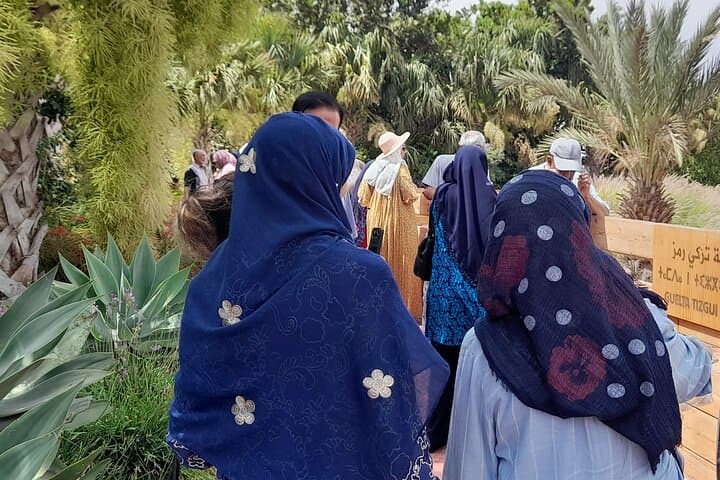


The afternoon heat thins as the coach winds through Agadir and drops you at the gates of Crocoparc, where a row of sun-baked rocks and low palms frames a lagoon of slow-moving reptiles. The park’s Nile crocodiles line the pools like living fossils, eyes half-closed while giant tortoises shuffle among blooms and green iguanas slither through the understory. A local guide threads facts and friendly warnings between exhibits, bringing the animals and the gardens into clearer focus.
The afternoon heat thins as the coach winds through Agadir and drops you at the gates of Crocoparc, where a row of sun-baked rocks and low palms frames a lagoon of slow-moving reptiles. The park’s Nile crocodiles line the pools like living fossils, eyes half-closed while giant tortoises shuffle among blooms and green iguanas slither through the understory. A local guide threads facts and friendly warnings between exhibits, bringing the animals and the gardens into clearer focus.
Crocoparc opened in the early 2000s as a private collection turned public attraction; over time it grew into a compact wildlife-and-botanical site focused on education and visitor access rather than wild exhibition. The park sits on Agadir’s coastal plain where sandy soils and irrigation support a surprising diversity of adapted plants—succulents, palms and cacti that shade paths and terraces. Culturally, it’s part of Agadir’s mix of family-friendly attractions just inland from the Atlantic beaches and the city’s fishing port.
Practical guidance: the tour runs about three hours and includes hotel pickup and an English-speaking guide. Wear sturdy shoes for uneven paths, bring sun protection and a refillable water bottle—shade is patchy and viewing areas are outdoors. Expect short boardwalks, viewing barriers and explanatory signs; feeding or touching animals is not allowed. Mobility-impaired visitors should check pickup and path access in advance. If you want quieter photo opportunities, request an earlier or later pickup when crowds thin and the reptiles are more active near water. The visit pairs well with a stroll along Agadir’s waterfront afterward.