THE ADVENTURE COLLECTIVE® · Independent discovery and booking for outdoor travel

Shop a bustling Agadir market, cook tagine and msemen with a local chef, then saddle up for a one‑hour camel ride through eucalyptus groves and the Oued Souss estuary. This half‑day blends hands‑on culinary learning with an easy coastal ride framed by migratory birds.
Shop a bustling Agadir market, cook tagine and msemen with a local chef, then saddle up for a one‑hour camel ride through eucalyptus groves and the Oued Souss estuary. This half‑day blends hands‑on culinary learning with an easy coastal ride framed by migratory birds.
You step from an air‑conditioned van into the warm, fragrant chaos of Bensergao market—piles of preserved lemons, coriander bunches that smell green and sharp, and women weighing sacks of cumin. A local chef leads the small group through bargaining and ingredient selection, the kind of practical choreography that makes Moroccan food feel homemade rather than staged.
Verified experiences and guided adventures in the surrounding area.
Operated by Agadir Guide Tours · Agadir, Souss-Massa
You step from an air‑conditioned van into the warm, fragrant chaos of Bensergao market—piles of preserved lemons, coriander bunches that smell green and sharp, and women weighing sacks of cumin. A local chef leads the small group through bargaining and ingredient selection, the kind of practical choreography that makes Moroccan food feel homemade rather than staged.
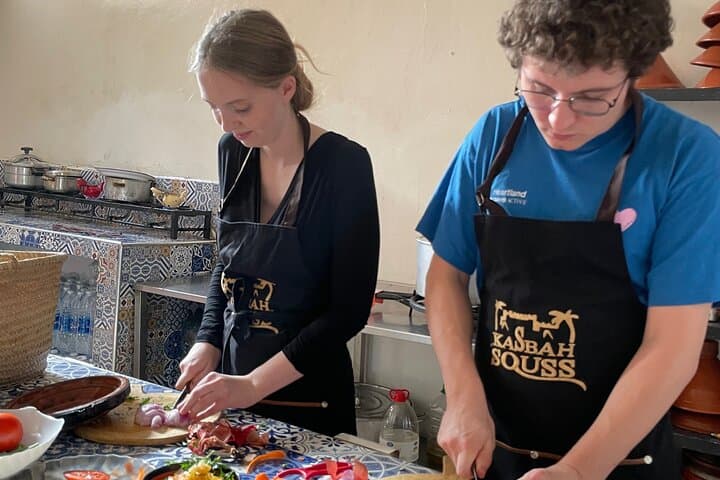
The cooking lesson takes place in Kasbah Sous, where Berber, Arab and Andalusian foodways collide: slow braised tagines that lean on clay and low heat, flaky msemen pancakes rolled by hand, and the ritual of sweet, minty thé prepared with an almost theatrical pour. Geologically Agadir sits on a wide coastal plain shaped by the Souss River estuary and the Atlantic swell, which feeds the salt marshes and migratory birdlife you'll spot later on the ride.
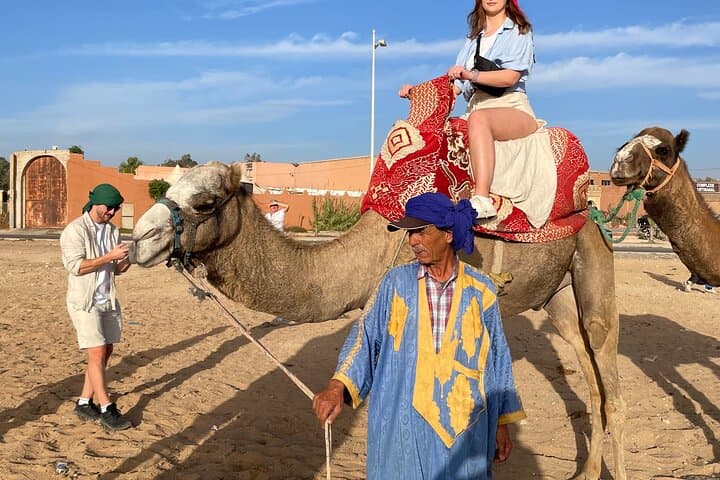
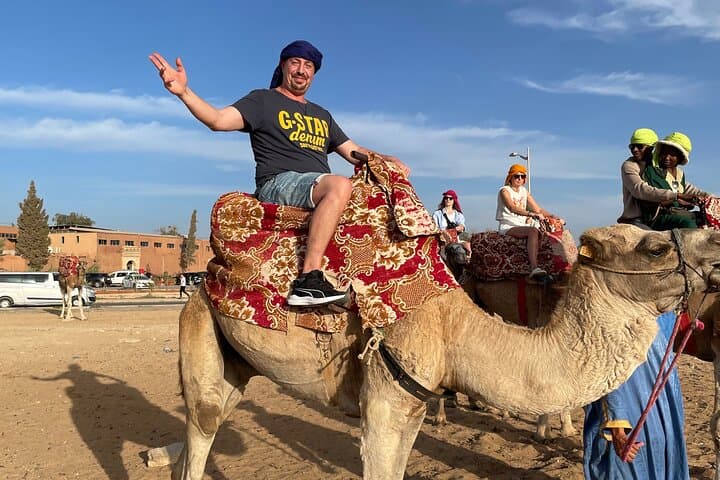
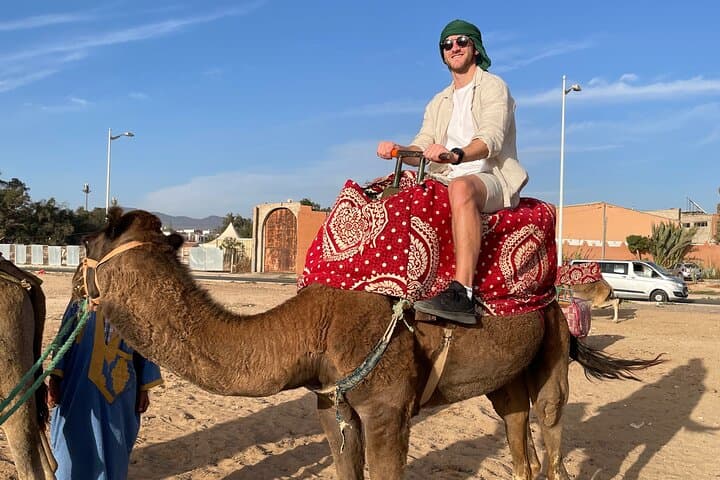
After the kitchen, you mount a dromedary for a one‑hour camel ride that threads eucalyptus rows, glassy side‑channels of the Oued Souss and small Berber villages. The camel’s steady gait forces you to slow and take in the light over the estuary—flamingos often punctuate the horizon.
Practical guidance: schedule this half‑day in the morning or late afternoon to avoid midday heat; the operator includes hotel pickup, market shopping guidance, and all ingredients. Wear closed shoes for market walking and light layers for the evening breeze. Bring a small camera, cash for market extras, and an open appetite—the cooking class is hands‑on and ends with a shared meal and mint tea.
moderate.
4 hours.
Light to moderate fitness—able to walk 30–60 minutes on uneven surfaces and mount a camel with assistance.
Yes—hotel pickup and drop‑off in Agadir are included as part of the tour.
Children may join; operators typically have age and weight limits—check when booking and request infant seats for the vehicle if needed.
Yes—the local chef can adapt dishes for common dietary needs if informed in advance.
The ride is low‑impact and paced for comfort; mounting may require a short step up and assistance from guides.
Kasbah Sous and surrounding Berber villages reflect centuries of coastal trade and a cuisine shaped by Berber, Arab and Andalusian influences.
The Souss estuary is important for migratory birds—respect marked paths and avoid disturbing feeding flocks; operators aim to minimize trail erosion and litter.
Agadir Guide Tours operates guided outdoor trips and adventures with an emphasis on safety, stewardship, and memorable experiences.
You step from an air‑conditioned van into the warm, fragrant chaos of Bensergao market—piles of preserved lemons, coriander bunches that smell green and sharp, and women weighing sacks of cumin. A local chef leads the small group through bargaining and ingredient selection, the kind of practical choreography that makes Moroccan food feel homemade rather than staged.
You step from an air‑conditioned van into the warm, fragrant chaos of Bensergao market—piles of preserved lemons, coriander bunches that smell green and sharp, and women weighing sacks of cumin. A local chef leads the small group through bargaining and ingredient selection, the kind of practical choreography that makes Moroccan food feel homemade rather than staged.
The cooking lesson takes place in Kasbah Sous, where Berber, Arab and Andalusian foodways collide: slow braised tagines that lean on clay and low heat, flaky msemen pancakes rolled by hand, and the ritual of sweet, minty thé prepared with an almost theatrical pour. Geologically Agadir sits on a wide coastal plain shaped by the Souss River estuary and the Atlantic swell, which feeds the salt marshes and migratory birdlife you'll spot later on the ride.
After the kitchen, you mount a dromedary for a one‑hour camel ride that threads eucalyptus rows, glassy side‑channels of the Oued Souss and small Berber villages. The camel’s steady gait forces you to slow and take in the light over the estuary—flamingos often punctuate the horizon.
Practical guidance: schedule this half‑day in the morning or late afternoon to avoid midday heat; the operator includes hotel pickup, market shopping guidance, and all ingredients. Wear closed shoes for market walking and light layers for the evening breeze. Bring a small camera, cash for market extras, and an open appetite—the cooking class is hands‑on and ends with a shared meal and mint tea.