THE ADVENTURE COLLECTIVE® · Independent discovery and booking for outdoor travel

Explore Agadir’s highlights in a compact half‑day: the Marina, panoramic Kasbah Oufella, Mohamed V Mosque, Argan Palace and the bustling Souk El Had. This guided loop blends coastal views, local craft demonstrations and market bargaining with convenient hotel pickup.
Explore Agadir’s highlights in a compact half‑day: the Marina, panoramic Kasbah Oufella, Mohamed V Mosque, Argan Palace and the bustling Souk El Had. This guided loop blends coastal views, local craft demonstrations and market bargaining with convenient hotel pickup.
You step off an air‑conditioned minivan and the Atlantic wind meets you at the Marina — glossy yachts bob against a horizon that feels abruptly close. The guide points up a scrub‑brown ridge where the stone remains of Kasbah Agadir Oufella watch over the city; from that vantage the rebuild after the 1960 earthquake reads plainly in the flat grid of new Agadir below.
Verified experiences and guided adventures in the surrounding area.
Operated by Kawathar Atlas · Agadir, Souss‑Massa
You step off an air‑conditioned minivan and the Atlantic wind meets you at the Marina — glossy yachts bob against a horizon that feels abruptly close. The guide points up a scrub‑brown ridge where the stone remains of Kasbah Agadir Oufella watch over the city; from that vantage the rebuild after the 1960 earthquake reads plainly in the flat grid of new Agadir below.
The route traces recent history and coastal geology: a modern mosque with geometric tilework, a reconstructed hilltop kasbah perched on Cretaceous sedimentary cliffs, and the Argan Palace where local women’s cooperatives demonstrate oil production from the endemic argan tree. Each stop is compact but telling—this is a city of reclamation and trade, where ocean air and dry, rocky hills meet.
Souk El Had is where the tour loosens. Stalls spill spices, leatherwork and fresh produce; bargaining here is part social ritual, part navigation through color and scent. Expect narrow aisles, friendly persistence from vendors and a chance to sample argan products and sweet Moroccan pastries.
Practical guidance: bring a hat, sunscreen and cash in small dirhams for bargaining. The tour is wheelchair and stroller accessible and includes hotel pickup and drop‑off, but wear sensible shoes for short walks and steps at viewpoints. Morning light is best for photography at the kasbah; late afternoon keeps the souk cooler. This half‑day loop gives a concise, walkable primer to Agadir’s people, landscape and commerce.
easy.
1–2 hours.
Suitable for most fitness levels; includes short walks and some steps at viewpoints.
Yes—hotel pickup and drop‑off within Agadir are included; confirm your pickup time when booking.
The itinerary runs roughly 1–2 hours depending on stops and traffic; there is dedicated free time at Souk El Had.
Non‑Muslim visitors can view the exterior and certain public areas; follow the guide’s instructions and dress modestly.
Most goods are safe; many shops accept cash only—inspect handmade items and ask about materials before buying.
Kasbah Agadir Oufella is the ruin of a 16th‑century hilltop fortress that dominated the pre‑1960 city; the earthquake that year razed much of Agadir, shaping its modern rebuild.
Argan landscapes are fragile; support ethical cooperatives when buying argan products and minimize single‑use plastics in the market.
Kawathar Atlas operates guided outdoor trips and adventures with an emphasis on safety, stewardship, and memorable experiences.

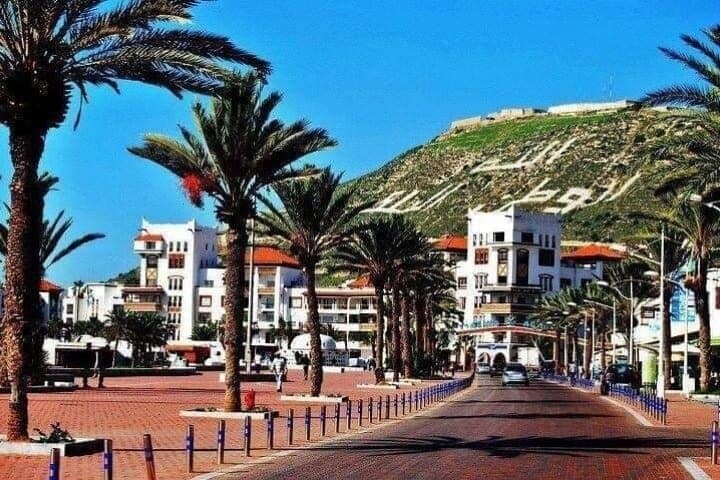


You step off an air‑conditioned minivan and the Atlantic wind meets you at the Marina — glossy yachts bob against a horizon that feels abruptly close. The guide points up a scrub‑brown ridge where the stone remains of Kasbah Agadir Oufella watch over the city; from that vantage the rebuild after the 1960 earthquake reads plainly in the flat grid of new Agadir below.
You step off an air‑conditioned minivan and the Atlantic wind meets you at the Marina — glossy yachts bob against a horizon that feels abruptly close. The guide points up a scrub‑brown ridge where the stone remains of Kasbah Agadir Oufella watch over the city; from that vantage the rebuild after the 1960 earthquake reads plainly in the flat grid of new Agadir below.
The route traces recent history and coastal geology: a modern mosque with geometric tilework, a reconstructed hilltop kasbah perched on Cretaceous sedimentary cliffs, and the Argan Palace where local women’s cooperatives demonstrate oil production from the endemic argan tree. Each stop is compact but telling—this is a city of reclamation and trade, where ocean air and dry, rocky hills meet.
Souk El Had is where the tour loosens. Stalls spill spices, leatherwork and fresh produce; bargaining here is part social ritual, part navigation through color and scent. Expect narrow aisles, friendly persistence from vendors and a chance to sample argan products and sweet Moroccan pastries.
Practical guidance: bring a hat, sunscreen and cash in small dirhams for bargaining. The tour is wheelchair and stroller accessible and includes hotel pickup and drop‑off, but wear sensible shoes for short walks and steps at viewpoints. Morning light is best for photography at the kasbah; late afternoon keeps the souk cooler. This half‑day loop gives a concise, walkable primer to Agadir’s people, landscape and commerce.