THE ADVENTURE COLLECTIVE® · Independent discovery and booking for outdoor travel

Ride a camel through eucalyptus-scented forest and along Agadir’s large lake, wearing traditional outfits and turbans for the full Moroccan moment. This accessible 1–2 hour excursion pairs easy trails with birdwatching opportunities, including flamingos.
Ride a camel through eucalyptus-scented forest and along Agadir’s large lake, wearing traditional outfits and turbans for the full Moroccan moment. This accessible 1–2 hour excursion pairs easy trails with birdwatching opportunities, including flamingos.
The first hoofbeat arrives like a metronome, steady and patient, as you step onto a camel saddle framed by eucalyptus shade and the low shimmer of Agadir’s large lake. The route threads forest tracks and open shoreline; flamingos lift and circle when the wind pushes across the water, and the camels walk with the slow certainty of local guides who have read this landscape for years.
Verified experiences and guided adventures in the surrounding area.
Operated by Agadir camel & horse riding · Agadir, Souss-Massa
The first hoofbeat arrives like a metronome, steady and patient, as you step onto a camel saddle framed by eucalyptus shade and the low shimmer of Agadir’s large lake. The route threads forest tracks and open shoreline; flamingos lift and circle when the wind pushes across the water, and the camels walk with the slow certainty of local guides who have read this landscape for years.
This stretch of Morocco sits where Atlantic plains meet the foothills of the Souss-Massa region. The area’s geology is coastal sediment and quarried terraces, while cultural history belongs to the Amazigh (Berber) communities who have worked these lands for centuries. Wearing a turban and traditional outfit during the ride is both photographic and a nod to hospitality practices in southern Morocco.
Expect a gentle, accessible outing rather than a technical trek: trails are compacted dirt and low roots, elevation changes minor, and the route is roughly 1–2 hours including transfer time. Guides often offer bottled water and short stops for photos and birdwatching; flamingos and wading birds are common near the lagoon.
Practical tips: schedule morning or late-afternoon rides to avoid midday heat, bring sun protection and closed shoes for grip, and follow your guide’s instructions mounting and dismounting — camels rise and sit with pronounced motion. Respect nearby birdlife by keeping noise low and never approaching nesting sites. This ride is an easy, sensory way to connect with coastal Agadir’s natural edge while sampling a small, living piece of Moroccan culture.
easy.
1–2 hours.
Suitable for most fitness levels; riders should be able to mount with minimal assistance and tolerate short periods seated on a moving animal.
The advertised activity lasts about 1 hour 40 minutes door-to-door; the on-camel portion is typically closer to 45–60 minutes.
Yes—traditional outfits and turbans are provided so you can wear them during the ride and photos.
This ride is generally suitable for most ages; infants may sit on laps and operators provide assistance, but people with serious back or heart conditions should avoid it.
Yes—flamingos and other wading birds frequent the lake; sightings depend on season and water levels.
The Agadir coastline has long been a crossroads for Amazigh communities and Atlantic trade; local attire and turban styles reflect centuries of desert and coastal travel needs.
Stick to marked paths and avoid feeding wildlife; staying on established trails helps protect sensitive bird habitat along the lagoon.
Agadir camel & horse riding operates guided outdoor trips and adventures with an emphasis on safety, stewardship, and memorable experiences.
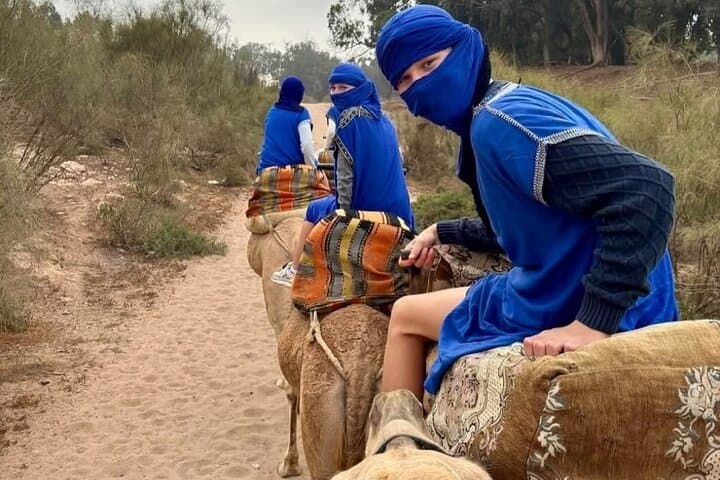


The first hoofbeat arrives like a metronome, steady and patient, as you step onto a camel saddle framed by eucalyptus shade and the low shimmer of Agadir’s large lake. The route threads forest tracks and open shoreline; flamingos lift and circle when the wind pushes across the water, and the camels walk with the slow certainty of local guides who have read this landscape for years.
The first hoofbeat arrives like a metronome, steady and patient, as you step onto a camel saddle framed by eucalyptus shade and the low shimmer of Agadir’s large lake. The route threads forest tracks and open shoreline; flamingos lift and circle when the wind pushes across the water, and the camels walk with the slow certainty of local guides who have read this landscape for years.
This stretch of Morocco sits where Atlantic plains meet the foothills of the Souss-Massa region. The area’s geology is coastal sediment and quarried terraces, while cultural history belongs to the Amazigh (Berber) communities who have worked these lands for centuries. Wearing a turban and traditional outfit during the ride is both photographic and a nod to hospitality practices in southern Morocco.
Expect a gentle, accessible outing rather than a technical trek: trails are compacted dirt and low roots, elevation changes minor, and the route is roughly 1–2 hours including transfer time. Guides often offer bottled water and short stops for photos and birdwatching; flamingos and wading birds are common near the lagoon.
Practical tips: schedule morning or late-afternoon rides to avoid midday heat, bring sun protection and closed shoes for grip, and follow your guide’s instructions mounting and dismounting — camels rise and sit with pronounced motion. Respect nearby birdlife by keeping noise low and never approaching nesting sites. This ride is an easy, sensory way to connect with coastal Agadir’s natural edge while sampling a small, living piece of Moroccan culture.