THE ADVENTURE COLLECTIVE® · Independent discovery and booking for outdoor travel

Ride a single-mounted dromedary through eucalyptus windrows and the mouth of the Souss River, spotting migratory flamingos and finishing with mint tea and cakes at the ranch. This two-hour Agadir loop emphasizes animal welfare and a straightforward, no-pressure experience.
Ride a single-mounted dromedary through eucalyptus windrows and the mouth of the Souss River, spotting migratory flamingos and finishing with mint tea and cakes at the ranch. This two-hour Agadir loop emphasizes animal welfare and a straightforward, no-pressure experience.
The sun is low over Agadir when the caravan shuffles from the ranch and the dromedaries rise and fall with steady, patient steps. Eucalyptus perfume threads the air as you move away from town, the camels’ slow gait setting a meditative pace that lets you watch the Souss estuary expand toward the Atlantic and, at low tide, reveal salt flats where waders pick at the mud.
Verified experiences and guided adventures in the surrounding area.
Operated by DAR SOUSS LOISIR · Agadir, Souss-Massa
The sun is low over Agadir when the caravan shuffles from the ranch and the dromedaries rise and fall with steady, patient steps. Eucalyptus perfume threads the air as you move away from town, the camels’ slow gait setting a meditative pace that lets you watch the Souss estuary expand toward the Atlantic and, at low tide, reveal salt flats where waders pick at the mud.
This short two-hour loop runs through Aghroud Bensergao village and a planted eucalyptus stand—an engineered coastal landscape atop older alluvial soils from the Souss River. Agadir sits on a coastline shaped by river sediments and Atlantic currents, and the estuary is a seasonal magnet for migratory birds. Camels themselves have been part of North African transport and culture for centuries; today the local operators claim a welfare-focused approach—one rider per camel—so animals are less stressed and photos feel more respectful than crowded doubles.
Expect brief stops at the river mouth for birdwatching and a return to the ranch for mint tea and Moroccan cakes prepared with generational recipes. Guides usually brief riders on mounting and posture; the route is flat with packed sand and occasional soft patches, not technical but uneven underfoot.
Practical guidance: arrive with sturdy closed shoes (flip-flops are impractical), layered clothing for coastal breezes, and a small daypack for water and sunscreen. If you have back problems or are pregnant, skip riding. Bring your camera but keep straps secure—the estuary light changes quickly. Book for late afternoon for cooler temperatures and the best light on the water.
easy.
2 hours.
Suitable for most fitness levels; riders should be able to mount with assistance and remain seated for short intervals.
The full experience is about two hours total, including transfer to the ranch, a guided camel loop of roughly 10–40 minutes depending on the route, and refreshments afterward.
Yes—children are accepted but under-12s ride with a parent seated in front for safety; infants may need a carrier and adults should check with the operator at booking.
Operators may cancel rides in rain or when surfaces are slippery since camels are vulnerable to slips; you’ll need to cancel at least 24 hours for a full refund per the policy.
Pickup and drop-off from hotels in downtown Agadir (and for cruise passengers from the port) are included in the booking.
Camels have carried people across North Africa for millennia; along the Souss coast, the estuary and nearby settlements reflect centuries of Amazigh (Berber) fishing and riverine trade.
Riders should respect marked paths and avoid disturbing bird feeding zones; operators that limit riders per camel typically support better animal welfare and lower local impact.
DAR SOUSS LOISIR operates guided outdoor trips and adventures with an emphasis on safety, stewardship, and memorable experiences.
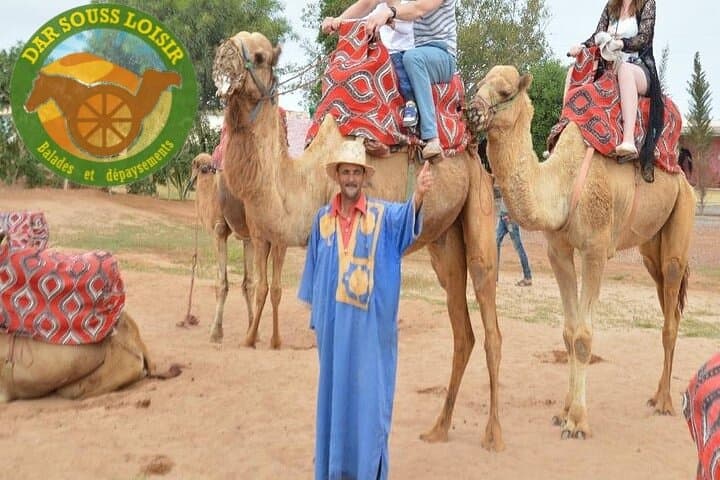
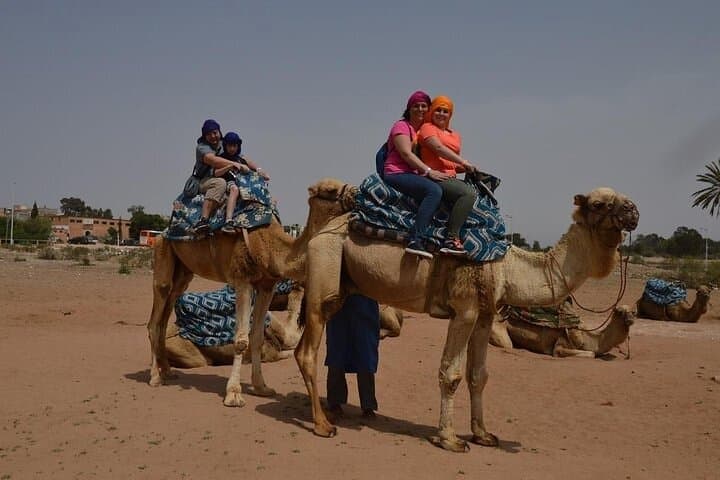
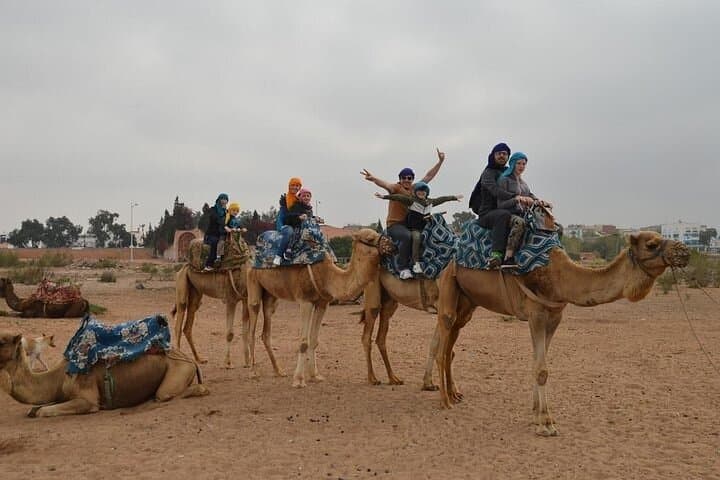
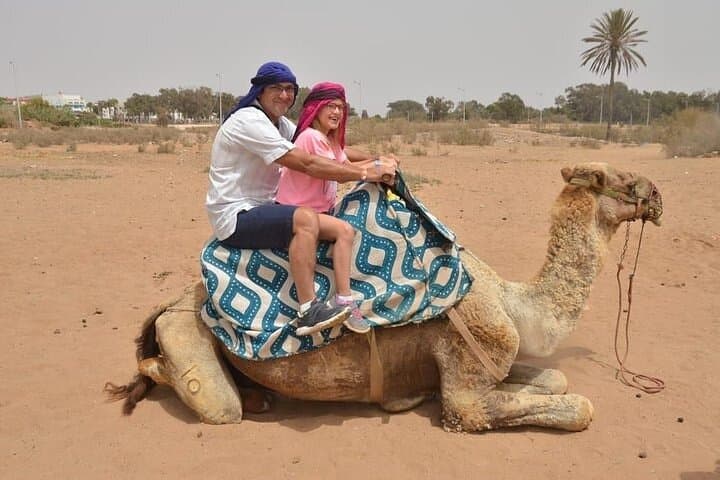
The sun is low over Agadir when the caravan shuffles from the ranch and the dromedaries rise and fall with steady, patient steps. Eucalyptus perfume threads the air as you move away from town, the camels’ slow gait setting a meditative pace that lets you watch the Souss estuary expand toward the Atlantic and, at low tide, reveal salt flats where waders pick at the mud.
The sun is low over Agadir when the caravan shuffles from the ranch and the dromedaries rise and fall with steady, patient steps. Eucalyptus perfume threads the air as you move away from town, the camels’ slow gait setting a meditative pace that lets you watch the Souss estuary expand toward the Atlantic and, at low tide, reveal salt flats where waders pick at the mud.
This short two-hour loop runs through Aghroud Bensergao village and a planted eucalyptus stand—an engineered coastal landscape atop older alluvial soils from the Souss River. Agadir sits on a coastline shaped by river sediments and Atlantic currents, and the estuary is a seasonal magnet for migratory birds. Camels themselves have been part of North African transport and culture for centuries; today the local operators claim a welfare-focused approach—one rider per camel—so animals are less stressed and photos feel more respectful than crowded doubles.
Expect brief stops at the river mouth for birdwatching and a return to the ranch for mint tea and Moroccan cakes prepared with generational recipes. Guides usually brief riders on mounting and posture; the route is flat with packed sand and occasional soft patches, not technical but uneven underfoot.
Practical guidance: arrive with sturdy closed shoes (flip-flops are impractical), layered clothing for coastal breezes, and a small daypack for water and sunscreen. If you have back problems or are pregnant, skip riding. Bring your camera but keep straps secure—the estuary light changes quickly. Book for late afternoon for cooler temperatures and the best light on the water.