THE ADVENTURE COLLECTIVE® · Independent discovery and booking for outdoor travel

Take a 90-minute camel ride from Agadir through eucalyptus groves and low dunes to the mouth of Oued Souss. Expect close birdwatching opportunities, local camel handlers, and gentle terrain suited to most travelers.
Take a 90-minute camel ride from Agadir through eucalyptus groves and low dunes to the mouth of Oued Souss. Expect close birdwatching opportunities, local camel handlers, and gentle terrain suited to most travelers.
The first steps off the air-conditioned minivan feel deliberate — sand underfoot, a line of camels lifting and lowering like slow metronomes. You climb a padded saddle, settle into the rise and fall, and the city noise slips behind you as the eucalyptus forest opens to low dunes and the broad ribbon of the Souss estuary.
Verified experiences and guided adventures in the surrounding area.
Operated by Agadir Destination · Agadir, Souss-Massa
The first steps off the air-conditioned minivan feel deliberate — sand underfoot, a line of camels lifting and lowering like slow metronomes. You climb a padded saddle, settle into the rise and fall, and the city noise slips behind you as the eucalyptus forest opens to low dunes and the broad ribbon of the Souss estuary.
This two-hour ride follows routes used for decades by local handlers and taps into Morocco’s living relationship with the dromedary, a traditional Berber transport animal adapted to coastal and desert terrain. Geologically the area is recent coastal sand over alluvial soils from the Souss plain; the dunes are modest in height and the ride stays near sea level, which keeps the path gentle and steady.
Culturally, camel handling is a working craft here — expect handlers who know the animals and the shoreline. The mouth of Oued Souss is an active stop for migratory birds, so binoculars reward patient riders with flamingos and storks on mudflats.
Practical guidance: rides run about 90 minutes seated on camels with pickup from Agadir hotels. Beach access for camels is restricted, so the route stays on dunes, tracks and forest edges. Wear closed-toe shoes, a sun hat and layers for wind off the Atlantic. Bring water, motion-sickness prevention if you’re sensitive to sway, and a small camera with a secure strap.
Respect handlers’ instructions when mounting and dismounting, keep voices low near birding areas, and leave no litter — the estuary is both a fragile habitat and a highlight of the trip.
easy.
1.5–2 hours.
Suitable for most fitness levels; you should be able to mount/dismount with minimal assistance and sit comfortably for the duration.
The activity runs about 90 minutes on the camel, with total door-to-door time depending on hotel pickup and drop-off.
No — camels are not permitted on the main Agadir beach; the route follows dunes, tracks and forest edges near the estuary instead.
Operators often provide specialized infant seats and state the activity is suitable for all fitness levels, but check age and safety rules with the provider before booking.
Yes — this tour typically includes hotel pickup and drop-off in an air-conditioned vehicle; confirm pickup time and location when you book.
The dromedary has been a working partner in southern Morocco for centuries; camel transport remains an element of coastal and desert culture near Agadir.
Oued Souss estuary is an important stop for migratory birds — keep to designated routes, avoid feeding wildlife, and pack out litter to protect feeding and nesting habitats.
Agadir Destination operates guided outdoor trips and adventures with an emphasis on safety, stewardship, and memorable experiences.
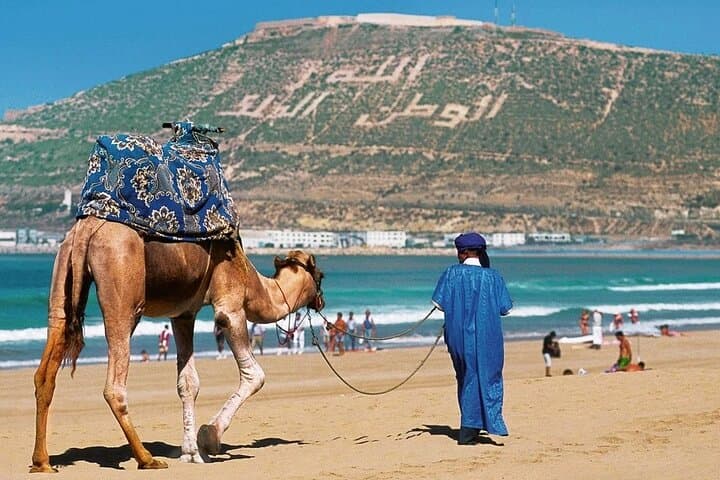
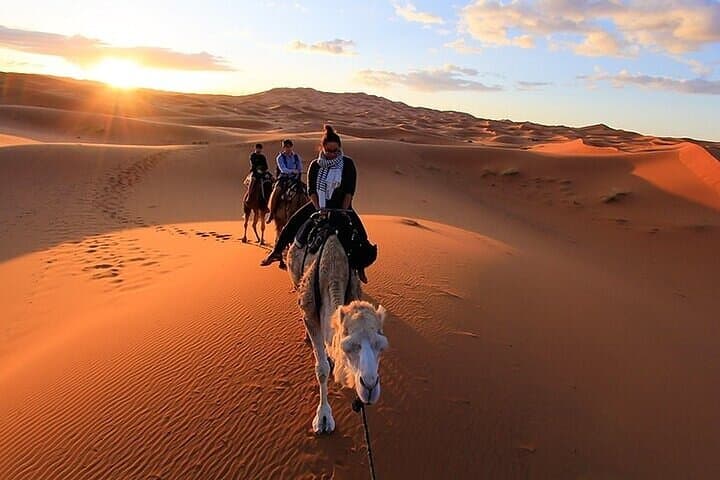
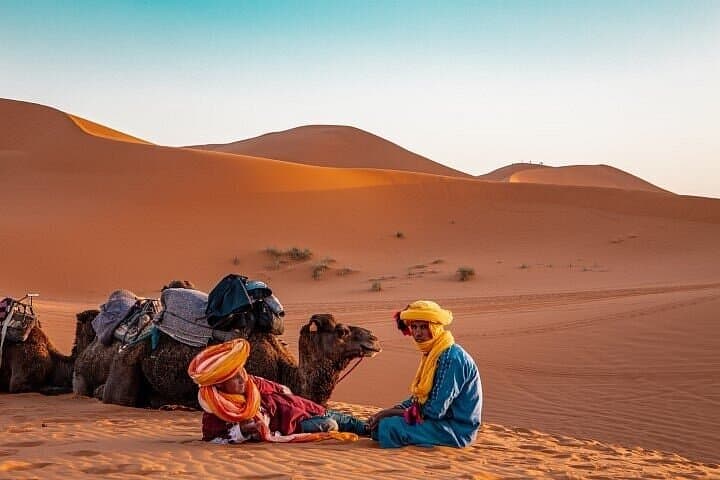
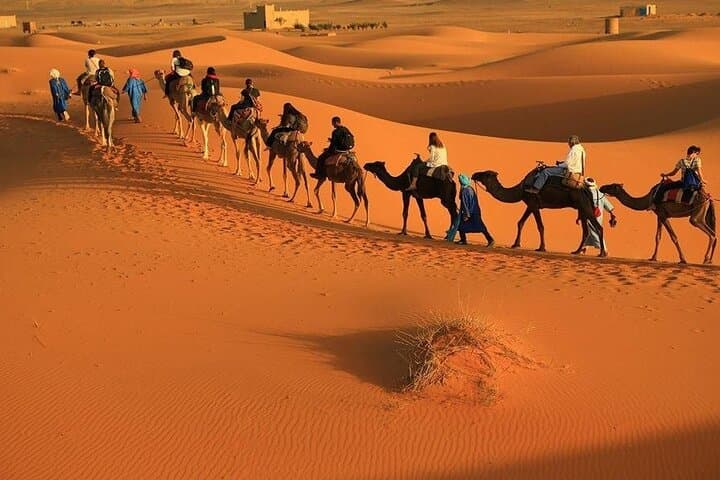
The first steps off the air-conditioned minivan feel deliberate — sand underfoot, a line of camels lifting and lowering like slow metronomes. You climb a padded saddle, settle into the rise and fall, and the city noise slips behind you as the eucalyptus forest opens to low dunes and the broad ribbon of the Souss estuary.
The first steps off the air-conditioned minivan feel deliberate — sand underfoot, a line of camels lifting and lowering like slow metronomes. You climb a padded saddle, settle into the rise and fall, and the city noise slips behind you as the eucalyptus forest opens to low dunes and the broad ribbon of the Souss estuary.
This two-hour ride follows routes used for decades by local handlers and taps into Morocco’s living relationship with the dromedary, a traditional Berber transport animal adapted to coastal and desert terrain. Geologically the area is recent coastal sand over alluvial soils from the Souss plain; the dunes are modest in height and the ride stays near sea level, which keeps the path gentle and steady.
Culturally, camel handling is a working craft here — expect handlers who know the animals and the shoreline. The mouth of Oued Souss is an active stop for migratory birds, so binoculars reward patient riders with flamingos and storks on mudflats.
Practical guidance: rides run about 90 minutes seated on camels with pickup from Agadir hotels. Beach access for camels is restricted, so the route stays on dunes, tracks and forest edges. Wear closed-toe shoes, a sun hat and layers for wind off the Atlantic. Bring water, motion-sickness prevention if you’re sensitive to sway, and a small camera with a secure strap.
Respect handlers’ instructions when mounting and dismounting, keep voices low near birding areas, and leave no litter — the estuary is both a fragile habitat and a highlight of the trip.