THE ADVENTURE COLLECTIVE® · Independent discovery and booking for outdoor travel

Ride Agadir’s cable car to Kasbah Oufella, meet tree-climbing goats among argan trees, explore Crocopark’s crocodiles and visit a women’s cooperative producing argan oil. This compact half-day tour combines coastal views, wildlife, and cultural insight.
Ride Agadir’s cable car to Kasbah Oufella, meet tree-climbing goats among argan trees, explore Crocopark’s crocodiles and visit a women’s cooperative producing argan oil. This compact half-day tour combines coastal views, wildlife, and cultural insight.
A brisk cable car ride lifts you out of Agadir’s low-rise grid and deposits you at Kasbah Oufella, where wind and salt spray sharpen the view. The city unfurls below—Atlantic silver, the crescent bay, and the foothills that press inland—while the ruined kasbah’s crumbling walls frame the panorama. The hill’s breeze seems to push you toward the old fortress stones, where guide narration reanimates the site’s history.
Verified experiences and guided adventures in the surrounding area.
Operated by The best guide '' king mohamed 7" · Agadir, Souss-Massa
A brisk cable car ride lifts you out of Agadir’s low-rise grid and deposits you at Kasbah Oufella, where wind and salt spray sharpen the view. The city unfurls below—Atlantic silver, the crescent bay, and the foothills that press inland—while the ruined kasbah’s crumbling walls frame the panorama. The hill’s breeze seems to push you toward the old fortress stones, where guide narration reanimates the site’s history.
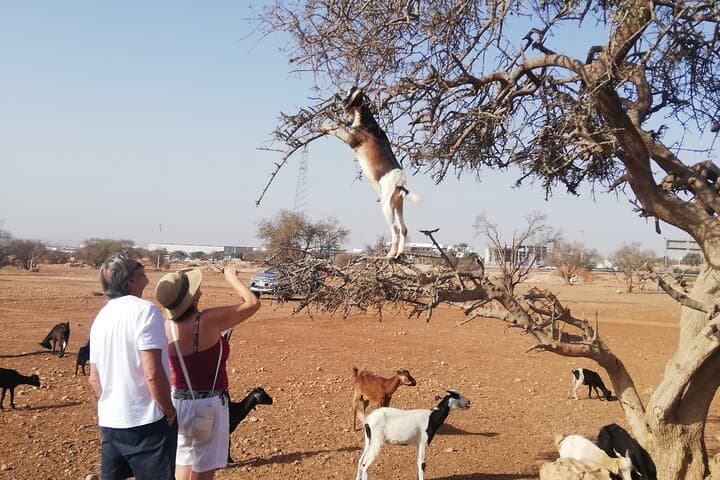
Kasbah Oufella dates to the 16th century and was a strategic coastal lookout until the 1960 earthquake reduced much of the old town to ruins; the ruins now read as open-air memory. Geologically, the coastline is where Atlantic plains meet the anti-Atlas foothills, creating the cliffs and sandy beaches visible from the cable car. Nearby argan-dotted slopes host an odd local spectacle: goats that climb branches to reach fruit, a behavior tied to the region’s argan ecology and local pastoral practices.
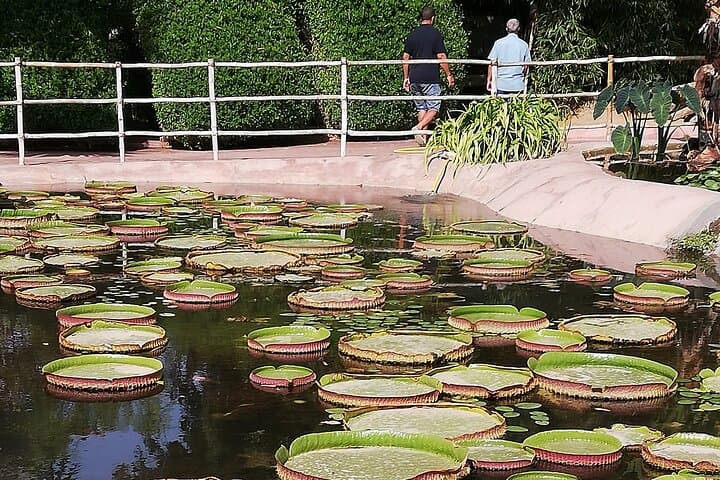
The tour moves from viewpoint to Crocopark, a compact wildlife collection built into botanical gardens where Nile crocodiles, iguanas and parrots are displayed with educational signage. A final stop at a women’s argan cooperative offers hands-on demonstrations of traditional oil production and the chance to support local producers.
Practical guidance: plan for roughly 4.5 hours, wear sturdy shoes for uneven surfaces at the kasbah and park paths, bring sun protection and water, and carry small change for cooperative purchases. Morning light gives the best photos and cooler air; later in the day the Atlantic wind can make it feel several degrees cooler. The itinerary is accessible and family-friendly, blending easy walking with clear cultural context.
easy.
4–5 hours.
Suitable for most fitness levels; involves short walks and standing at viewpoints
Yes — the itinerary includes a one-way cable car ticket to Kasbah Oufella as part of the tour.
The tour notes wheelchair and stroller accessibility for transport and most areas, but expect some uneven surfaces at the kasbah.
The tour lasts about 4.5 hours and includes hotel pick-up and drop-off in Agadir.
Goats climbing argan trees are common in the region and frequently visible, but sightings depend on local herd movements and season.
Kasbah Oufella was a strategic lookout from the 16th century and much of the old medina was destroyed in Agadir’s 1960 earthquake; the hilltop ruins now serve as a historical viewpoint.
Argan woodlands are a UNESCO-recognized ecosystem; supporting local cooperatives and staying on paths helps protect fragile soils and trees.
The best guide '' king mohamed 7" operates guided outdoor trips and adventures with an emphasis on safety, stewardship, and memorable experiences.
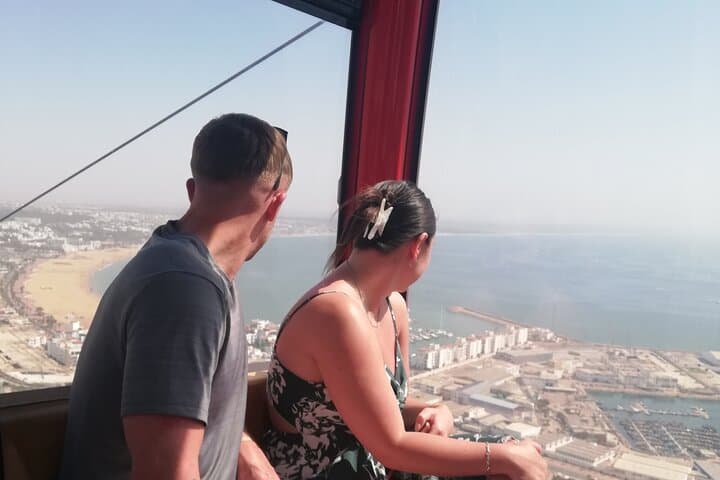
A brisk cable car ride lifts you out of Agadir’s low-rise grid and deposits you at Kasbah Oufella, where wind and salt spray sharpen the view. The city unfurls below—Atlantic silver, the crescent bay, and the foothills that press inland—while the ruined kasbah’s crumbling walls frame the panorama. The hill’s breeze seems to push you toward the old fortress stones, where guide narration reanimates the site’s history.
A brisk cable car ride lifts you out of Agadir’s low-rise grid and deposits you at Kasbah Oufella, where wind and salt spray sharpen the view. The city unfurls below—Atlantic silver, the crescent bay, and the foothills that press inland—while the ruined kasbah’s crumbling walls frame the panorama. The hill’s breeze seems to push you toward the old fortress stones, where guide narration reanimates the site’s history.
Kasbah Oufella dates to the 16th century and was a strategic coastal lookout until the 1960 earthquake reduced much of the old town to ruins; the ruins now read as open-air memory. Geologically, the coastline is where Atlantic plains meet the anti-Atlas foothills, creating the cliffs and sandy beaches visible from the cable car. Nearby argan-dotted slopes host an odd local spectacle: goats that climb branches to reach fruit, a behavior tied to the region’s argan ecology and local pastoral practices.
The tour moves from viewpoint to Crocopark, a compact wildlife collection built into botanical gardens where Nile crocodiles, iguanas and parrots are displayed with educational signage. A final stop at a women’s argan cooperative offers hands-on demonstrations of traditional oil production and the chance to support local producers.
Practical guidance: plan for roughly 4.5 hours, wear sturdy shoes for uneven surfaces at the kasbah and park paths, bring sun protection and water, and carry small change for cooperative purchases. Morning light gives the best photos and cooler air; later in the day the Atlantic wind can make it feel several degrees cooler. The itinerary is accessible and family-friendly, blending easy walking with clear cultural context.