THE ADVENTURE COLLECTIVE® · Independent discovery and booking for outdoor travel

See Agadir’s highlights in a compact three‑hour loop: panoramic views from the kasbah, a stroll around Marina d’Agadir, a visit to Mohamed V Mosque, and a sensory dive into Souk El Had. Perfect if you have limited time but want a real feel for the city.
See Agadir’s highlights in a compact three‑hour loop: panoramic views from the kasbah, a stroll around Marina d’Agadir, a visit to Mohamed V Mosque, and a sensory dive into Souk El Had. Perfect if you have limited time but want a real feel for the city.
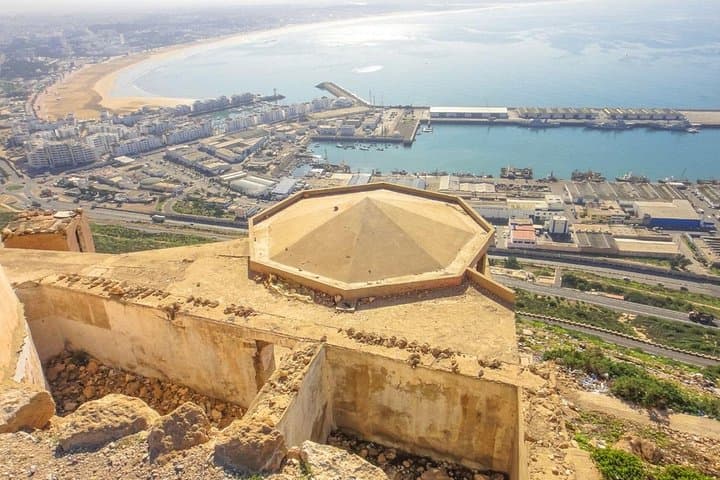
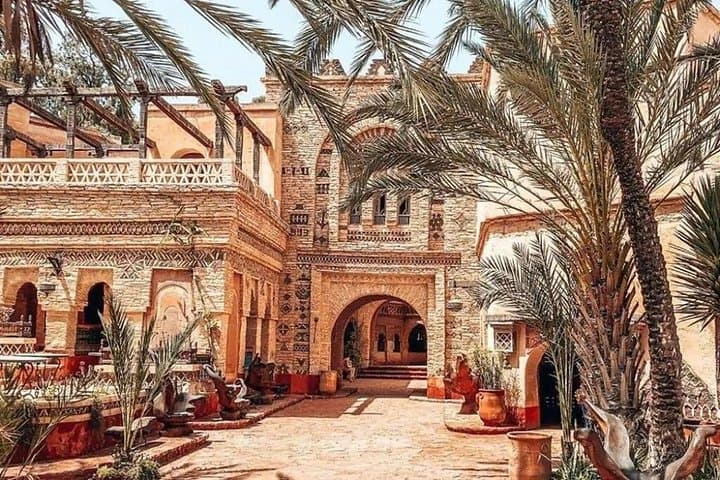
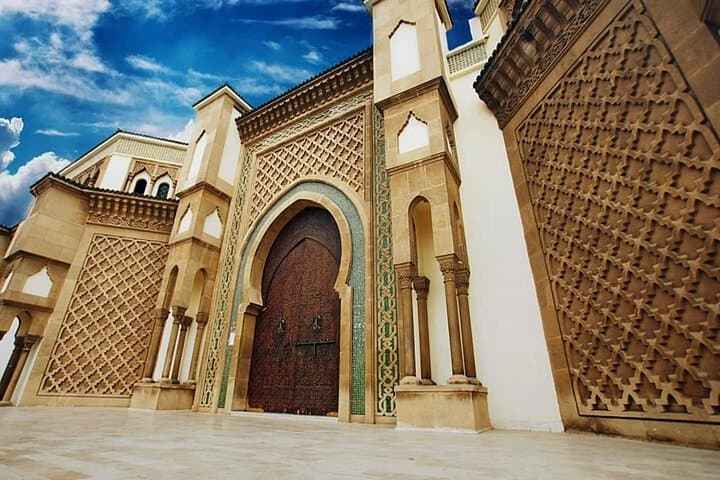
You step out of the air‑conditioned vehicle into a wind that smells of salt and citrus—the Atlantic pushing a cool reach up the palm‑lined avenue. In three hours the city opens like pages of a compact guidebook: a ruined kasbah crowning a grassy hill, a wide marina where fishing boats and yachts bob in conversation, the stone quiet of a modern mosque, and a market that hums with bargaining and spice.
Verified experiences and guided adventures in the surrounding area.
Operated by Noun Travel · Agadir, Souss-Massa
You step out of the air‑conditioned vehicle into a wind that smells of salt and citrus—the Atlantic pushing a cool reach up the palm‑lined avenue. In three hours the city opens like pages of a compact guidebook: a ruined kasbah crowning a grassy hill, a wide marina where fishing boats and yachts bob in conversation, the stone quiet of a modern mosque, and a market that hums with bargaining and spice.
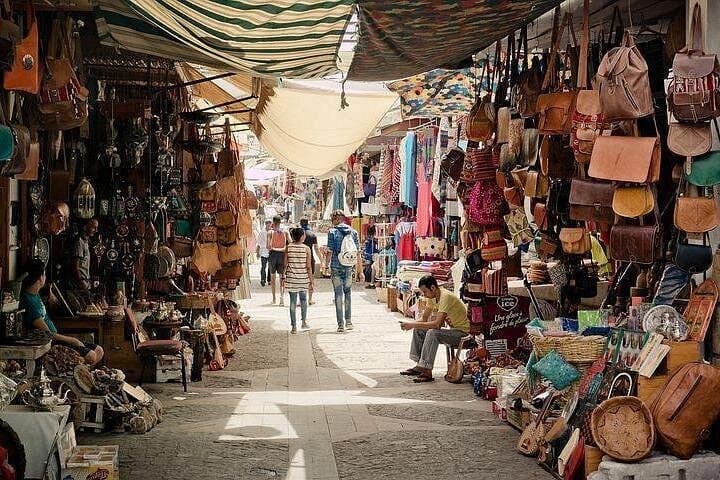
Agadir’s modern face was rebuilt after the 1960 earthquake; the exposed masonry of Agadir Oufella and the city grid reflect that 20th‑century restart. Geologically the coast sits on erosion‑soft sandstone bluffs with sandy beaches below, which is why the kasbah’s hill keeps both view and memory. Culturally, Souk El Had remains the city’s social engine—food vendors, leatherworkers, and argan cooperatives trade tradition and livelihood in full view.
A short, guided circuit gives context: the kasbah for panoramic orientation, the Great Mosque for architectural notes, Marina d’Agadir for a modern leisure pulse, and Souk El Had for hands‑on market life and an argan cooperative visit. Expect mostly paved walking, short stair sections at the kasbah, and crowded aisles in the souk.
Practical notes: wear comfortable closed shoes for cobbled streets, bring sun protection and a reusable water bottle, and carry small change for purchases. Allow extra time after the tour to sit at a marina café or to linger in the market—three hours sketches the city; a slow cup of mint tea lets you read the details.
easy.
3 hours.
Suitable for all fitness levels; involves walking on paved streets and some stairs
Yes; the tour is rated easy with mostly paved walking and short stair sections—wheelchair access may be limited at the kasbah.
Admission is not included; most sites are viewed from public areas or exterior courtyards, but small donations or entrance fees may apply locally.
Guides often explain local customs and can give tips, but haggling is typically handled by the traveler.
Yes; hotel pickup and drop‑off in an air‑conditioned vehicle are included per the tour details.
Agadir was largely rebuilt after a devastating 1960 earthquake; the kasbah hill remains a historical viewpoint and symbol of the city’s rebirth.
Local argan cooperatives support sustainable argan oil production, and visitors are encouraged to buy directly to support community livelihoods and reduce middlemen.
Noun Travel operates guided outdoor trips and adventures with an emphasis on safety, stewardship, and memorable experiences.
You step out of the air‑conditioned vehicle into a wind that smells of salt and citrus—the Atlantic pushing a cool reach up the palm‑lined avenue. In three hours the city opens like pages of a compact guidebook: a ruined kasbah crowning a grassy hill, a wide marina where fishing boats and yachts bob in conversation, the stone quiet of a modern mosque, and a market that hums with bargaining and spice.
You step out of the air‑conditioned vehicle into a wind that smells of salt and citrus—the Atlantic pushing a cool reach up the palm‑lined avenue. In three hours the city opens like pages of a compact guidebook: a ruined kasbah crowning a grassy hill, a wide marina where fishing boats and yachts bob in conversation, the stone quiet of a modern mosque, and a market that hums with bargaining and spice.
Agadir’s modern face was rebuilt after the 1960 earthquake; the exposed masonry of Agadir Oufella and the city grid reflect that 20th‑century restart. Geologically the coast sits on erosion‑soft sandstone bluffs with sandy beaches below, which is why the kasbah’s hill keeps both view and memory. Culturally, Souk El Had remains the city’s social engine—food vendors, leatherworkers, and argan cooperatives trade tradition and livelihood in full view.
A short, guided circuit gives context: the kasbah for panoramic orientation, the Great Mosque for architectural notes, Marina d’Agadir for a modern leisure pulse, and Souk El Had for hands‑on market life and an argan cooperative visit. Expect mostly paved walking, short stair sections at the kasbah, and crowded aisles in the souk.
Practical notes: wear comfortable closed shoes for cobbled streets, bring sun protection and a reusable water bottle, and carry small change for purchases. Allow extra time after the tour to sit at a marina café or to linger in the market—three hours sketches the city; a slow cup of mint tea lets you read the details.