THE ADVENTURE COLLECTIVE® · Independent discovery and booking for outdoor travel

Ride Agadir’s panoramic cable car to Kasbah Oufella for sweeping ocean and city views, with optional stops at Souk El Had and local artisan workshops. Fast, accessible, and great for sunset photography.
Ride Agadir’s panoramic cable car to Kasbah Oufella for sweeping ocean and city views, with optional stops at Souk El Had and local artisan workshops. Fast, accessible, and great for sunset photography.
You step into the gondola as the city slips beneath you: tile roofs, the Atlantic’s flat ribbon, and the Kasbah’s ruined wall coming into view. The cable car climbs steady and silent, windows framing the coastline and the scrubbed hills that guard Agadir. At the summit, the city spreads like a working map—harbor cranes, market roofs and lights that begin to pulse after dusk.
Verified experiences and guided adventures in the surrounding area.
Operated by Agadir excursions · Agadir, Souss-Massa
You step into the gondola as the city slips beneath you: tile roofs, the Atlantic’s flat ribbon, and the Kasbah’s ruined wall coming into view. The cable car climbs steady and silent, windows framing the coastline and the scrubbed hills that guard Agadir. At the summit, the city spreads like a working map—harbor cranes, market roofs and lights that begin to pulse after dusk.
The route leads to Kasbah Oufella, a 16th-century ridge-top fortification that watched trade and conflict for centuries; its walls are mostly ruins now, but the viewpoint still carries the city’s layered history. Geologically, the hill is part of the coastal escarpment shaped by Atlantic storms and tectonic uplift; the wind at the top is part of the landscape’s character and often cuts cooler than the waterfront.
Culturally the ride mixes modern leisure with traditional commerce: many tours include stops at Souk El Had and visits to local artisans who press argan oil or craft leather and pottery. Even simple detours—an evening mosque stop for silhouette photography or a quick factory visit—give texture to the trip.
Practical guidance: plan 1.5–3 hours depending on stops; bring sun protection and a light jacket for the summit breeze. Tickets are usually round-trip, and the system is wheelchair accessible; evenings offer better light but can be windier. Arrive early to avoid market crowds and allow time for photo stops and a brief walk along the Kasbah ramparts. The experience is low-effort but high-on-views—perfect for families, photographers, and anyone who wants a swift, panoramic primer on Agadir.
easy.
2–4 hours.
Suitable for most fitness levels; minimal walking required though some uneven surfaces at the Kasbah.
Yes—the cable car and summit areas are designed to be wheelchair accessible; confirm specifics with the operator if you need transfer assistance.
Tours typically run 1–4 hours depending on whether you include stops at Souk El Had, the argan factory, or an evening Kasbah visit.
Most operators offer full refunds if the ride is canceled for weather; check the booking’s cancellation policy and allow 24+ hours for standard refunds.
Yes—night visits to Kasbah Oufella are popular for city-light views; be prepared for stronger winds and limited facilities after dark.
Kasbah Oufella dates to the 16th century and became a key lookout and defensive point; much of the current ruin reflects rebuilding and damage from the 1960 earthquake.
Respect local markets by avoiding single-use plastics and buying direct from artisans when possible; the cable car reduces road traffic up the hill, concentrating foot traffic to protect surrounding slopes.
Agadir excursions operates guided outdoor trips and adventures with an emphasis on safety, stewardship, and memorable experiences.
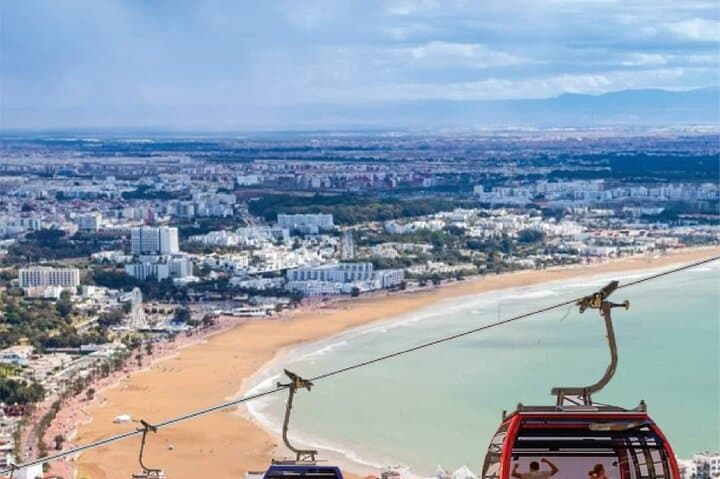
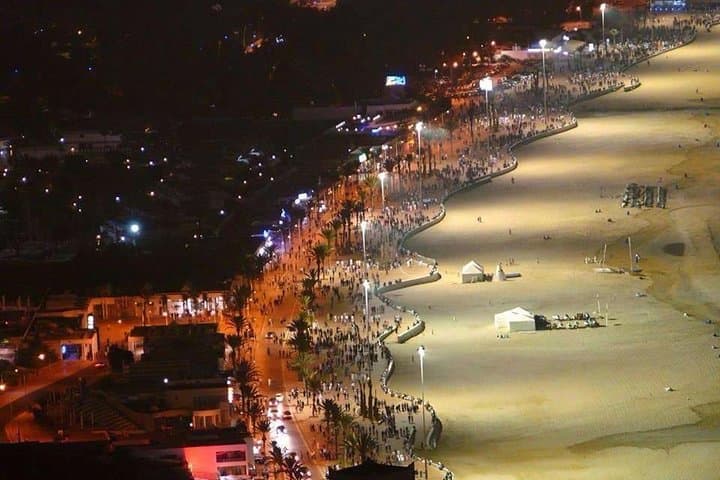
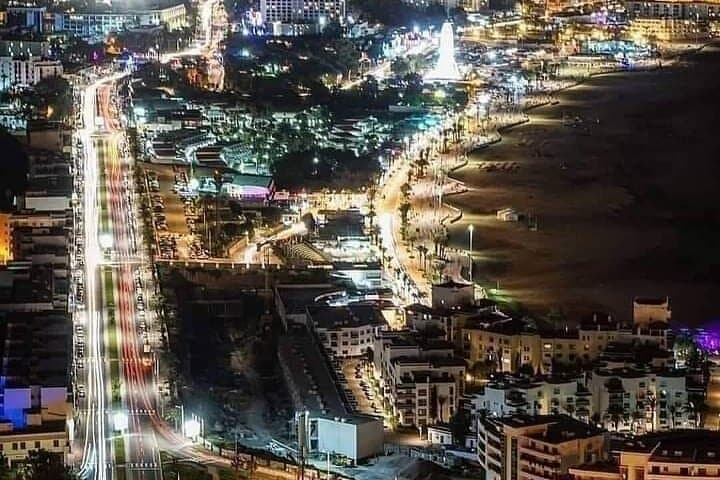
You step into the gondola as the city slips beneath you: tile roofs, the Atlantic’s flat ribbon, and the Kasbah’s ruined wall coming into view. The cable car climbs steady and silent, windows framing the coastline and the scrubbed hills that guard Agadir. At the summit, the city spreads like a working map—harbor cranes, market roofs and lights that begin to pulse after dusk.
You step into the gondola as the city slips beneath you: tile roofs, the Atlantic’s flat ribbon, and the Kasbah’s ruined wall coming into view. The cable car climbs steady and silent, windows framing the coastline and the scrubbed hills that guard Agadir. At the summit, the city spreads like a working map—harbor cranes, market roofs and lights that begin to pulse after dusk.
The route leads to Kasbah Oufella, a 16th-century ridge-top fortification that watched trade and conflict for centuries; its walls are mostly ruins now, but the viewpoint still carries the city’s layered history. Geologically, the hill is part of the coastal escarpment shaped by Atlantic storms and tectonic uplift; the wind at the top is part of the landscape’s character and often cuts cooler than the waterfront.
Culturally the ride mixes modern leisure with traditional commerce: many tours include stops at Souk El Had and visits to local artisans who press argan oil or craft leather and pottery. Even simple detours—an evening mosque stop for silhouette photography or a quick factory visit—give texture to the trip.
Practical guidance: plan 1.5–3 hours depending on stops; bring sun protection and a light jacket for the summit breeze. Tickets are usually round-trip, and the system is wheelchair accessible; evenings offer better light but can be windier. Arrive early to avoid market crowds and allow time for photo stops and a brief walk along the Kasbah ramparts. The experience is low-effort but high-on-views—perfect for families, photographers, and anyone who wants a swift, panoramic primer on Agadir.