THE ADVENTURE COLLECTIVE® · Independent discovery and booking for outdoor travel

Trade the city for a gentle two-hour horseback ride across Agadir’s dunes, farms, and coastal tracks, finished with a traditional Moroccan lunch. Beginner-friendly guides, helmets, and hotel pickup make this an easy, scenic introduction to the Souss-Massa countryside.
Trade the city for a gentle two-hour horseback ride across Agadir’s dunes, farms, and coastal tracks, finished with a traditional Moroccan lunch. Beginner-friendly guides, helmets, and hotel pickup make this an easy, scenic introduction to the Souss-Massa countryside.
The first hoofbeats fall soft against a palette of wind-sculpted sand and green fields as the Atlantic wind pushes the ride forward; riders release the city’s hum and track a coastline where the sea keeps time.
Verified experiences and guided adventures in the surrounding area.
Operated by Noun Travel · Agadir, Souss-Massa
The first hoofbeats fall soft against a palette of wind-sculpted sand and green fields as the Atlantic wind pushes the ride forward; riders release the city’s hum and track a coastline where the sea keeps time.
This two-hour loop moves across Agadir’s outer dunes, through irrigated farms on the Souss plain, and onto low coastal tracks—terrain shaped by river sediment and Atlantic swell. The modern city nearby was rebuilt after the 1960 earthquake of 1960, but the rural landscape still follows older rhythms: argan trees, small-scale farms, and tracks long used by local Berber communities.
Culturally the ride bridges two worlds—the fishing harbor energy of Agadir and the country hospitality of nearby villages. Guides are typically local riders who explain tack, basic cues, and the meaning of certain plants and fences along the way. Geologically the dunes are mobile but stabilized in places by vegetation; expect sandy stretches that demand slower paces and firmer coastal tracks.
Practically, the tour is beginner-friendly: helmets and basic instruction are provided, and the pace remains relaxed for photos and comfortable mounting. Hotel pickup and a traditional Moroccan lunch of fresh vegetables, tagine-style options, and mint tea round out the experience.
Plan for sun, wind, and sand—closed-toe shoes, layers, and a water bottle make the difference. Follow guides’ instructions around horses and stay on designated trails to protect fragile dune plants. This is an accessible way to feel the region’s contrasts—sea, sand, and cultivated land—on horseback.
easy.
2–3 hours.
Light fitness—comfortable sitting for two hours and the ability to follow basic riding cues; suitable for beginners and families.
No—this tour is beginner-friendly. Guides give a safety briefing and basic instruction; rides proceed at a relaxed pace suitable for first-timers.
The included lunch features local Moroccan dishes made from fresh ingredients—vegetable-forward options, tagine-style mains, salads, and mint tea are typical.
Yes—hotel pickup and drop-off are included; confirm your pickup point when booking and communicate any special requirements with the operator.
Yes—helmets, basic tack, and a pre-ride safety briefing are provided to all participants.
Agadir’s modern layout dates to the rebuilding after the 1960 earthquake; historically the Souss plain has been agricultural, with Berber communities cultivating argan and citrus along small irrigation channels.
Stick to established trails to avoid destabilizing dunes and damaging native plants; choose operators who practice responsible grazing and support local communities.
Noun Travel operates guided outdoor trips and adventures with an emphasis on safety, stewardship, and memorable experiences.
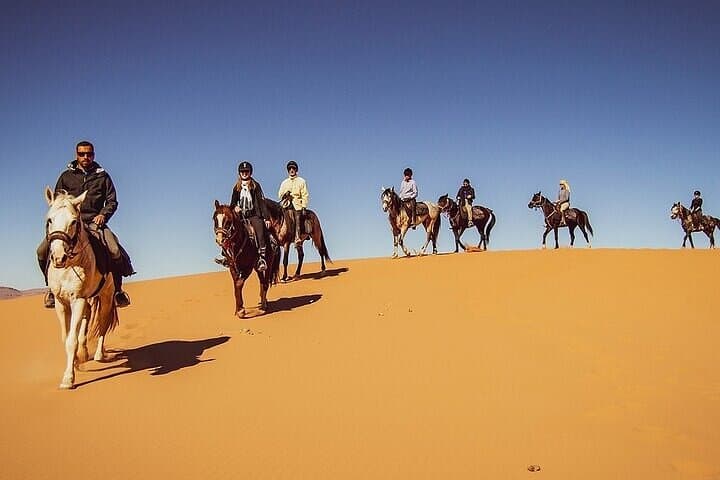
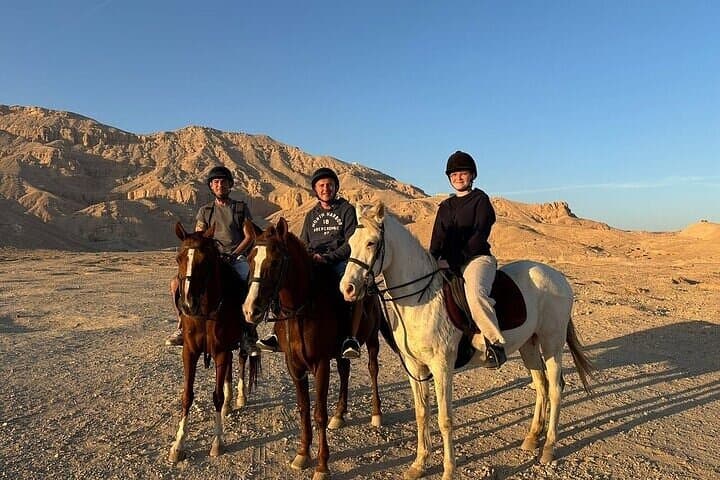
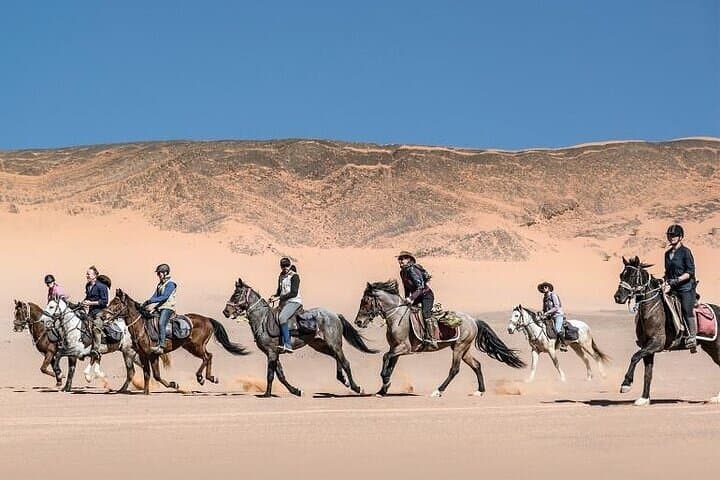
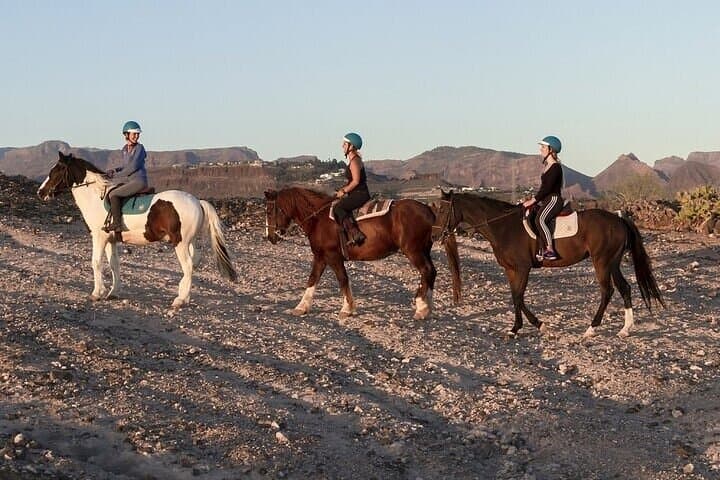
The first hoofbeats fall soft against a palette of wind-sculpted sand and green fields as the Atlantic wind pushes the ride forward; riders release the city’s hum and track a coastline where the sea keeps time.
The first hoofbeats fall soft against a palette of wind-sculpted sand and green fields as the Atlantic wind pushes the ride forward; riders release the city’s hum and track a coastline where the sea keeps time.
This two-hour loop moves across Agadir’s outer dunes, through irrigated farms on the Souss plain, and onto low coastal tracks—terrain shaped by river sediment and Atlantic swell. The modern city nearby was rebuilt after the 1960 earthquake of 1960, but the rural landscape still follows older rhythms: argan trees, small-scale farms, and tracks long used by local Berber communities.
Culturally the ride bridges two worlds—the fishing harbor energy of Agadir and the country hospitality of nearby villages. Guides are typically local riders who explain tack, basic cues, and the meaning of certain plants and fences along the way. Geologically the dunes are mobile but stabilized in places by vegetation; expect sandy stretches that demand slower paces and firmer coastal tracks.
Practically, the tour is beginner-friendly: helmets and basic instruction are provided, and the pace remains relaxed for photos and comfortable mounting. Hotel pickup and a traditional Moroccan lunch of fresh vegetables, tagine-style options, and mint tea round out the experience.
Plan for sun, wind, and sand—closed-toe shoes, layers, and a water bottle make the difference. Follow guides’ instructions around horses and stay on designated trails to protect fragile dune plants. This is an accessible way to feel the region’s contrasts—sea, sand, and cultivated land—on horseback.