THE ADVENTURE COLLECTIVE® · Independent discovery and booking for outdoor travel

A full-day drive from Baku brings you to Tanggalti canyon and Afrudja waterfall—Azerbaijan’s highest cascade—followed by a climbable, culturally charged summit at Beshbarmag. Expect canyon walls, spray-cooled air, and a short but uneven scramble.
A full-day drive from Baku brings you to Tanggalti canyon and Afrudja waterfall—Azerbaijan’s highest cascade—followed by a climbable, culturally charged summit at Beshbarmag. Expect canyon walls, spray-cooled air, and a short but uneven scramble.
You leave Baku mid-morning and the city flattens behind you as the road pushes north, the Caspian shrinking to a glint at the horizon.
Verified experiences and guided adventures in the surrounding area.
Operated by Travel2Baku · Quba, Quba District
You leave Baku mid-morning and the city flattens behind you as the road pushes north, the Caspian shrinking to a glint at the horizon.
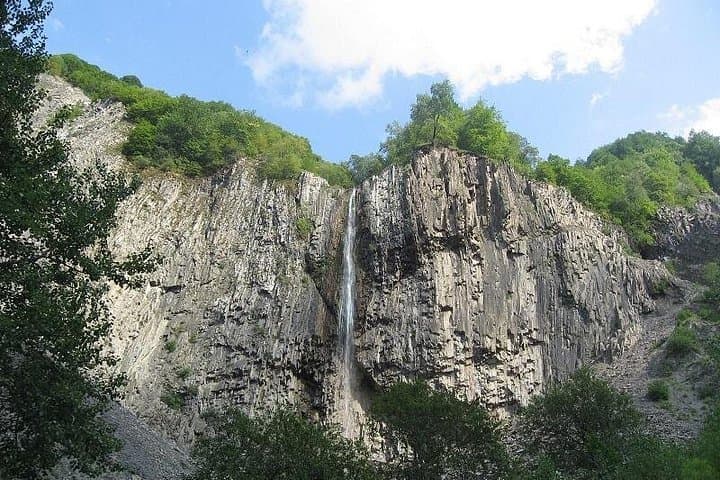
By the time the bus drops you at a shaded pullout near Tanggalti canyon, cliffs loom—nearly 600 meters of folded rock that pin the sky. The canyon’s brook dares you closer; it gathers strength, then tumbles as Afrudja (Afurdja) waterfall, a near-vertical ribbon of water falling roughly 95 meters into a ferned pool. The spray cools the air and the trees seem to lean in to listen.
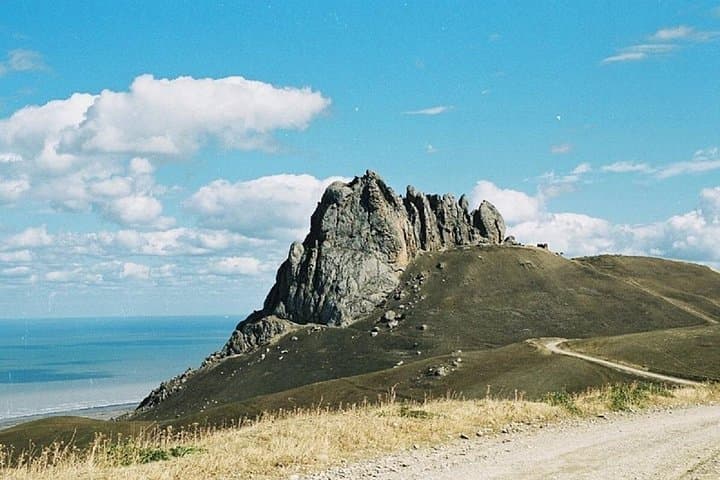
This ground sits on the foothills of the Greater Caucasus, where uplift, river incision and local limestone and volcanic beds have carved dramatic walls and steep ridges. Culture threads through the route: on the return the craggy silhouette of Beshbarmag (Five Finger Mountain) rises—around 520 m—and hosts a living mix of folk ritual and small shrines where locals leave stones, ribbons and offerings.
Practical: the walking at the waterfall is short but uneven—expect rocky steps and wet, slippery sections; the climb to Beshbarmag is a steeper grassy scramble with loose scree near the top and 200–400 m of ascent depending on your line. Carry layered clothing, sturdy shoes, sun protection and 1–2 liters of water. Plan for 8–10 hours including transfers from Baku and photo stops; check local weather and wear modest attire if you’ll be among onsite worshippers. The route rewards photographers, hikers and anyone who likes landscape drama without technical climbing.
moderate.
8–10 hours.
Good general fitness—able to handle short scrambles, uneven footing and up to a few hundred meters of elevation gain.
Expect about two hours to Quba under normal traffic; the full outing including stops typically fills a full day.
The pool below the falls can be cold and is not routinely recommended for swimming due to currents and cold meltwater—local guides will advise on safety.
The ascent is a moderate grassy scramble with loose sections; no technical climbing gear is required but good footwear and caution are essential.
Local guides and private tours are common and recommended for navigation, cultural context and arranging transport; this tour typically includes a guide.
The Quba region sits at the northern fringe of the Greater Caucasus and has long been a crossroads of Perso-Caucasian trade and local mountain cultures; Beshbarmag is locally significant for folk rituals.
Stay on established paths, avoid littering and do not remove stones or votive items—local sites are culturally sensitive and erosion-prone in steep canyons.
Travel2Baku operates guided outdoor trips and adventures with an emphasis on safety, stewardship, and memorable experiences.
You leave Baku mid-morning and the city flattens behind you as the road pushes north, the Caspian shrinking to a glint at the horizon.
You leave Baku mid-morning and the city flattens behind you as the road pushes north, the Caspian shrinking to a glint at the horizon.
By the time the bus drops you at a shaded pullout near Tanggalti canyon, cliffs loom—nearly 600 meters of folded rock that pin the sky. The canyon’s brook dares you closer; it gathers strength, then tumbles as Afrudja (Afurdja) waterfall, a near-vertical ribbon of water falling roughly 95 meters into a ferned pool. The spray cools the air and the trees seem to lean in to listen.
This ground sits on the foothills of the Greater Caucasus, where uplift, river incision and local limestone and volcanic beds have carved dramatic walls and steep ridges. Culture threads through the route: on the return the craggy silhouette of Beshbarmag (Five Finger Mountain) rises—around 520 m—and hosts a living mix of folk ritual and small shrines where locals leave stones, ribbons and offerings.
Practical: the walking at the waterfall is short but uneven—expect rocky steps and wet, slippery sections; the climb to Beshbarmag is a steeper grassy scramble with loose scree near the top and 200–400 m of ascent depending on your line. Carry layered clothing, sturdy shoes, sun protection and 1–2 liters of water. Plan for 8–10 hours including transfers from Baku and photo stops; check local weather and wear modest attire if you’ll be among onsite worshippers. The route rewards photographers, hikers and anyone who likes landscape drama without technical climbing.