THE ADVENTURE COLLECTIVE® · Independent discovery and booking for outdoor travel

Spend an easy half-day from Hoi An exploring Marble Mountains’ caves and craft village, then climb Son Tra (Monkey) Mountain for sweeping views and the towering Lady Buddha. This practical guide tells you what to expect, what to bring, and how to navigate stairs, shrines, and curious macaques.
Spend an easy half-day from Hoi An exploring Marble Mountains’ caves and craft village, then climb Son Tra (Monkey) Mountain for sweeping views and the towering Lady Buddha. This practical guide tells you what to expect, what to bring, and how to navigate stairs, shrines, and curious macaques.
You step off the van into a warm coastal breeze and the first limestone fingers rise before you—Marble Mountains’ steep steps cut into white marble and shadowed caverns. Stained stairs lead past small shrines, Buddhist statues peering from grotto mouths and terraces that throw open quick views to the South China Sea.
Verified experiences and guided adventures in the surrounding area.
Operated by DN Tour · Da Nang, Da Nang
You step off the van into a warm coastal breeze and the first limestone fingers rise before you—Marble Mountains’ steep steps cut into white marble and shadowed caverns. Stained stairs lead past small shrines, Buddhist statues peering from grotto mouths and terraces that throw open quick views to the South China Sea.
Geology here is blunt and visible: five marble-limestone outcrops formed by tectonic uplift and marine sedimentation, scored by caves and sinkholes. At the base, the Non Nuoc stone village continues three centuries of carving craft—hands shaping local marble into altars and figurines. Later the tour climbs to Monkey Mountain (Son Tra), where the 67 m Lady Buddha watches Da Nang’s bay; the peninsula’s granite and volcanic ridges give broader panoramas and attract long-tailed macaques.
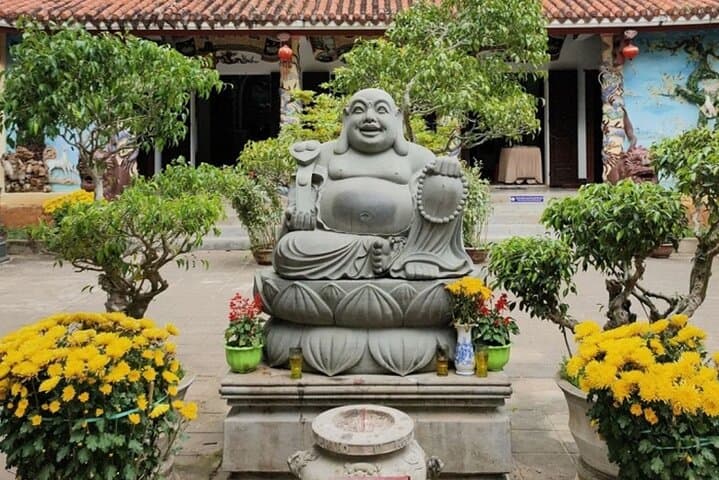
Culture sits in every niche: saffron-robed monks and incense at Linh Ung, small Hindu grottoes hidden in Marble Mountain caves, and family workshops where traditional carving meets modern tourism.
Practical guidance: wear sturdy shoes—the route includes many stairs and uneven stone. Bring sun protection and 1–1.5 L water for the afternoon heat. Respect worship areas (modest dress, quiet voices) and do not approach or feed monkeys; they’re wild and can be bold. The loop easily fits a half-day schedule from Hoi An with hotel pickup; photography is best in late afternoon for softer light and cooler temperatures. This itinerary is accessible for most walkers but includes repeated stair climbs and short hikes between viewpoints.
moderate.
4 hours.
Light to moderate fitness; must be able to climb multiple flights of uneven stairs and walk short uphill sections.
Yes—this tour includes admission to Marble Mountains and the Linh Ung pagoda area as stated in the inclusions.
Pickup and drop-off in the Hoi An area are provided; check the booking for your specific pickup point or the listed meeting address in Da Nang.
Monkeys are commonly seen around Linh Ung and Son Tra, but sightings are never guaranteed; observe them from a distance and do not feed them.
Not ideal—Marble Mountains and some Son Tra viewpoints require climbing many stairs and navigating uneven surfaces, which can be difficult for those with limited mobility.
Marble Mountains have been a pilgrimage and craft center for centuries; the nearby Non Nuoc village has produced stone carving for over 300 years. Son Tra has historical naval significance and later became a spiritual site with the Lady Buddha statue.
Tourism puts pressure on fragile caves and temple sites—stay on marked paths, avoid touching carvings, and support local artisans by buying from established workshops rather than street vendors.
DN Tour operates guided outdoor trips and adventures with an emphasis on safety, stewardship, and memorable experiences.
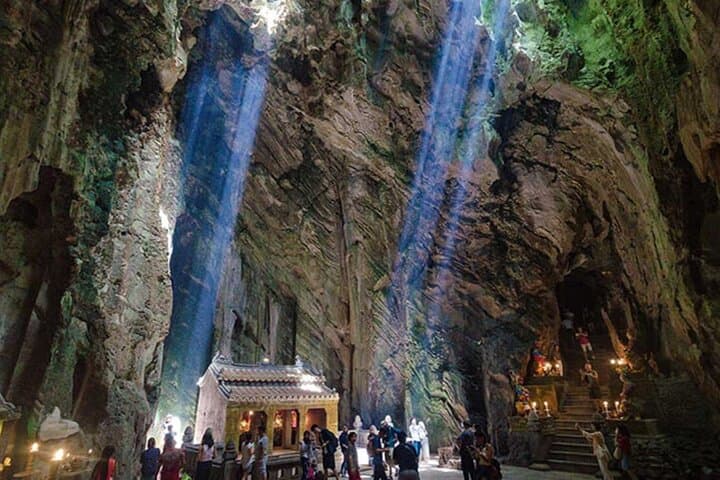
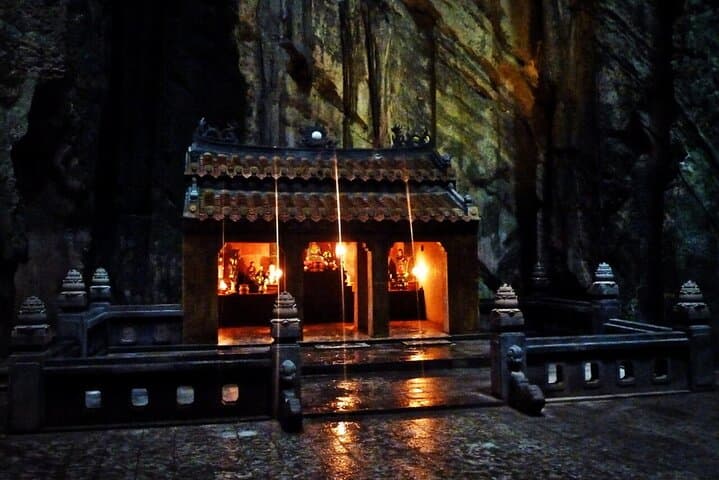
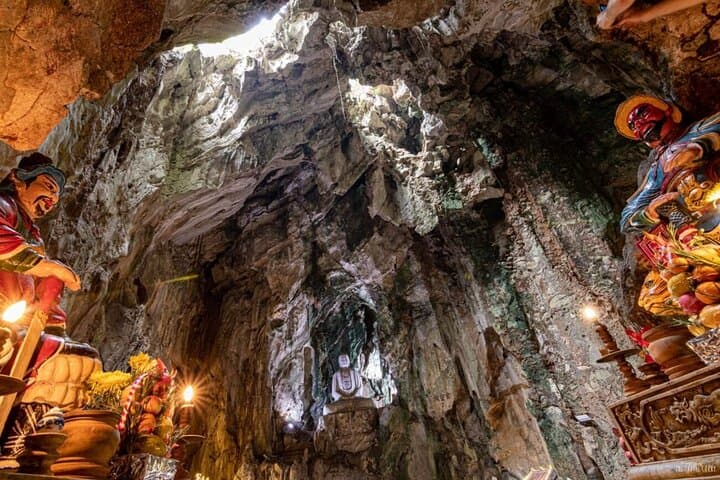
You step off the van into a warm coastal breeze and the first limestone fingers rise before you—Marble Mountains’ steep steps cut into white marble and shadowed caverns. Stained stairs lead past small shrines, Buddhist statues peering from grotto mouths and terraces that throw open quick views to the South China Sea.
You step off the van into a warm coastal breeze and the first limestone fingers rise before you—Marble Mountains’ steep steps cut into white marble and shadowed caverns. Stained stairs lead past small shrines, Buddhist statues peering from grotto mouths and terraces that throw open quick views to the South China Sea.
Geology here is blunt and visible: five marble-limestone outcrops formed by tectonic uplift and marine sedimentation, scored by caves and sinkholes. At the base, the Non Nuoc stone village continues three centuries of carving craft—hands shaping local marble into altars and figurines. Later the tour climbs to Monkey Mountain (Son Tra), where the 67 m Lady Buddha watches Da Nang’s bay; the peninsula’s granite and volcanic ridges give broader panoramas and attract long-tailed macaques.
Culture sits in every niche: saffron-robed monks and incense at Linh Ung, small Hindu grottoes hidden in Marble Mountain caves, and family workshops where traditional carving meets modern tourism.
Practical guidance: wear sturdy shoes—the route includes many stairs and uneven stone. Bring sun protection and 1–1.5 L water for the afternoon heat. Respect worship areas (modest dress, quiet voices) and do not approach or feed monkeys; they’re wild and can be bold. The loop easily fits a half-day schedule from Hoi An with hotel pickup; photography is best in late afternoon for softer light and cooler temperatures. This itinerary is accessible for most walkers but includes repeated stair climbs and short hikes between viewpoints.