THE ADVENTURE COLLECTIVE® · Independent discovery and booking for outdoor travel

Spend a relaxed 2½ hours among the salt pans outside Trapani, watching flamingos and exploring historic mills and canals. This guided afternoon tour combines easy walking, wildlife viewing, and local salt-culture insights.
Spend a relaxed 2½ hours among the salt pans outside Trapani, watching flamingos and exploring historic mills and canals. This guided afternoon tour combines easy walking, wildlife viewing, and local salt-culture insights.
The sun sits low and warm across broad white pans as the bus eases into the reserve, and the flamingos hold the afternoon like a slow conversation. Salt basins glint, windmills turn with measured patience and canals cut pale lines through the landscape; birds shift as if the whole place breathes. This is the Saline reserve outside Trapani in the hush of the early afternoon—quiet but never empty.
Verified experiences and guided adventures in the surrounding area.
Operated by Flamingo Way · Trapani, Sicily
The sun sits low and warm across broad white pans as the bus eases into the reserve, and the flamingos hold the afternoon like a slow conversation. Salt basins glint, windmills turn with measured patience and canals cut pale lines through the landscape; birds shift as if the whole place breathes. This is the Saline reserve outside Trapani in the hush of the early afternoon—quiet but never empty.
Salt production here dates to antiquity: Phoenicians and later Romans exploited the flats, and the low ridges and mills you pass are part of a living industrial landscape shaped by geology and human hands. The pans form on a shallow coastal plain where seawater evaporates on hot Sicilian afternoons; the mineral flats create reflective surfaces that attract and concentrate birds, especially greater flamingos and waders. Local culture still honors salt as both commodity and heritage—museums and small processing mills nearby explain the trade that built coastal communities.
On this 2½-hour guided tour you’ll move between vantage points, short walks alongside canals, and stops at a small museum; guides point out species and explain mill mechanics. Expect flat, easy walking on packed paths and boardwalks, strong sunlight, and shifting breezes off the sea. Practical prep: bring a wide-brim hat, sunscreen, binoculars, and a refillable water bottle. Mid-afternoon is prime for photography and calm bird behavior, but bring a light layer against coastal wind.
The visit pairs natural spectacle with straightforward logistics—accessible paths, short interpretive stops, and a tempo designed for relaxed observation rather than strenuous hiking.
easy.
2–3 hours.
Suitable for most fitness levels; requires only short, flat walks and standing during birdwatching stops.
The tour is about 2½ hours with short, flat walks between viewpoints and extended stationary birdwatching at observation points.
Flamingos are common in the reserve, especially in the afternoon when they rest in shallow pools, but wildlife sightings cannot be guaranteed.
Yes—this tour is marked as stroller-accessible and suitable for all fitness levels; paths are generally flat and easy to navigate.
Museum entrance is included and transport is provided in an air-conditioned vehicle with onboard Wi‑Fi, per the tour description.
Salt extraction in the Trapani plain goes back to antiquity; the windmills and basin layout reflect centuries of local saltcraft tied to Mediterranean trade.
The Saline reserve is managed to balance traditional salt production with habitat protection—visitors should stick to paths and avoid disturbing nesting or roosting birds.
Flamingo Way operates guided outdoor trips and adventures with an emphasis on safety, stewardship, and memorable experiences.
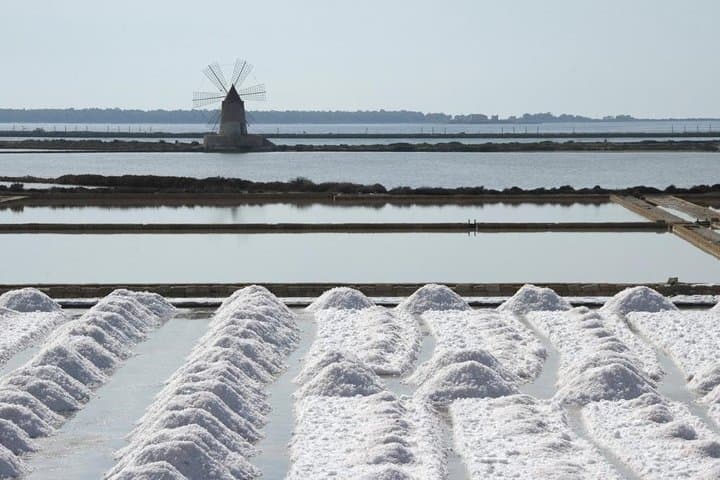


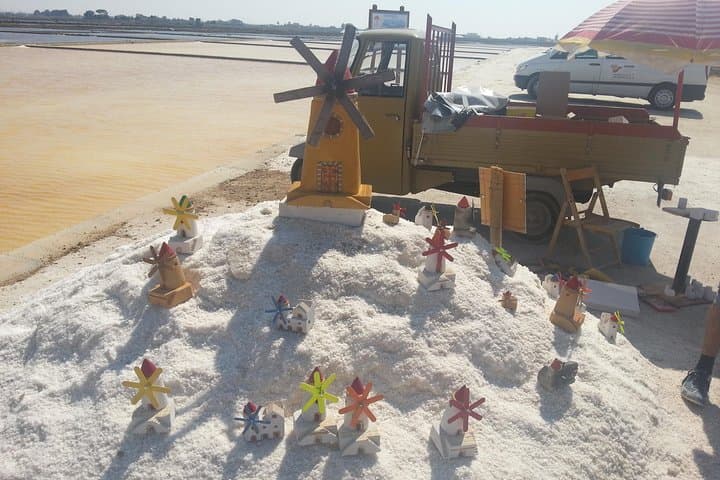
The sun sits low and warm across broad white pans as the bus eases into the reserve, and the flamingos hold the afternoon like a slow conversation. Salt basins glint, windmills turn with measured patience and canals cut pale lines through the landscape; birds shift as if the whole place breathes. This is the Saline reserve outside Trapani in the hush of the early afternoon—quiet but never empty.
The sun sits low and warm across broad white pans as the bus eases into the reserve, and the flamingos hold the afternoon like a slow conversation. Salt basins glint, windmills turn with measured patience and canals cut pale lines through the landscape; birds shift as if the whole place breathes. This is the Saline reserve outside Trapani in the hush of the early afternoon—quiet but never empty.
Salt production here dates to antiquity: Phoenicians and later Romans exploited the flats, and the low ridges and mills you pass are part of a living industrial landscape shaped by geology and human hands. The pans form on a shallow coastal plain where seawater evaporates on hot Sicilian afternoons; the mineral flats create reflective surfaces that attract and concentrate birds, especially greater flamingos and waders. Local culture still honors salt as both commodity and heritage—museums and small processing mills nearby explain the trade that built coastal communities.
On this 2½-hour guided tour you’ll move between vantage points, short walks alongside canals, and stops at a small museum; guides point out species and explain mill mechanics. Expect flat, easy walking on packed paths and boardwalks, strong sunlight, and shifting breezes off the sea. Practical prep: bring a wide-brim hat, sunscreen, binoculars, and a refillable water bottle. Mid-afternoon is prime for photography and calm bird behavior, but bring a light layer against coastal wind.
The visit pairs natural spectacle with straightforward logistics—accessible paths, short interpretive stops, and a tempo designed for relaxed observation rather than strenuous hiking.