THE ADVENTURE COLLECTIVE® · Independent discovery and booking for outdoor travel

Spend an afternoon game‑driving Maduru Oya National Park where open dry‑zone plains favor elephant sightings and abundant birdlife. This concise guide covers what to expect, local context, and practical tips for a smooth safari.
Spend an afternoon game‑driving Maduru Oya National Park where open dry‑zone plains favor elephant sightings and abundant birdlife. This concise guide covers what to expect, local context, and practical tips for a smooth safari.
Late afternoon light slides across the dry grass as the jeep eases through Maduru Oya National Park, dust lifting like a curtain to reveal a lone elephant feeding at the water’s edge. The park’s low scrub and open plains give visibility; trees lean and shade the track, while distant calls and wingbeats mark the rhythm of the day.
Verified experiences and guided adventures in the surrounding area.
Operated by The Mice Team · Maha Oya, North Central Province
Late afternoon light slides across the dry grass as the jeep eases through Maduru Oya National Park, dust lifting like a curtain to reveal a lone elephant feeding at the water’s edge. The park’s low scrub and open plains give visibility; trees lean and shade the track, while distant calls and wingbeats mark the rhythm of the day.
Maduru Oya protects one of Sri Lanka’s important dry‑zone ecosystems, carved around a large reservoir and ancient irrigation features. Geologically the terrain is flat to undulating with lateritic soils that support thorn forests and grasslands. Culturally the area sits between Polonnaruwa’s ancient irrigation heartland and the present‑day villages that still read the seasons by reservoir levels.
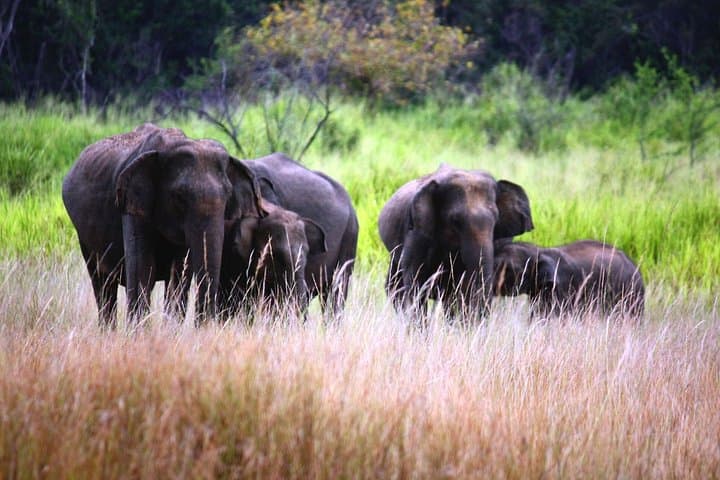
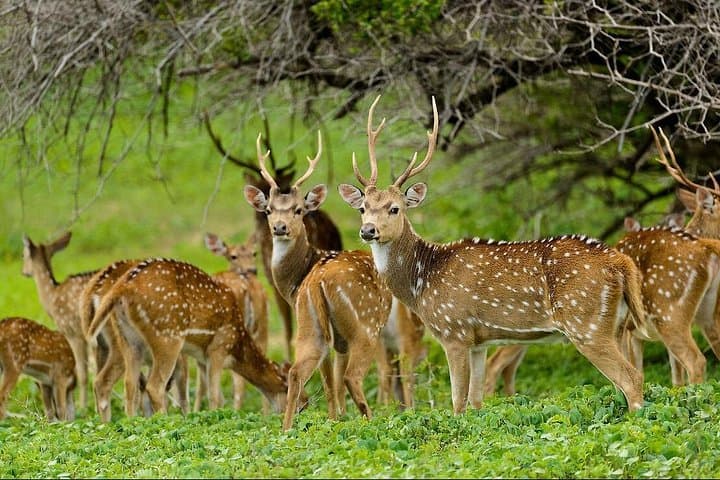
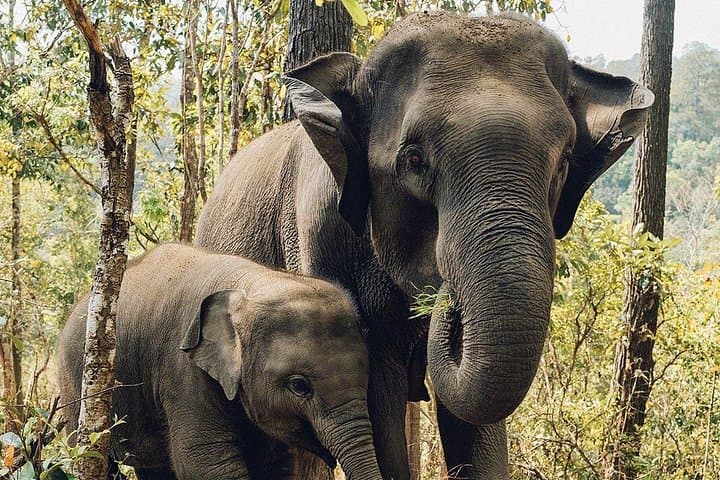
On a 3–5 hour afternoon drive you can expect elephant families, sambar and spotted deer, wild buffalo and a rich complement of dry‑zone birds — white‑bellied sea eagles among them. A skilled tracker will tune the route to recent sightings; the landscape itself tests patience and rewards quiet observation as shadows stretch.
Practical guidance: arrive hydrated and sun‑protected, carry binoculars and a lightweight layer for cooling evenings. Vehicles are open‑roof or pop‑top jeeps — expect bumps and occasional standing to scan horizons. Follow rangers’ instructions, keep voices low and cameras ready but on silent mode. Pickup is commonly mid‑afternoon with return before dusk; park timings and weather can alter exact start and finish. This afternoon safari balances easy physical demands with the uncertainty and thrill of genuine wildlife viewing.
moderate.
4–5 hours.
Suitable for most fitness levels; requires ability to climb into a safari jeep and sit for extended periods.
Typical afternoon safaris run 4–5 hours including transfer time; pick up is usually mid‑afternoon with return before dusk.
No—wildlife is unpredictable. The park is a stronghold for elephants, so sightings are common but not guaranteed.
Children can join but check age restrictions; the supplier advises against participation for pregnant travelers and those with serious back or heart issues.
Entrance fees are included in most organized safaris, but confirm with your operator and carry ID for booking verification.
Maduru Oya lies within Sri Lanka’s dry‑zone landscape shaped by ancient irrigation and modern reservoirs; the park conserves remnants of that long human–water relationship.
The park is managed to protect dry‑zone habitat and elephant migration routes; visitors should stay on tracks, avoid littering, and follow ranger guidance to minimize disturbance.
The Mice Team operates guided outdoor trips and adventures with an emphasis on safety, stewardship, and memorable experiences.
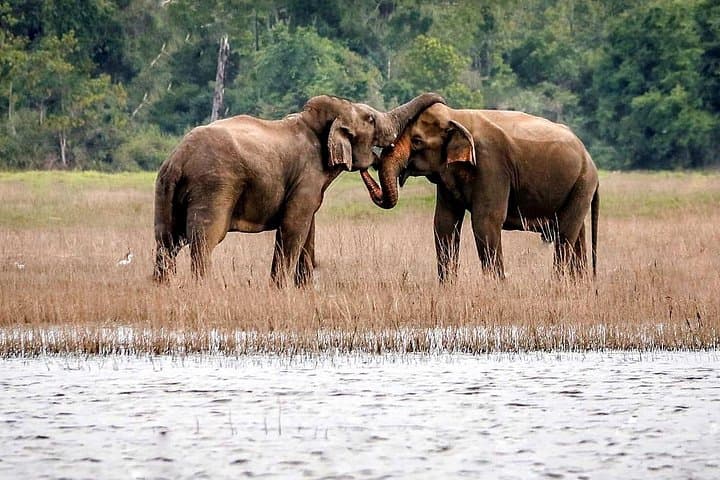
Late afternoon light slides across the dry grass as the jeep eases through Maduru Oya National Park, dust lifting like a curtain to reveal a lone elephant feeding at the water’s edge. The park’s low scrub and open plains give visibility; trees lean and shade the track, while distant calls and wingbeats mark the rhythm of the day.
Late afternoon light slides across the dry grass as the jeep eases through Maduru Oya National Park, dust lifting like a curtain to reveal a lone elephant feeding at the water’s edge. The park’s low scrub and open plains give visibility; trees lean and shade the track, while distant calls and wingbeats mark the rhythm of the day.
Maduru Oya protects one of Sri Lanka’s important dry‑zone ecosystems, carved around a large reservoir and ancient irrigation features. Geologically the terrain is flat to undulating with lateritic soils that support thorn forests and grasslands. Culturally the area sits between Polonnaruwa’s ancient irrigation heartland and the present‑day villages that still read the seasons by reservoir levels.
On a 3–5 hour afternoon drive you can expect elephant families, sambar and spotted deer, wild buffalo and a rich complement of dry‑zone birds — white‑bellied sea eagles among them. A skilled tracker will tune the route to recent sightings; the landscape itself tests patience and rewards quiet observation as shadows stretch.
Practical guidance: arrive hydrated and sun‑protected, carry binoculars and a lightweight layer for cooling evenings. Vehicles are open‑roof or pop‑top jeeps — expect bumps and occasional standing to scan horizons. Follow rangers’ instructions, keep voices low and cameras ready but on silent mode. Pickup is commonly mid‑afternoon with return before dusk; park timings and weather can alter exact start and finish. This afternoon safari balances easy physical demands with the uncertainty and thrill of genuine wildlife viewing.