THE ADVENTURE COLLECTIVE® · Independent discovery and booking for outdoor travel

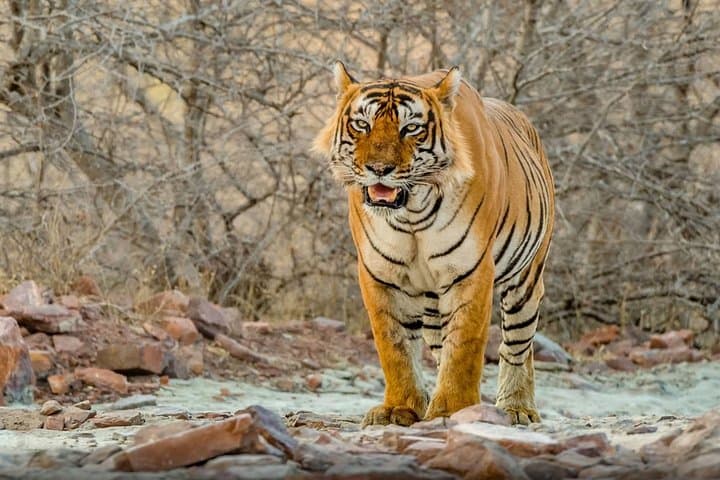
Leave Jaipur for a full‑day, private transfer to Ranthambore National Park where an afternoon safari with a naturalist chases Bengal tigers across rocky hills, seasonal lakes and open meadows. Learn the park's history, what to expect on the jeep, and practical tips for maximizing sightings.
Leave Jaipur for a full‑day, private transfer to Ranthambore National Park where an afternoon safari with a naturalist chases Bengal tigers across rocky hills, seasonal lakes and open meadows. Learn the park's history, what to expect on the jeep, and practical tips for maximizing sightings.
Dust rises as an air‑conditioned van leaves Jaipur, the plains opening into scrub, rocky knolls and seasonal lakes where the jungle seems to wait with patience. By mid‑afternoon the forest light tightens; a trained naturalist scans the track ahead and the undergrowth, and the vehicle threads along routes that have been refined for sightings and safety.
Verified experiences and guided adventures in the surrounding area.
Operated by Imperial Holidays · Sawai Madhopur, Rajasthan
Dust rises as an air‑conditioned van leaves Jaipur, the plains opening into scrub, rocky knolls and seasonal lakes where the jungle seems to wait with patience. By mid‑afternoon the forest light tightens; a trained naturalist scans the track ahead and the undergrowth, and the vehicle threads along routes that have been refined for sightings and safety.
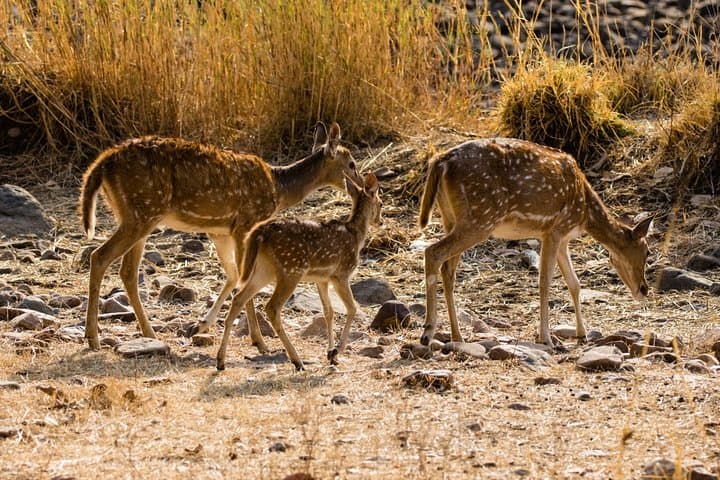
Ranthambore began as royal hunting grounds and still carries the slow geometry of forts and water tanks. The 10th‑century Ranthambore Fort perches over the park, its stone faces weathering the swings of empire. Geologically the landscape is a mix of low granite and sandstone hills cut by seasonal streams, creating open meadows and dense patches of Sal and Dhok trees that attract deer and their hunters. The park became part of Project Tiger in 1973 and a national park in 1980—conservation history that shapes how visitors move through this habitat today.
Expect an experience that mixes wildlife viewing with cultural context: forts, village life beyond the park boundary and local guides who read animal signs as easily as the map. Practical side: afternoon safaris last roughly three hours inside the park within a full 12–13 hour door‑to‑door day; sightings of tigers are not guaranteed and rely on patience and luck. Bring binoculars, a camera with a telephoto, sun protection and steady shoes for short walks near viewing points. Keep noise low, stay on the vehicle, and follow your naturalist—this is a place where the jungle tests your attention and rewards it with sudden, unforgettable encounters.
moderate.
12–13 hours.
Suitable for most fitness levels but requires tolerance for long vehicle time, some bumpy roads, and short walks at viewpoints.
Sightings vary—Ranthambore is one of the better parks for tiger viewing, but encounters are not guaranteed and depend on season, time and animal movement.
Typical inclusions are hotel pickup/drop‑off in Jaipur, private air‑conditioned transport, afternoon safari tickets by shared jeep or canter, bottled water and a naturalist guide.
Most ages can participate, but long travel times and bumpy rides may be uncomfortable for very young children, people with spinal issues, pregnant travelers or those with serious heart conditions.
Yes—personal cameras, binoculars and lenses are allowed and encouraged; drones and feeding or approaching wildlife are prohibited.
The area was once royal hunting grounds; Ranthambore joined Project Tiger in 1973 and became a national park in 1980.
Visitor numbers and strict vehicle routes help limit disturbance; follow guide instructions, avoid litter and keep noise low to support ongoing conservation efforts.
Imperial Holidays operates guided outdoor trips and adventures with an emphasis on safety, stewardship, and memorable experiences.

Dust rises as an air‑conditioned van leaves Jaipur, the plains opening into scrub, rocky knolls and seasonal lakes where the jungle seems to wait with patience. By mid‑afternoon the forest light tightens; a trained naturalist scans the track ahead and the undergrowth, and the vehicle threads along routes that have been refined for sightings and safety.
Dust rises as an air‑conditioned van leaves Jaipur, the plains opening into scrub, rocky knolls and seasonal lakes where the jungle seems to wait with patience. By mid‑afternoon the forest light tightens; a trained naturalist scans the track ahead and the undergrowth, and the vehicle threads along routes that have been refined for sightings and safety.
Ranthambore began as royal hunting grounds and still carries the slow geometry of forts and water tanks. The 10th‑century Ranthambore Fort perches over the park, its stone faces weathering the swings of empire. Geologically the landscape is a mix of low granite and sandstone hills cut by seasonal streams, creating open meadows and dense patches of Sal and Dhok trees that attract deer and their hunters. The park became part of Project Tiger in 1973 and a national park in 1980—conservation history that shapes how visitors move through this habitat today.
Expect an experience that mixes wildlife viewing with cultural context: forts, village life beyond the park boundary and local guides who read animal signs as easily as the map. Practical side: afternoon safaris last roughly three hours inside the park within a full 12–13 hour door‑to‑door day; sightings of tigers are not guaranteed and rely on patience and luck. Bring binoculars, a camera with a telephoto, sun protection and steady shoes for short walks near viewing points. Keep noise low, stay on the vehicle, and follow your naturalist—this is a place where the jungle tests your attention and rewards it with sudden, unforgettable encounters.