THE ADVENTURE COLLECTIVE® · Independent discovery and booking for outdoor travel

Spend an action-packed afternoon exploring Marble Mountains’ caves and pagodas, then climb Son Tra (Monkey Mountain) for sweeping views of Da Nang and the sea. This 4–4.5 hour guided loop blends geology, Buddhist sanctuaries and coastal panoramas.
Spend an action-packed afternoon exploring Marble Mountains’ caves and pagodas, then climb Son Tra (Monkey Mountain) for sweeping views of Da Nang and the sea. This 4–4.5 hour guided loop blends geology, Buddhist sanctuaries and coastal panoramas.
You step out of the air-conditioned van at mid-afternoon and face a cluster of craggy hills that rise from coastal flats—white marble veins catching the slanting light as incense threads smoke from a nearby pagoda.
Verified experiences and guided adventures in the surrounding area.
Operated by Simply Vietnam Travel · Da Nang, Da Nang
You step out of the air-conditioned van at mid-afternoon and face a cluster of craggy hills that rise from coastal flats—white marble veins catching the slanting light as incense threads smoke from a nearby pagoda.
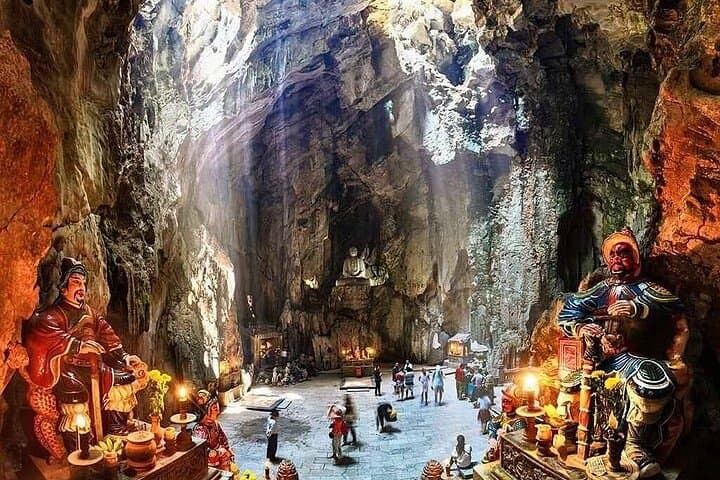
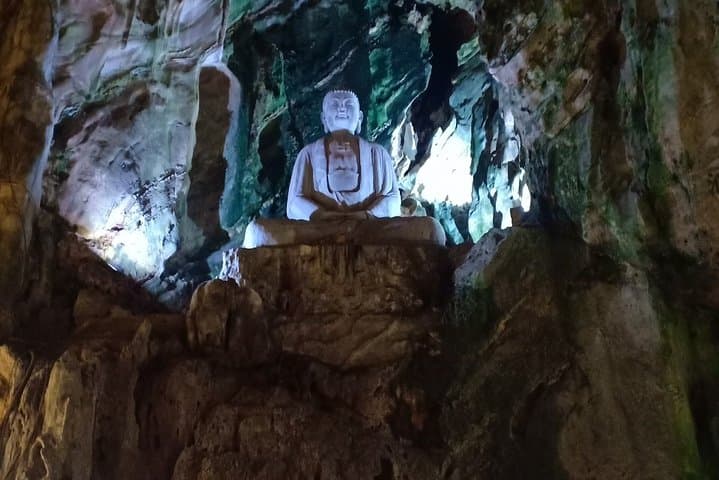
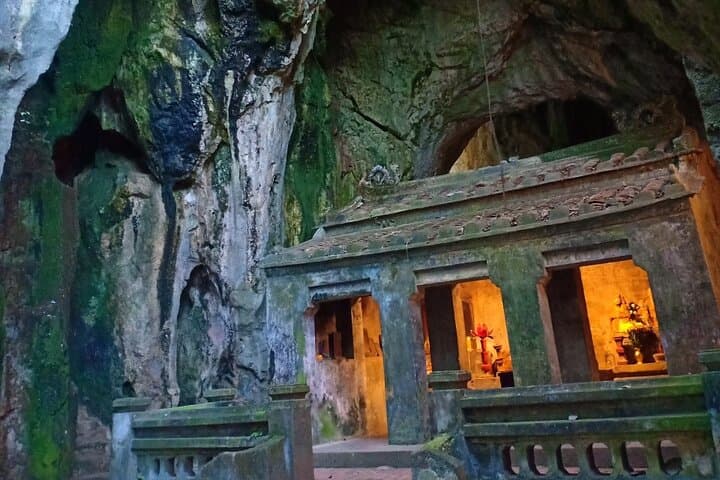
Ngu Hanh Son (Marble Mountains) are five limestone-and-marble outcrops formed over millennia, cut by caves and tunnels that have been used as sanctuaries and carving sites for generations. Inside Am Phu Cave — commonly called the “Hell Cave” — carved scenes and altars frame Buddhist teachings about karma and mortality, their dim passages asking for quiet attention.
A forty-minute drive brings you up Son Tra (Monkey Mountain), where wind and surf trade places in the view and Linh Ung pagoda’s striking Lady Buddha watches the city and sea. The peninsula has geological ridges of volcanic origin and a history as a strategic lookout; today it’s prized for coastal panoramas and pockets of rainforest.
Practical guidance: this afternoon loop runs about 4–4.5 hours (tour starts ~2:00pm and ends ~6:30–7:00pm). Expect 60–120 minutes of walking through steps, caves and temple grounds—sturdy shoes and modest clothing for pagodas are required. Bring at least 1 liter of water, sun protection, and insect repellent; watch for monkeys on Son Tra and never feed them. Photography is best late afternoon when light softens the cliffs and city below.
The route is accessible for most travelers but includes uneven stone, stairs and brief climbs. Respect temple customs, stay on marked paths, and leave carved marble pieces and wildlife undisturbed to keep these places intact for the next visitor.
moderate.
4–4.5 hours.
Light-to-moderate fitness; able to climb stairs and walk uneven paths for up to 2 hours total
The afternoon tour runs about 4–4.5 hours, typically departing around 2:00pm and returning between 6:30–7:00pm.
Most sites have stairs and uneven floors; they’re accessible to travelers in normal mobility but not suitable for those unable to navigate steps.
Yes—pick up and drop off from Da Nang and Hoi An are generally included; confirm your pickup point when booking.
Photography is permitted in most areas but be respectful—avoid flash at shrines and follow signs restricting access to certain altars.
Marble Mountains have been a source of stone and spiritual practice for centuries; Son Tra served as a strategic promontory and now protects coastal forest and wildlife.
Quarrying and unregulated visitation have strained marble sites, and Son Tra is actively managed to protect endemic species—stay on trails, avoid removing stone and don’t feed wildlife.
Simply Vietnam Travel operates guided outdoor trips and adventures with an emphasis on safety, stewardship, and memorable experiences.
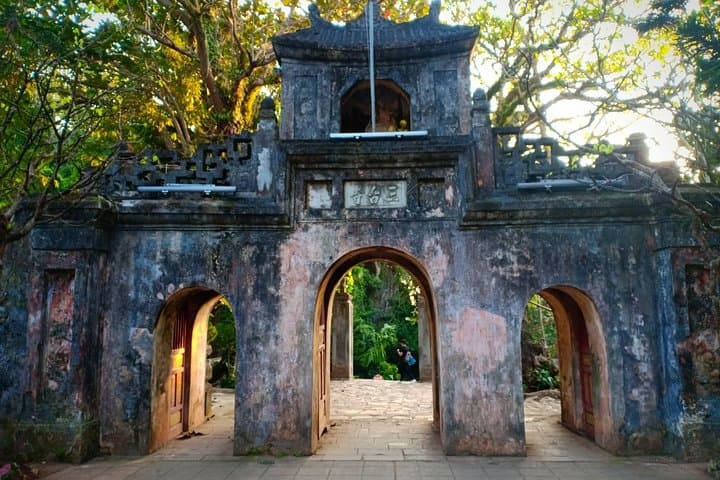
You step out of the air-conditioned van at mid-afternoon and face a cluster of craggy hills that rise from coastal flats—white marble veins catching the slanting light as incense threads smoke from a nearby pagoda.
You step out of the air-conditioned van at mid-afternoon and face a cluster of craggy hills that rise from coastal flats—white marble veins catching the slanting light as incense threads smoke from a nearby pagoda.
Ngu Hanh Son (Marble Mountains) are five limestone-and-marble outcrops formed over millennia, cut by caves and tunnels that have been used as sanctuaries and carving sites for generations. Inside Am Phu Cave — commonly called the “Hell Cave” — carved scenes and altars frame Buddhist teachings about karma and mortality, their dim passages asking for quiet attention.
A forty-minute drive brings you up Son Tra (Monkey Mountain), where wind and surf trade places in the view and Linh Ung pagoda’s striking Lady Buddha watches the city and sea. The peninsula has geological ridges of volcanic origin and a history as a strategic lookout; today it’s prized for coastal panoramas and pockets of rainforest.
Practical guidance: this afternoon loop runs about 4–4.5 hours (tour starts ~2:00pm and ends ~6:30–7:00pm). Expect 60–120 minutes of walking through steps, caves and temple grounds—sturdy shoes and modest clothing for pagodas are required. Bring at least 1 liter of water, sun protection, and insect repellent; watch for monkeys on Son Tra and never feed them. Photography is best late afternoon when light softens the cliffs and city below.
The route is accessible for most travelers but includes uneven stone, stairs and brief climbs. Respect temple customs, stay on marked paths, and leave carved marble pieces and wildlife undisturbed to keep these places intact for the next visitor.