THE ADVENTURE COLLECTIVE® · Independent discovery and booking for outdoor travel

Explore Karnak and Luxor at your own pace with a private vehicle and local driver. Start late afternoon to avoid crowds, buy tickets on arrival, and finish beneath Luxor Temple’s evening lights.
Explore Karnak and Luxor at your own pace with a private vehicle and local driver. Start late afternoon to avoid crowds, buy tickets on arrival, and finish beneath Luxor Temple’s evening lights.
You pull up beside a low stone wall as late afternoon light softens the columns—sandstone pillars catching gold, shadows stretching across the avenue. Your private driver waits while you push through the ticket line and step into the scale of pharaonic ambition: obelisks, hypostyle halls, and carved reliefs that still hold the gestures of ancient ritual.
Verified experiences and guided adventures in the surrounding area.
Operated by Eyes of Egypt · Luxor, Luxor Governorate
You pull up beside a low stone wall as late afternoon light softens the columns—sandstone pillars catching gold, shadows stretching across the avenue. Your private driver waits while you push through the ticket line and step into the scale of pharaonic ambition: obelisks, hypostyle halls, and carved reliefs that still hold the gestures of ancient ritual.
Karnak and Luxor evolved over centuries of New Kingdom rule, built in stages by pharaohs who added pylons, statues, and avenues for processions to honor Amun-Ra and royal power. Geologically the site sits on the Nile floodplain; builders quarried nearby sandstone and limestone, fashioning massive blocks that resist desert wind and heat.
Today the east bank hums with modern life—cafés along the Corniche, souk alleys, and felucca crews on the river—offering a grounded counterpoint to the temples’ ancient ceremonial spaces. Locals still sell papyrus prints and spices near the entrances, and an optional stop in El Souk gives a quick, authentic snapshot of daily Luxor.
Practical guidance: plan 3–4 hours, start around 14:00–15:00 to avoid peak crowds and catch Luxor Temple’s evening illumination. Entrance tickets are bought on-site; carry cash and a copy of your booking. Wear sturdy shoes for uneven stone and bring sun protection and at least 1–1.5 liters of water per person. Your driver can assist with directions and waits nearby, but exploration is self-guided—ideal for photographers and independent travelers who want tempo and privacy without a fixed itinerary.
easy.
3–4 hours.
Suitable for most fitness levels; requires walking on uneven surfaces and short standing periods
No—tickets for Karnak and Luxor Temples are purchased on-site at the temple ticket counters; bring cash in Egyptian pounds.
Yes—a private vehicle and driver pick you up from your hotel and return you afterward; vehicle type is chosen at booking.
Many areas are wheelchair and stroller accessible, though some temple sections have steps or uneven ground—ask the driver for the easiest entry points.
The optional city/souk stop is flexible—confirm timing with your driver, but extra time may affect the total tour duration and return schedule.
Karnak and Luxor were central ritual sites in the New Kingdom; successive pharaohs added pylons, obelisks, and statues to reinforce royal theology across centuries.
High visitor volume stresses fragile stone and painted reliefs—avoid touching carvings, stay on marked paths, and use local services that follow responsible waste and water practices.
Eyes of Egypt operates guided outdoor trips and adventures with an emphasis on safety, stewardship, and memorable experiences.
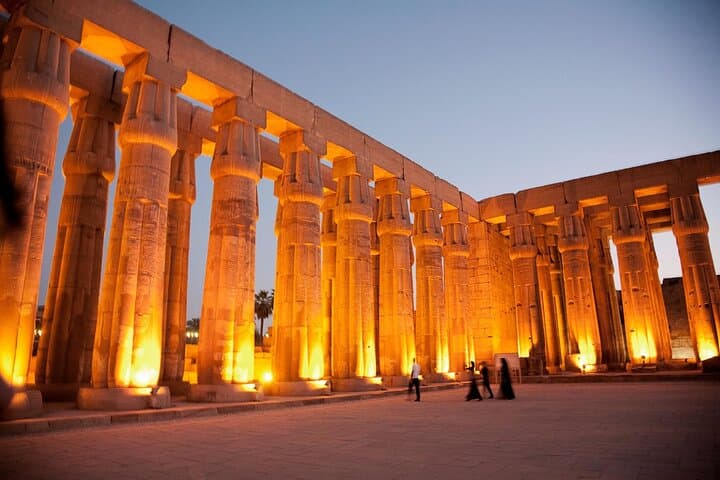
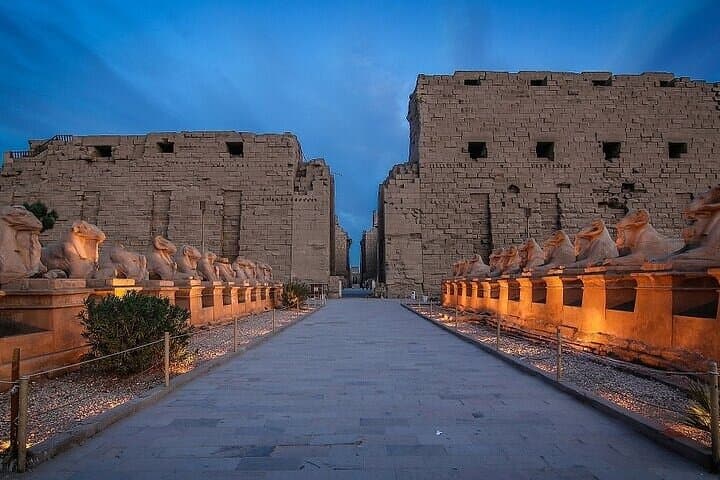
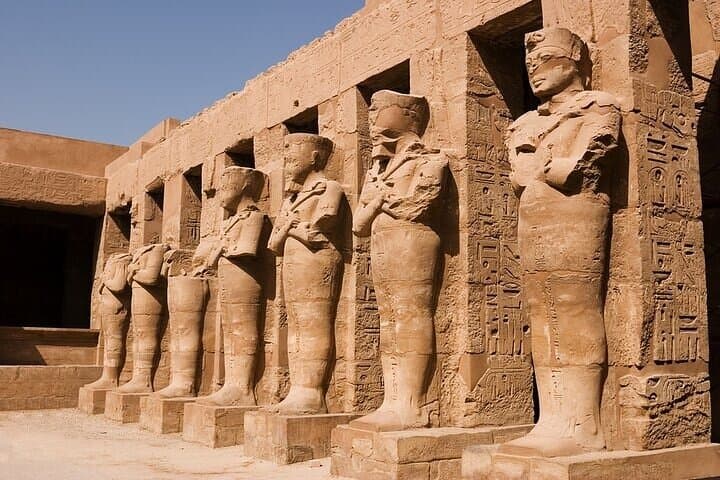
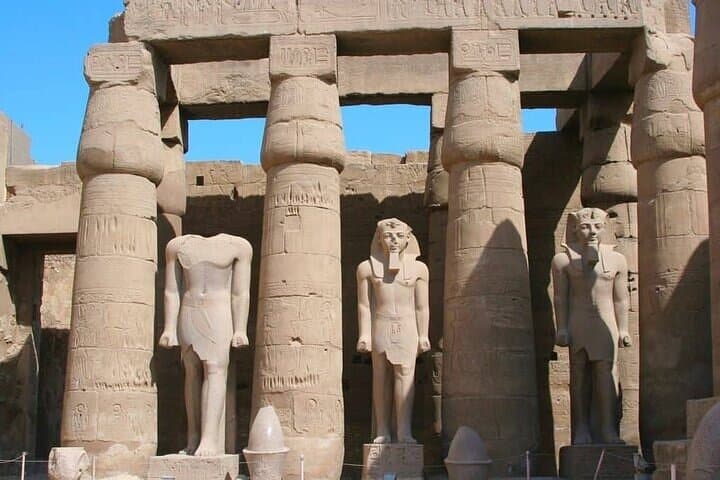
You pull up beside a low stone wall as late afternoon light softens the columns—sandstone pillars catching gold, shadows stretching across the avenue. Your private driver waits while you push through the ticket line and step into the scale of pharaonic ambition: obelisks, hypostyle halls, and carved reliefs that still hold the gestures of ancient ritual.
You pull up beside a low stone wall as late afternoon light softens the columns—sandstone pillars catching gold, shadows stretching across the avenue. Your private driver waits while you push through the ticket line and step into the scale of pharaonic ambition: obelisks, hypostyle halls, and carved reliefs that still hold the gestures of ancient ritual.
Karnak and Luxor evolved over centuries of New Kingdom rule, built in stages by pharaohs who added pylons, statues, and avenues for processions to honor Amun-Ra and royal power. Geologically the site sits on the Nile floodplain; builders quarried nearby sandstone and limestone, fashioning massive blocks that resist desert wind and heat.
Today the east bank hums with modern life—cafés along the Corniche, souk alleys, and felucca crews on the river—offering a grounded counterpoint to the temples’ ancient ceremonial spaces. Locals still sell papyrus prints and spices near the entrances, and an optional stop in El Souk gives a quick, authentic snapshot of daily Luxor.
Practical guidance: plan 3–4 hours, start around 14:00–15:00 to avoid peak crowds and catch Luxor Temple’s evening illumination. Entrance tickets are bought on-site; carry cash and a copy of your booking. Wear sturdy shoes for uneven stone and bring sun protection and at least 1–1.5 liters of water per person. Your driver can assist with directions and waits nearby, but exploration is self-guided—ideal for photographers and independent travelers who want tempo and privacy without a fixed itinerary.