THE ADVENTURE COLLECTIVE® · Independent discovery and booking for outdoor travel

Move through the Louvre after dark with a maximum of six people: quieter galleries, focused storytelling, and highlights like the Mona Lisa and Winged Victory without daytime crowds. This two‑hour guided experience pairs intimate access with practical tips for navigating security and free admission rules.
Move through the Louvre after dark with a maximum of six people: quieter galleries, focused storytelling, and highlights like the Mona Lisa and Winged Victory without daytime crowds. This two‑hour guided experience pairs intimate access with practical tips for navigating security and free admission rules.
You step off a quiet Paris evening and into light that seems to have been turned down across the city—the glass pyramid glows against the cool air, and the courtyard hush makes the stones speak. A small group of six threads through security, guided by someone who knows which corners hold secrets after the crowds leave.
Verified experiences and guided adventures in the surrounding area.
Operated by VOYAGE · Paris, Île-de-France
You step off a quiet Paris evening and into light that seems to have been turned down across the city—the glass pyramid glows against the cool air, and the courtyard hush makes the stones speak. A small group of six threads through security, guided by someone who knows which corners hold secrets after the crowds leave.
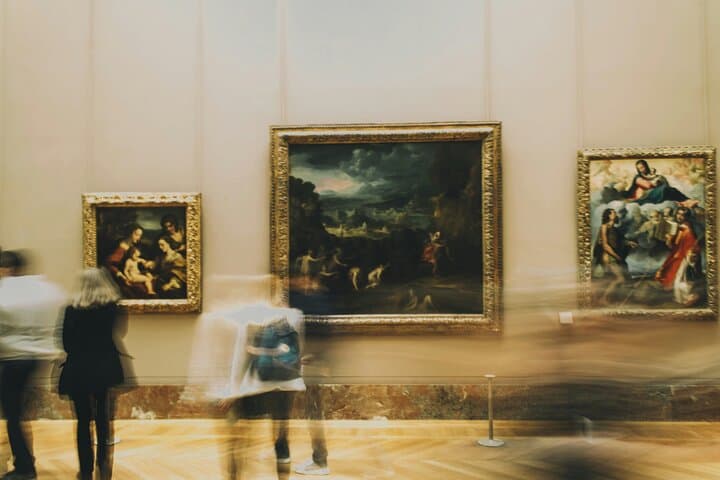
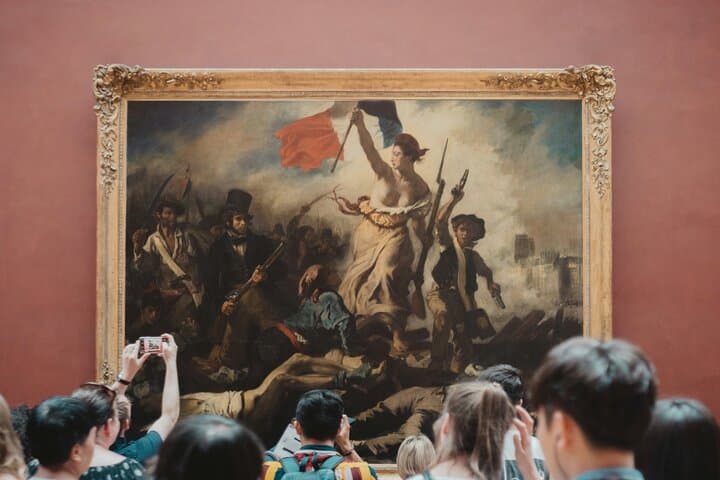
The Louvre began as a 12th‑century fortress on the Seine, rebuilt across centuries into a royal palace before becoming the national museum in 1793. Its walls are mostly Parisian limestone—Lutetian stone quarried from nearby—whose pale grain ages under gallery lights. Night tours emphasize masterpieces and stories: the compact smile of the Mona Lisa, the marble sweep of the Winged Victory, the ancient balance of Venus de Milo, and the quieter panels and sculptures that give the museum depth beyond its headline pieces.
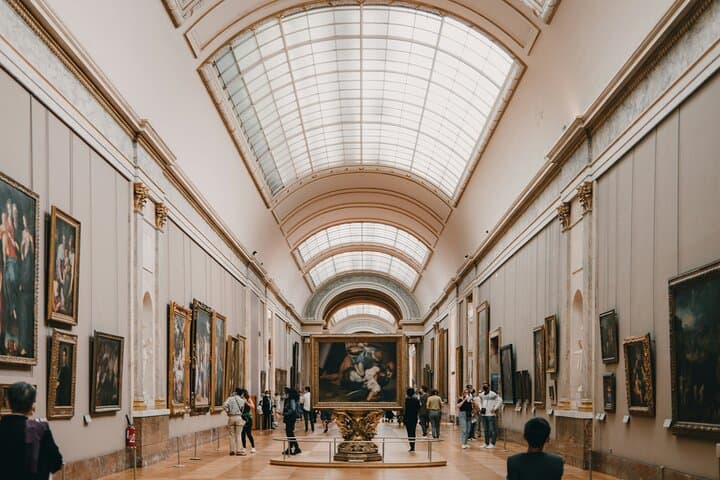
Expect close attention to provenance, anecdotes about curatorial choices, and practical navigation of gallery flows. A two‑hour, six‑person max tour reduces waiting and allows time for focused interpretation; still, the Louvre is vast and requires steady walking across stone floors and stairways. Bring valid ID if you qualify for free admission (under‑18 or EEA under‑26), a charged phone for photos (no flash or tripods), and comfortable shoes.
Plan to arrive early to meet your guide, keep valuables secure, and allow 15–30 minutes for security lines. Evening light and smaller crowds make this a great option for anyone who prefers calm, concentrated access to some of the world’s most visited art.
easy.
2 hours.
Suitable for all fitness levels; requires standing and walking on stone floors and some stairs for the duration.
This tour includes the adult entrance ticket noted in the activity details (≈€22); free admission applies to eligible visitors who present valid ID.
Yes—families and children are welcome; the tour is designed to be accessible to all ages, but minors may require ID for free-entry rules.
The Louvre has accessible routes and elevators, but this shared small‑group tour recommends contacting the operator or upgrading to a private tour for specific accessibility needs.
If the minimum number of guests isn't met the operator will offer an alternative date/time or a full refund according to the booking terms.
The Louvre evolved from a 12th‑century fortress into a royal palace and was opened as a public museum after the French Revolution in 1793.
The museum enforces strict no‑touch and lighting rules to protect fragile works; visitors should stay behind barriers and avoid flash photography to minimize wear.
VOYAGE operates guided outdoor trips and adventures with an emphasis on safety, stewardship, and memorable experiences.
You step off a quiet Paris evening and into light that seems to have been turned down across the city—the glass pyramid glows against the cool air, and the courtyard hush makes the stones speak. A small group of six threads through security, guided by someone who knows which corners hold secrets after the crowds leave.
You step off a quiet Paris evening and into light that seems to have been turned down across the city—the glass pyramid glows against the cool air, and the courtyard hush makes the stones speak. A small group of six threads through security, guided by someone who knows which corners hold secrets after the crowds leave.
The Louvre began as a 12th‑century fortress on the Seine, rebuilt across centuries into a royal palace before becoming the national museum in 1793. Its walls are mostly Parisian limestone—Lutetian stone quarried from nearby—whose pale grain ages under gallery lights. Night tours emphasize masterpieces and stories: the compact smile of the Mona Lisa, the marble sweep of the Winged Victory, the ancient balance of Venus de Milo, and the quieter panels and sculptures that give the museum depth beyond its headline pieces.
Expect close attention to provenance, anecdotes about curatorial choices, and practical navigation of gallery flows. A two‑hour, six‑person max tour reduces waiting and allows time for focused interpretation; still, the Louvre is vast and requires steady walking across stone floors and stairways. Bring valid ID if you qualify for free admission (under‑18 or EEA under‑26), a charged phone for photos (no flash or tripods), and comfortable shoes.
Plan to arrive early to meet your guide, keep valuables secure, and allow 15–30 minutes for security lines. Evening light and smaller crowds make this a great option for anyone who prefers calm, concentrated access to some of the world’s most visited art.