THE ADVENTURE COLLECTIVE® · Independent discovery and booking for outdoor travel

Discover Bohol’s signature sights—up-close tarsier viewing and the Chocolate Hills—in a private half-day loop. This easy, scenic tour pairs gentle walks with short interpretive stops and comfortable transport.
Discover Bohol’s signature sights—up-close tarsier viewing and the Chocolate Hills—in a private half-day loop. This easy, scenic tour pairs gentle walks with short interpretive stops and comfortable transport.
You step off an air-conditioned van onto a wooden deck that looks out over a rolling sea of cone-shaped knolls — the Chocolate Hills — their grasses bristling in the trade wind. Close by, a small enclosure holds the wide-eyed Philippine tarsier, whose padded toes and enormous eyes make silence feel like a necessary companion.
Verified experiences and guided adventures in the surrounding area.
Operated by Christopher Seloterio · Tagbilaran, Bohol
You step off an air-conditioned van onto a wooden deck that looks out over a rolling sea of cone-shaped knolls — the Chocolate Hills — their grasses bristling in the trade wind. Close by, a small enclosure holds the wide-eyed Philippine tarsier, whose padded toes and enormous eyes make silence feel like a necessary companion.
The route threads through Bilar’s mahogany stand, a two-kilometer corridor planted during mid-20th-century reforestation efforts, and skims Loboc’s river valley where floating-restaurant culture grew from local boatmen traditions. The Chocolate Hills — at least 1,260 rounded mounds across roughly 50 square kilometers — are a limestone formation shaped by uplift and erosion over millennia; they brown in the dry season, the visual contrast that gives them their name.
The tarsier (Carlito syrichta) is endemic to the Philippines and protected in small sanctuaries on Bohol; viewing rules are strict to avoid stress to the animals. Expect 20–30 minute stops at principal sights: a viewing deck at the hills, a short tarsier encounter, and a brief photo stop in the man-made mahogany forest.
Practicalities are straightforward: this private, 4–6 hour countryside loop runs on paved and secondary roads with minimal walking required. Bring water, sun protection and insect repellent; respect tarsier quiet zones and follow guide instructions at the viewpoints. Morning trips give cooler light for photos and quieter wildlife viewing; afternoons can be warmer and busier. For a half-day that balances geology, wildlife and local culture, this itinerary delivers high-impact sights with low exertion.
easy.
4–6 hours.
Suitable for all fitness levels; limited walking and short stair sections at viewpoints
The private tour runs about 4–6 hours depending on traffic and how long you spend at each stop.
Tarsiers are seen in small sanctuaries and protected enclosures rather than roaming freely; sightings in the wild are rare and require specialized guides.
This tour itinerary includes entrance to the Chocolate Hills viewing deck as noted in the itinerary.
Yes—walking is minimal and transportation is private and air-conditioned, making it family- and elder-friendly with standard precautions.
The mahogany corridor is part of mid-20th-century reforestation; the Chocolate Hills formed from uplifted coral deposits and karst erosion over millions of years.
Tarsiers are protected and viewing protocols are strict; stick to marked paths and avoid single-use plastics to limit local ecological impact.
Christopher Seloterio operates guided outdoor trips and adventures with an emphasis on safety, stewardship, and memorable experiences.
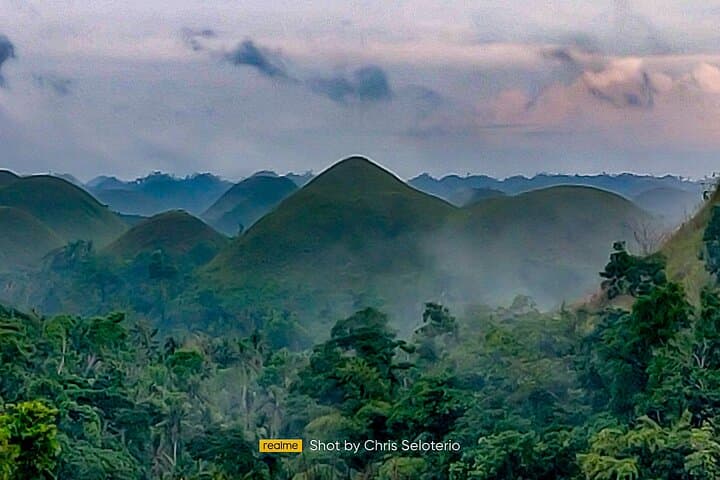
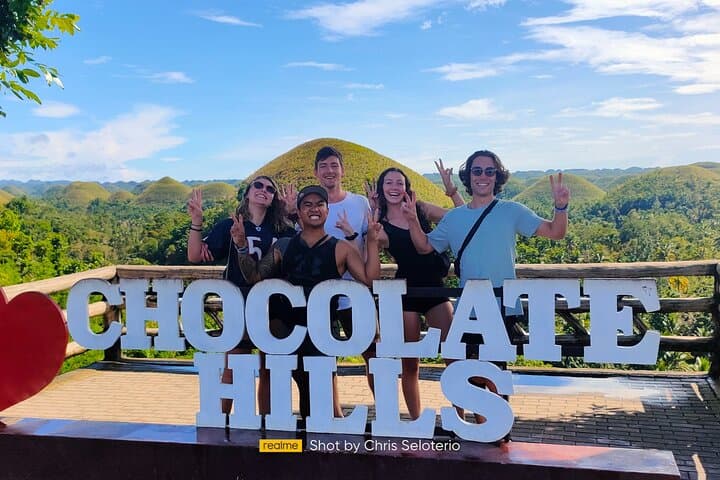


You step off an air-conditioned van onto a wooden deck that looks out over a rolling sea of cone-shaped knolls — the Chocolate Hills — their grasses bristling in the trade wind. Close by, a small enclosure holds the wide-eyed Philippine tarsier, whose padded toes and enormous eyes make silence feel like a necessary companion.
You step off an air-conditioned van onto a wooden deck that looks out over a rolling sea of cone-shaped knolls — the Chocolate Hills — their grasses bristling in the trade wind. Close by, a small enclosure holds the wide-eyed Philippine tarsier, whose padded toes and enormous eyes make silence feel like a necessary companion.
The route threads through Bilar’s mahogany stand, a two-kilometer corridor planted during mid-20th-century reforestation efforts, and skims Loboc’s river valley where floating-restaurant culture grew from local boatmen traditions. The Chocolate Hills — at least 1,260 rounded mounds across roughly 50 square kilometers — are a limestone formation shaped by uplift and erosion over millennia; they brown in the dry season, the visual contrast that gives them their name.
The tarsier (Carlito syrichta) is endemic to the Philippines and protected in small sanctuaries on Bohol; viewing rules are strict to avoid stress to the animals. Expect 20–30 minute stops at principal sights: a viewing deck at the hills, a short tarsier encounter, and a brief photo stop in the man-made mahogany forest.
Practicalities are straightforward: this private, 4–6 hour countryside loop runs on paved and secondary roads with minimal walking required. Bring water, sun protection and insect repellent; respect tarsier quiet zones and follow guide instructions at the viewpoints. Morning trips give cooler light for photos and quieter wildlife viewing; afternoons can be warmer and busier. For a half-day that balances geology, wildlife and local culture, this itinerary delivers high-impact sights with low exertion.