THE ADVENTURE COLLECTIVE® · Independent discovery and booking for outdoor travel

Tackle Kilimanjaro’s scenic Machame Route in seven days from Moshi—rainforest, high moor, and an alpine summit push to Uhuru Peak. This practical guide outlines what to expect, from daily camps to altitude tips.
Tackle Kilimanjaro’s scenic Machame Route in seven days from Moshi—rainforest, high moor, and an alpine summit push to Uhuru Peak. This practical guide outlines what to expect, from daily camps to altitude tips.
A dawn hush settles over the rainforest as a line of hikers threads the Machame Trail, breath fogging in the cool air while the mountain’s slopes watch like an old, patient guide. The route climbs through wet canopy and moorland, opens onto the Shira Plateau and then hardens into a lunar, wind-scoured alpine above 4,500m before the final, stark push to Uhuru Peak.
Verified experiences and guided adventures in the surrounding area.
Operated by AFRICA NATURAL SAFARIS · Moshi, Kilimanjaro
A dawn hush settles over the rainforest as a line of hikers threads the Machame Trail, breath fogging in the cool air while the mountain’s slopes watch like an old, patient guide. The route climbs through wet canopy and moorland, opens onto the Shira Plateau and then hardens into a lunar, wind-scoured alpine above 4,500m before the final, stark push to Uhuru Peak.
Kilimanjaro is a stratovolcano whose icy cap crowns volcanic cones and exposed lava flows. The Machame Route—known as the Whiskey Route—was formalized in the 20th century and favors a “hike high, sleep low” sequence that helps acclimatization. The mountain is central to Chagga cultural landscapes on its southern and eastern flanks; local guides often share stories of clan land and colonial-era exploration during the trek.
Expect persistent microclimates: rainforest and mossy trails below, heather and giant lobelia in the heath, then brittle scree and wind above 4,000m. Weather can turn quickly—sunlit mornings can become snow at night—and the summit night is a long, cold, steep push beginning near midnight.
Practically, this seven-day itinerary includes Machame Gate to Machame Camp, Shira Plateau, Lava Tower (acclimatization), Barranco and Karanga Camps, Barafu for summit night, and descent via Mweka. Daily hiking ranges 3–8 hours except the summit push (7–8 hours up, 4–6 down). Wear broken-in waterproof boots, bring layered insulation, and keep a steady, slow pace to manage altitude. Guides, porters, meals, tents and park permits are standard; carry water, snacks and patience—the mountain rewards calm persistence more than speed.
challenging.
7 days.
Good cardiovascular fitness and experience with multi-day trekking; ability to hike 5–8 hours with a light daypack is recommended.
No technical climbing skills are required—the route is a non-technical hike, but prior multi-day trekking experience and good fitness improve success chances.
Altitude sickness is the primary risk; follow the itinerary’s acclimatization plan, stay hydrated, and notify guides of symptoms immediately.
Most guided packages include park fees, rescue insurance, and camping permits—confirm inclusions with the operator before booking.
June–October and December–February offer the most stable weather windows; September is often clear but can be windy.
Kilimanjaro’s slopes are part of Chagga territories and were later mapped by European explorers; the mountain’s glaciers document long-term climate shifts.
Kilimanjaro National Park is a UNESCO site—stay on trails, minimize waste, and support guides who use established camps to reduce ecological impact.
AFRICA NATURAL SAFARIS operates guided outdoor trips and adventures with an emphasis on safety, stewardship, and memorable experiences.
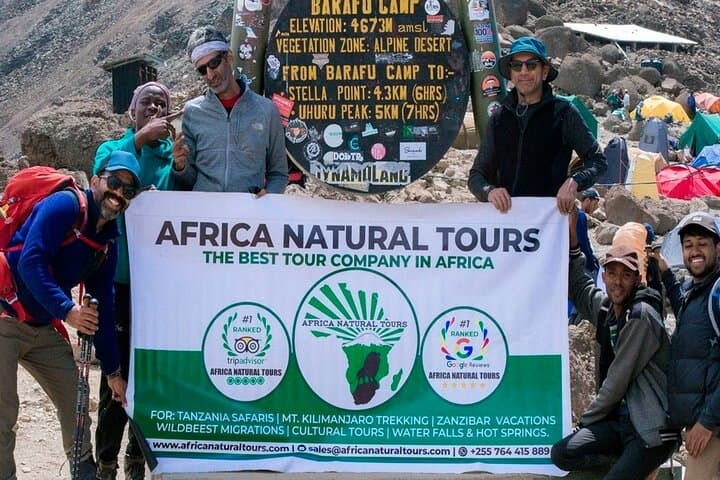
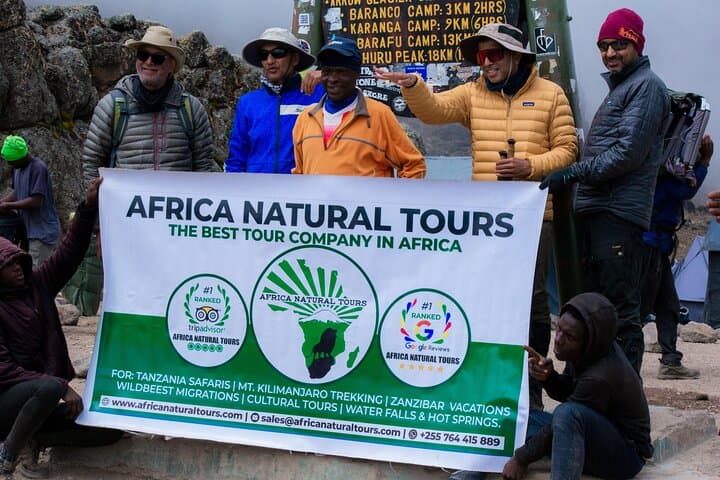

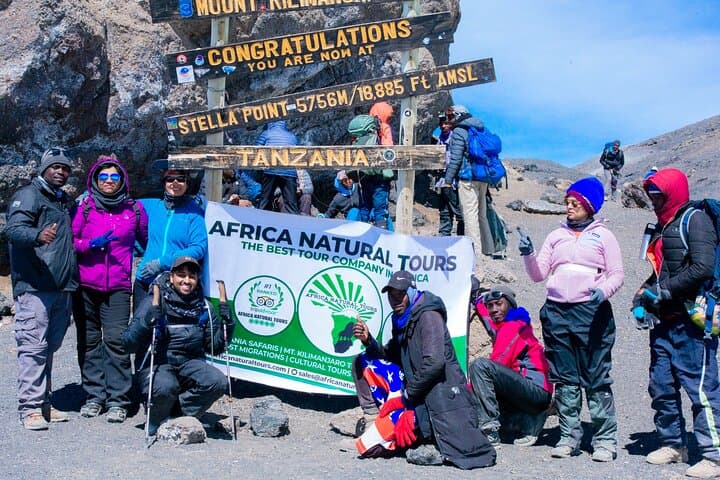
A dawn hush settles over the rainforest as a line of hikers threads the Machame Trail, breath fogging in the cool air while the mountain’s slopes watch like an old, patient guide. The route climbs through wet canopy and moorland, opens onto the Shira Plateau and then hardens into a lunar, wind-scoured alpine above 4,500m before the final, stark push to Uhuru Peak.
A dawn hush settles over the rainforest as a line of hikers threads the Machame Trail, breath fogging in the cool air while the mountain’s slopes watch like an old, patient guide. The route climbs through wet canopy and moorland, opens onto the Shira Plateau and then hardens into a lunar, wind-scoured alpine above 4,500m before the final, stark push to Uhuru Peak.
Kilimanjaro is a stratovolcano whose icy cap crowns volcanic cones and exposed lava flows. The Machame Route—known as the Whiskey Route—was formalized in the 20th century and favors a “hike high, sleep low” sequence that helps acclimatization. The mountain is central to Chagga cultural landscapes on its southern and eastern flanks; local guides often share stories of clan land and colonial-era exploration during the trek.
Expect persistent microclimates: rainforest and mossy trails below, heather and giant lobelia in the heath, then brittle scree and wind above 4,000m. Weather can turn quickly—sunlit mornings can become snow at night—and the summit night is a long, cold, steep push beginning near midnight.
Practically, this seven-day itinerary includes Machame Gate to Machame Camp, Shira Plateau, Lava Tower (acclimatization), Barranco and Karanga Camps, Barafu for summit night, and descent via Mweka. Daily hiking ranges 3–8 hours except the summit push (7–8 hours up, 4–6 down). Wear broken-in waterproof boots, bring layered insulation, and keep a steady, slow pace to manage altitude. Guides, porters, meals, tents and park permits are standard; carry water, snacks and patience—the mountain rewards calm persistence more than speed.