THE ADVENTURE COLLECTIVE® · Independent discovery and booking for outdoor travel

Spend a half-day outside Seoul at Aegibong Peace Ecological Park, where trails, an observatory and a narrow suspension bridge offer direct views across the DMZ into North Korea. This tour mixes ecology, history and accessible hiking with round-trip transport.
Spend a half-day outside Seoul at Aegibong Peace Ecological Park, where trails, an observatory and a narrow suspension bridge offer direct views across the DMZ into North Korea. This tour mixes ecology, history and accessible hiking with round-trip transport.
Morning light cuts across a low ridge as the van slips out of Seoul and the city’s noise thins to a wind that carries reed-scent and distant traffic. At Aegibong Peace Ecological Park the trail opens onto an observatory platform where telescopes point like quiet sentries toward the North — a direct, discomfiting view of the divided peninsula. The path then threads through oak scrub and riverside plain, punctuated by a narrow suspension bridge that adds the crisp, physical thrill to a reflective day.
Verified experiences and guided adventures in the surrounding area.
Operated by Lecirt · Paju, Gyeonggi-do
Morning light cuts across a low ridge as the van slips out of Seoul and the city’s noise thins to a wind that carries reed-scent and distant traffic. At Aegibong Peace Ecological Park the trail opens onto an observatory platform where telescopes point like quiet sentries toward the North — a direct, discomfiting view of the divided peninsula. The path then threads through oak scrub and riverside plain, punctuated by a narrow suspension bridge that adds the crisp, physical thrill to a reflective day.
The area sits along the Imjin River floodplain and a col of low hills formed by Pleistocene alluvium and more recent river terraces, which together offer vantage points for both military observation and seasonal bird migrations. Culturally, Aegibong is a modern site of memory: an ecological park and observatory created to promote peace and cross-border awareness rather than military display. You’ll pass interpretive signs, see memorial markers, and—surprisingly—stop at the Starbucks noted for being the closest to North Korea, a small marker of everyday life bordering geopolitical tension.
Practicalities are straightforward: the tour departs early from central Seoul pickup points and runs about 6–7 hours, including round-trip transport. Trails are mostly flat to gently sloping singletrack and boardwalk; good walking shoes and layers are enough. Bring ID, a camera, and patience for queues at the observatory; the experience balances quiet nature walks and contemplative history with the occasional crowd. Not recommended for those with serious heart conditions. Expect binoculars, birdwatching chances, and a grounded, informative look at the DMZ region.
easy.
6–7 hours.
Suitable for most walkers who can stand and walk for several hours with brief uphill sections.
The tour lasts approximately 6–7 hours including round-trip transportation from Seoul pickup points.
Bring photo ID or a passport—guides may request identification for administrative or access reasons.
No; the observatory offers viewing into North Korea but does not cross the Military Demarcation Line.
Yes—paths are generally easy, but the tour notes it is not recommended for people with serious heart conditions.
Aegibong Park occupies a ridge that became an observation point after the 1950–53 Korean War; it’s now framed as a space for ecological conservation and public reflection on division.
The park emphasizes minimal-impact trails and bird habitat protection; visitors are asked to stay on paths and avoid feeding wildlife to protect fragile riparian ecosystems.
Lecirt operates guided outdoor trips and adventures with an emphasis on safety, stewardship, and memorable experiences.
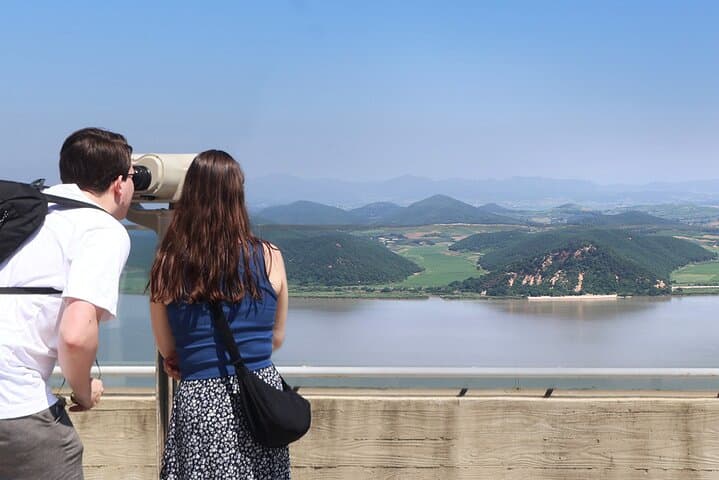

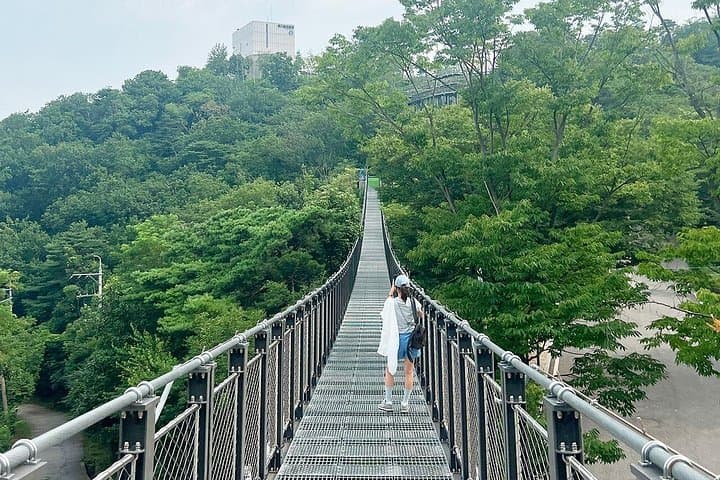

Morning light cuts across a low ridge as the van slips out of Seoul and the city’s noise thins to a wind that carries reed-scent and distant traffic. At Aegibong Peace Ecological Park the trail opens onto an observatory platform where telescopes point like quiet sentries toward the North — a direct, discomfiting view of the divided peninsula. The path then threads through oak scrub and riverside plain, punctuated by a narrow suspension bridge that adds the crisp, physical thrill to a reflective day.
Morning light cuts across a low ridge as the van slips out of Seoul and the city’s noise thins to a wind that carries reed-scent and distant traffic. At Aegibong Peace Ecological Park the trail opens onto an observatory platform where telescopes point like quiet sentries toward the North — a direct, discomfiting view of the divided peninsula. The path then threads through oak scrub and riverside plain, punctuated by a narrow suspension bridge that adds the crisp, physical thrill to a reflective day.
The area sits along the Imjin River floodplain and a col of low hills formed by Pleistocene alluvium and more recent river terraces, which together offer vantage points for both military observation and seasonal bird migrations. Culturally, Aegibong is a modern site of memory: an ecological park and observatory created to promote peace and cross-border awareness rather than military display. You’ll pass interpretive signs, see memorial markers, and—surprisingly—stop at the Starbucks noted for being the closest to North Korea, a small marker of everyday life bordering geopolitical tension.
Practicalities are straightforward: the tour departs early from central Seoul pickup points and runs about 6–7 hours, including round-trip transport. Trails are mostly flat to gently sloping singletrack and boardwalk; good walking shoes and layers are enough. Bring ID, a camera, and patience for queues at the observatory; the experience balances quiet nature walks and contemplative history with the occasional crowd. Not recommended for those with serious heart conditions. Expect binoculars, birdwatching chances, and a grounded, informative look at the DMZ region.