THE ADVENTURE COLLECTIVE® · Independent discovery and booking for outdoor travel

Walk white travertines, explore Roman theaters and trace early Christian history on a compact 3‑day route from Pamukkale to Ephesus and Priene. Ideal for travelers who want geological spectacle and classical ruins with guided ease.
Walk white travertines, explore Roman theaters and trace early Christian history on a compact 3‑day route from Pamukkale to Ephesus and Priene. Ideal for travelers who want geological spectacle and classical ruins with guided ease.
You step from the minibus onto a palette of chalk-white terraces; warm mineral water murmurs and the limestone pools reflect a blue that seems to challenge the sky. The travertines of Pamukkale spread downslope like frozen waterfalls while distant ruins of Hierapolis perch above, their stones warmed by centuries of sun and pilgrims.
Verified experiences and guided adventures in the surrounding area.
Operated by Turkey Experiences · Kuşadası, Aydın
You step from the minibus onto a palette of chalk-white terraces; warm mineral water murmurs and the limestone pools reflect a blue that seems to challenge the sky. The travertines of Pamukkale spread downslope like frozen waterfalls while distant ruins of Hierapolis perch above, their stones warmed by centuries of sun and pilgrims.
This three‑day circuit links geological drama with classical cities: Pamukkale’s travertine terraces form where calcium-rich springs deposit layers of white carbonate, creating a landscape UNESCO declared protected. Hierapolis, Laodicea and Ephesus map the sweep of Anatolian history—from Hellenistic civic planning and Roman theater-building to early Christian communities referenced in the Book of Revelation. Priene and Miletus show coastal urbanism once shaped by the Maeander River’s shifting mouth.
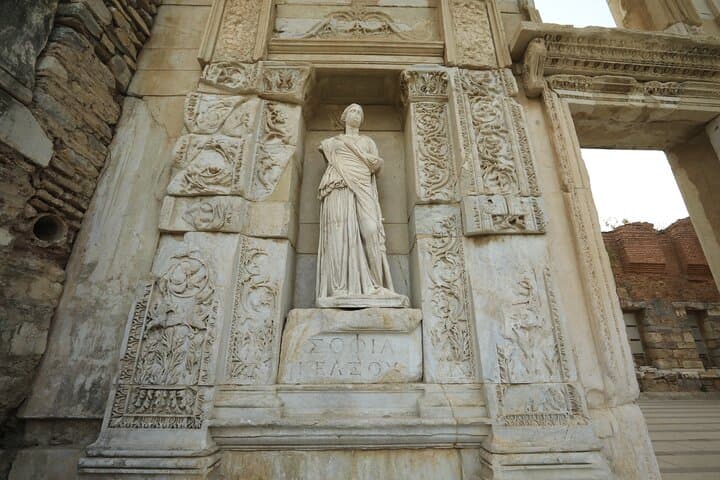
Expect steady walking on uneven ancient pavements, short climbs to viewpoints, and crowds at signature sites such as Ephesus’ Celsus Library. Cultural encounters include a traditional handicraft cooperative and local seafood at village restaurants; optional paragliding offers a birdlike view over the travertines for those seeking a different perspective.
Plan practicalities: arrive with a light daypack, good walking shoes, refillable water, and sun protection; mornings are best for thermal pools and for cooler walking at Ephesus. Allow time to remove shoes on the white terraces where required, and bring a small towel for thermal pools. Guides usually handle entrance tickets and logistics, but carry your passport for domestic flights. With moderate fitness and sensible gear, this compact tour threads geology, archaeology and village life into a clear, accomplishment-filled three days.
moderate.
3 days.
Moderate—able to walk 2–4 miles per day on uneven terrain and climb short stairways.
Expect several hours of walking each day with frequent stops—typically 2–4 miles of on‑and‑off walking over uneven surfaces.
Lunches and entrance tickets for listed sites are included as indicated in the itinerary; optional extras (Cleopatra’s Antique Pool, paragliding) cost extra.
Yes—most packages offer an option to fly onward to Cappadocia instead of returning to Istanbul, except the Bronze package.
Not recommended for those with serious spinal, mobility or cardiovascular conditions due to uneven terrain and stair climbs.
This corridor was a crossroads of Ionian Greek city‑states, Roman civic power and early Christian communities; Ephesus appears in the New Testament and Pamukkale hosted thermal worship at Hierapolis.
Pamukkale’s travertines are sensitive to water diversion and foot traffic—follow designated paths, avoid soaps in thermal pools, and support local conservation fees when requested.
Turkey Experiences operates guided outdoor trips and adventures with an emphasis on safety, stewardship, and memorable experiences.

You step from the minibus onto a palette of chalk-white terraces; warm mineral water murmurs and the limestone pools reflect a blue that seems to challenge the sky. The travertines of Pamukkale spread downslope like frozen waterfalls while distant ruins of Hierapolis perch above, their stones warmed by centuries of sun and pilgrims.
You step from the minibus onto a palette of chalk-white terraces; warm mineral water murmurs and the limestone pools reflect a blue that seems to challenge the sky. The travertines of Pamukkale spread downslope like frozen waterfalls while distant ruins of Hierapolis perch above, their stones warmed by centuries of sun and pilgrims.
This three‑day circuit links geological drama with classical cities: Pamukkale’s travertine terraces form where calcium-rich springs deposit layers of white carbonate, creating a landscape UNESCO declared protected. Hierapolis, Laodicea and Ephesus map the sweep of Anatolian history—from Hellenistic civic planning and Roman theater-building to early Christian communities referenced in the Book of Revelation. Priene and Miletus show coastal urbanism once shaped by the Maeander River’s shifting mouth.
Expect steady walking on uneven ancient pavements, short climbs to viewpoints, and crowds at signature sites such as Ephesus’ Celsus Library. Cultural encounters include a traditional handicraft cooperative and local seafood at village restaurants; optional paragliding offers a birdlike view over the travertines for those seeking a different perspective.
Plan practicalities: arrive with a light daypack, good walking shoes, refillable water, and sun protection; mornings are best for thermal pools and for cooler walking at Ephesus. Allow time to remove shoes on the white terraces where required, and bring a small towel for thermal pools. Guides usually handle entrance tickets and logistics, but carry your passport for domestic flights. With moderate fitness and sensible gear, this compact tour threads geology, archaeology and village life into a clear, accomplishment-filled three days.